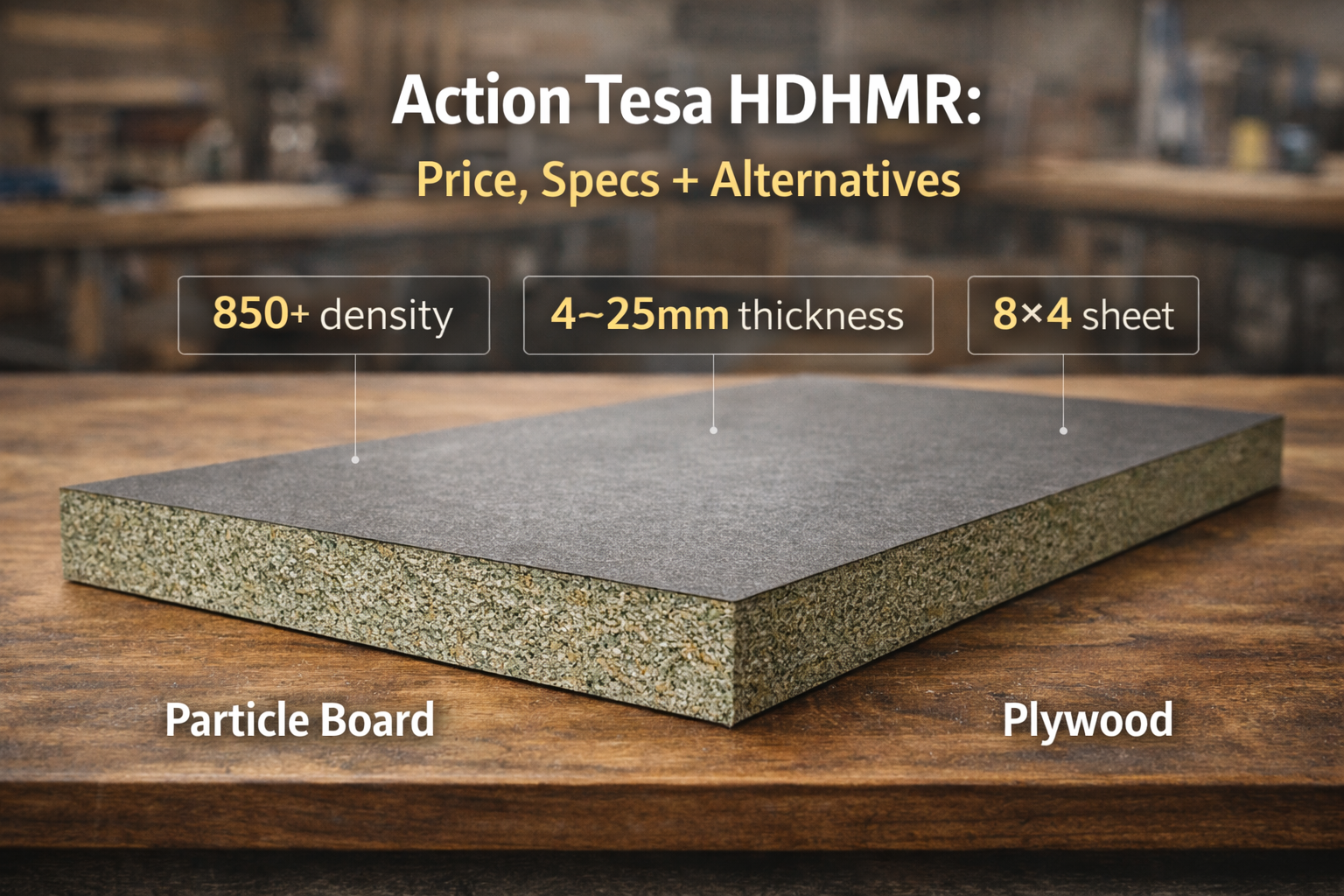
Introduction: Action Tesa is one of India’s well-known brands in the engineered wood space, and their HDHMR boards are a flagship product. If you’re specifically looking at Action Tesa HDHMR, this guide will give you the key information: typical specifications of their HDHMR boards, an idea of price range, the pros and cons of choosing this brand, and also some alternative options you might consider (whether other brands or other board materials) depending on your use-case and budget. We’ll keep it neutral and factual so you can make an unbiased decision.
About Action Tesa HDHMR: The abbreviation HDHMR stands for High Density High Moisture Resistance board. Action Tesa was among the first in India to promote HDHMR boards as a better alternative to plywood for interiors. Their boards are made from hardwood fibers and are known for being dense (they quote ~850 kg/m³ density) and water-resistant. Essentially, Action Tesa HDHMR is a type of premium HDF (High Density Fiberboard) with enhanced moisture and termite resistance, targeted at furniture and cabinet applications.
Full Form and Manufacturer: Action Tesa is the brand name under Balaji Action Buildwell. They produce a range of boards: plain MDF, prelam MDF, particle boards, laminates, etc. The Action Tesa HDHMR is one of their star products. The company often markets it as a direct competitor to plywood – highlighting that it can replace BWR ply in many uses.
Key Specifications of Action Tesa HDHMR:
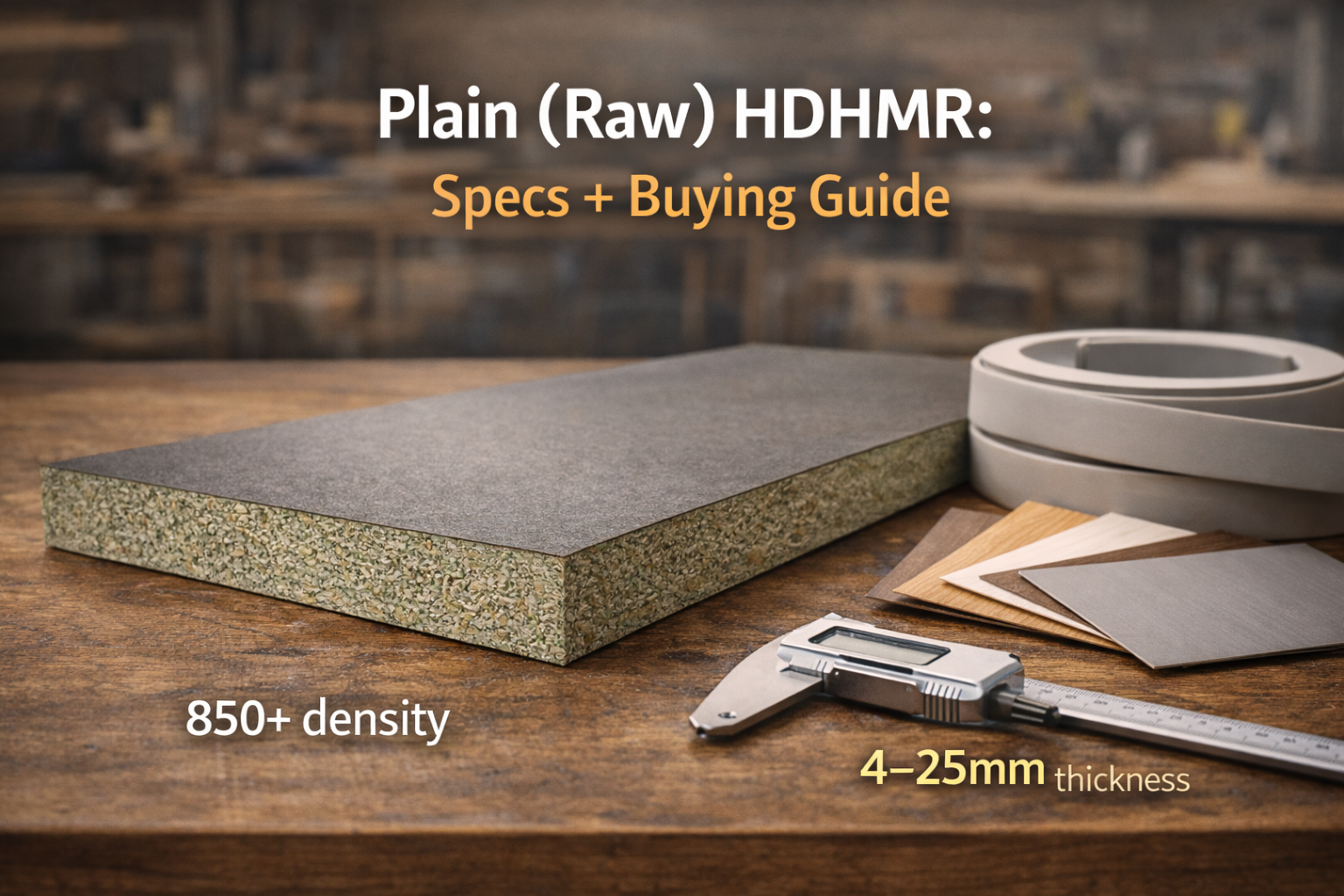
· Density: 850+ kg/m³. This is quite high (for comparison, normal MDF is ~600-700 kg/m³). The high density indicates a strong, sturdy board. It also means heavier weight.
· Thickness Range: 4mm up to 25mm. They offer a wide range of thicknesses. Common thicknesses available are 6mm, 8mm, 12mm, 16/17mm, 18mm, and 25mm (and even an odd 16.75mm which is basically 17mm). Thinner ones (4mm, 6mm) are used for back panels or liners, medium for furniture, thick for structural parts or doors.
· Standard Sheet Size: 8ft x 4ft (2440 x 1220 mm) is standard. Some other sizes might be produced but most dealers stock 8x4.
· Moisture Resistance: The board is formulated to be water/moisture resistant (interior grade). It isn’t waterproof like marine ply, but in tests it swells minimally with water exposure. For instance, it’s often cited that it can handle kitchen/bathroom humidity without swelling. The resin used is moisture-resistant (likely melamine urea formaldehyde or similar).
· Termite and Borer Resistance: Action Tesa HDHMR is treated with chemicals to be termite and borer resistant. They often advertise this feature. Many users choose it in place of plywood partly for this reason, as termite attacks on plywood are common if not treated. Action Tesa even brands some boards with anti-termite warranties.
· Surface Finish: These boards have a smooth surface that’s suitable for painting or laminating. Action Tesa also sells pre-laminated HDHMR in various colors/finishes, which come with the laminate factory-pressed. But the plain board itself is smooth enough to take on paint or glue for laminates well. The surface is also calibrated (uniform thickness).
· Internal Bond & Screw Strength: The internal bond strength and screw holding is high for this board – Action Tesa’s literature indicates very good screw retention (in technical datasheets they’ll have values in N or something, but qualitatively, screws hold better than in normal MDF due to density).
· Warranty: Action Tesa often offers a warranty on its HDHMR boards (commonly heard is 10-year warranty against manufacturing defects, termites etc.). That gives some assurance of quality. Of course, one must follow their usage guidelines (e.g., for interior use, properly sealed edges, etc., to claim warranty in case of issues).
Pros of Action Tesa HDHMR:
· High Quality and Consistency: Being a branded product, you can expect consistent board quality (uniform density, thickness, etc.). Random local boards might have soft spots or variation, but Action Tesa is pretty reliable.
· Excellent Moisture Resistance: While still an “interior” board, it performs exceptionally well in kitchens and bathrooms. Customers often report no swelling or issues even near sink areas when properly laminated.
· Termite Proofing: Big plus in termite-prone areas (which is much of India). This reduces the need for additional chemical treatments that you might do with plywood. The board’s composition itself deters pests.
· Smooth and Workable: Carpenters find it machines nicely (though being dense, it needs good tools). The smooth faces mean less sanding or prep for finishing. It’s a uniform material so cutting intricate designs (CNC routing for jali patterns, etc.) is possible, which plywood cannot achieve without edges fraying.
· No warping/twisting: Unlike plywood, which can sometimes warp if not stored flat or if it’s a bad batch, HDHMR boards stay flat and don’t have directional grain stresses. So large cabinet doors made of it won’t warp (provided hinges are sufficient for the weight).
· Brand Trust: Action Tesa is a leading manufacturer with a wide dealer network, so availability is good across cities. They also produce matching laminates and other products, which can be convenient.
· Cost-Effective vs Plywood: While HDHMR is not “cheap” per se, it is usually cheaper than branded BWP plywood of similar thickness. So, you get near-plywood performance at a lower cost, which is a pro if you want to save some money but not compromise too much on quality.
Cons / Considerations:
· Heavier Weight: As mentioned, these boards are heavy. An 18mm Action Tesa HDHMR sheet weighs maybe ~50-55 kg. This means handling needs care (more labor) and when used as doors or wall units, ensure proper support (extra hinges, sturdy wall plugs, etc.). The weight can put stress on hardware if not accounted for.
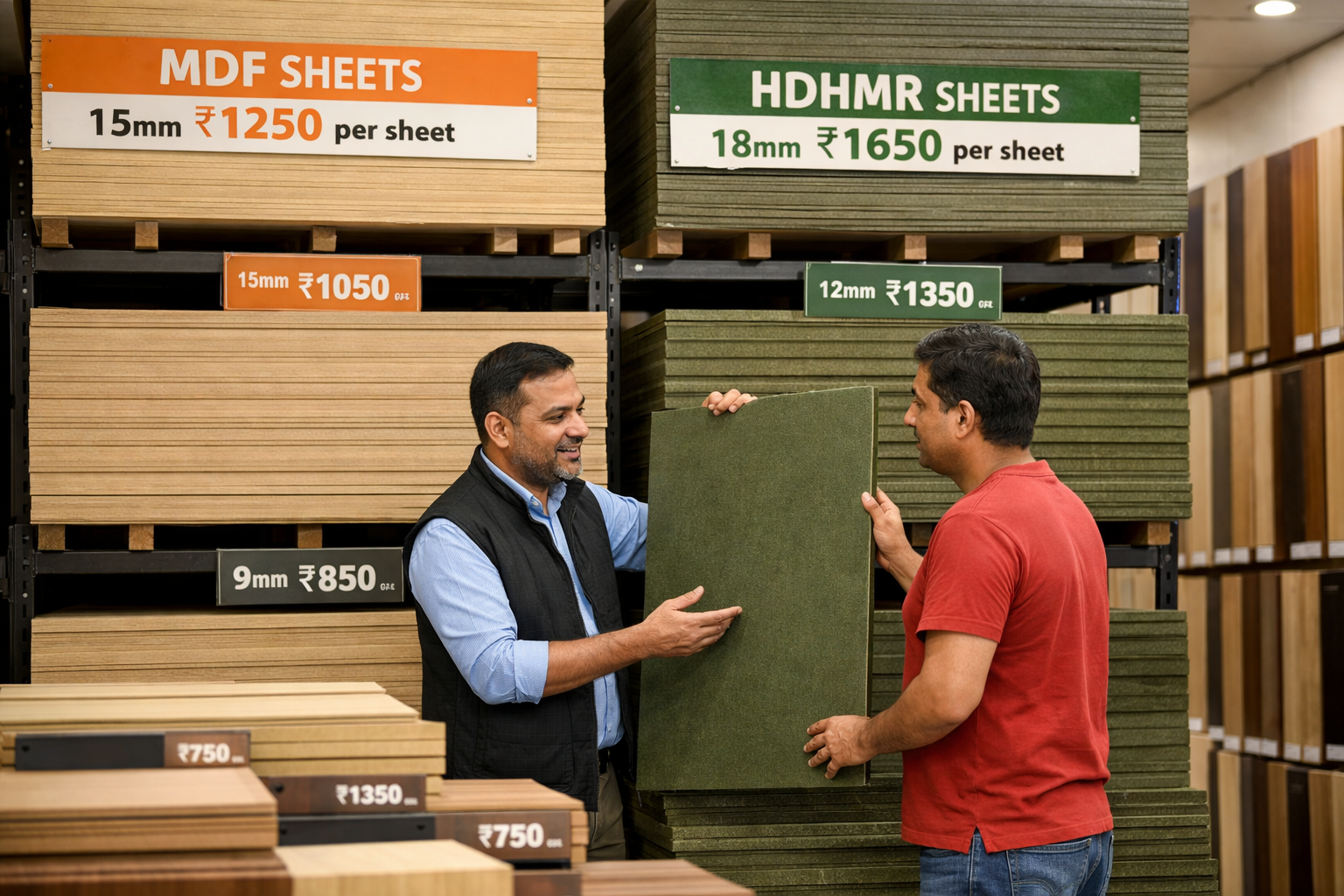
· Cost vs cheaper alternatives: It is more expensive than MDF or particle board. If someone’s comparing to those, Action Tesa HDHMR will seem pricey. For example, 18mm might be ₹100/sqft or more, whereas MDF could be ₹50-60, and PB even less. So, if budget is super tight, some may skip HDHMR and use lower-grade materials (though then they lose out on performance).
· Availability of thicknesses: Not really a con, but ensure your supplier stocks the thickness you need. Common ones like 18, 12, etc., are usually in stock. Something like 25mm might need a special order at some places (so plan ahead).
· Needs finishing: It’s not really a disadvantage, but just to note – like plywood, a plain HDHMR board will need a laminate or paint or veneer for aesthetic finishing (unless it’s a hidden part). It’s not like a pre-finished surface (unless you buy their prelam boards). So, factor that in (though same goes for ply/MDF).
· Cut Edge Sealing: To maximize its performance, you should seal or edge band the cut edges. If you leave edges raw in a humid area, they could absorb moisture over time. The board is moisture-resistant, not waterproof, so the edges are slightly more porous. Most carpenters will edge band anyway for looks, which solves this. But just a tip – if you cut a sink hole or something in it, paint or seal the cutout edges inside the hole.
· Competition / Market Confusion: This isn’t a con of the product per se, but be aware in the market: other brands have similar products often under different names (e.g., Greenpanel calls theirs “HDWR” – High Density Water Resistant board, Century has “Nesta” or just calls it premium MDF HMR, etc.). Some vendors might push those as equivalent or better. It’s good to compare specs – Action Tesa HDHMR is known to be very good; some others may match it, some may not. Also ensure you’re getting genuine Action Tesa (the boards usually have a stamp or printing on the edge).
Price of Action Tesa HDHMR: (approximate, as of mid 2020s for reference) - The price varies by thickness and whether it’s plain or laminated. - For plain boards, roughly: 18mm might be around ₹90–₹110 per sq.ft as discussed in the price section earlier. 12mm might be around ₹75–₹90 per sq.ft. Thinner ones are cheaper per sq.ft (e.g., 6mm might be ₹40–₹50/sq.ft). - Pre-laminated Action Tesa HDHMR (with factory laminate on one or both sides) will cost more – maybe ₹10-20/sq.ft extra depending on laminate type. - If comparing to plywood: say a high-grade 19mm BWP plywood might be ₹120-₹140/sq.ft, so Action Tesa HDHMR likely saves some cost. Versus normal MR plywood (cheaper), HDHMR might be similar or a bit higher, but MR ply doesn’t give the moisture resistance or consistency of HDHMR. - Availability: The price might also vary regionally. In North India where the factory is (I believe they manufacture in North), prices might be a tad lower than far-flung regions where transport adds cost. But Action Tesa has a wide dealer network, so differences aren’t huge.
One thing to note is that sometimes dealers quote per sheet or per piece. For instance, an 8x4 of 18mm might be quoted around ₹3200-3500 each. They may offer some discounts if buying large quantities.
Alternatives to Action Tesa HDHMR:
If for some reason you want to consider other options: - Greenpanel (formerly Greenply) HDWR: Greenpanel offers a product often dubbed “HDHMR” informally but they name it “Premium MDF – HMR” or HDWR (High Density Water Resistant). It is quite similar in concept – high density fiberboard with moisture resistance. Greenpanel’s version is also well-regarded. Some tests and comparisons (like the Khidki Homes blog) indicate Greenpanel’s board is slightly different: they position it for even exterior use (Greenpanel HDWR is said to be okay for semi-exterior because it’s water-resistant not just moisture-resistant). Meanwhile, Action Tesa focuses on interior use. If your use-case was, say, something that might occasionally face the elements (exterior cladding in shade, etc.), you might look at Greenpanel. Price-wise, Greenpanel’s HDF HMR boards are in similar range. - Century Ply’s “Architect MDF” or HMR boards: Century Ply markets an “Architect MDF (HMR)” which is moisture-resistant MDF/HDF. They also have a product called Exteria (which is an exterior grade MDF). Century’s a big brand – their HMR board could be an alternative if available. Some have found that Century’s HMR is not as dense as Action Tesa’s HDHMR; it might be more comparable to normal HDF. However, Century might leverage their brand in offering warranties or just brand trust. - Imported HDF boards (Egger, Sonae etc.): In some areas, imported HDF boards that are moisture-resistant could be available. For instance, Egger (a European brand) makes a variety of MDF/HDF including moisture resistant ones (usually used in flooring, etc.). If you find those, quality will be top-notch, but cost may be high. Egger, for example, is used for prelaminated panels in modular furniture imports. - Other Indian brands: There are others like Merino (they mostly do laminates but might have boards), Bhutan Tuff, Austin, etc. that might produce HDHMR equivalents. But Action Tesa and Greenpanel are the biggest players for this product in India. - Plywood (especially BWP Plywood): The main alternative material-wise is still good old waterproof plywood. If your use-case is a kitchen or bathroom and you are evaluating Action Tesa HDHMR vs Marine Plywood: marine ply will outperform in direct water contact, but as we discussed it’s pricier. Plywood might also be preferable if weight is a concern (ply is lighter) or if the application requires thickness beyond 25mm (you can get ply in 25mm, 30mm, etc., or build up thickness). - WPC Boards: A completely different alternative – Wood Plastic Composite boards or PVC foam boards. These are 100% waterproof and termite proof because they’re essentially plastic. People sometimes use WPC/PVC boards in areas with extreme moisture (like bathroom cabinets, outdoor units). They are lighter but not as strong as HDHMR in terms of screw holding (unless you use special anchors) and can be more expensive. The finish and workability are also different (they can be routed but painting them is tricky, etc.). If water-proofing is the prime goal, WPC is an alternative to consider, but for most interior furniture HDHMR is preferred due to better structural strength and traditional carpentry compatibility. - Local cheaper HDHMR/MDF HMR: There may be some smaller manufacturers offering “HMR boards” at lower prices. Quality might vary. If budget is tight and you cannot afford Action Tesa, you might find a generic HMR board from, say, a local MDF factory. But ensure it meets some standards. Sometimes these might not have as high density or might not be consistent. If one’s going for the concept of HDHMR, it probably makes sense to go with a known brand like Action Tesa or the others mentioned to truly get the performance benefits.
Which Alternative for Which Use-Case? - If you are building modular kitchen cabinets and want the best: you could use Action Tesa HDHMR for carcases and maybe Greenpanel HDWR for any panel that might face more moisture (though in a kitchen all should be fine with Action Tesa). Or just use Action Tesa for everything including shutters if shutters are laminate-finish; if you want painted shutters, you could use Century/Action Tesa HMR board or go with Birch Ply with paint – depending on budget and look. - If you are building bathroom vanity and worried about occasional splashes: Action Tesa HDHMR will do well, but also consider WPC board for the base structure if it might have standing water. However, WPC is costlier and harder to finish (you’d likely still laminate it). Some high-end solutions use a combo: e.g., WPC for cabinet under sink (completely waterproof) and HDHMR for door where it’s less likely to be drenched but needs good screw hold for hinges. - For wardrobes and bedroom furniture: Honestly, you could even step down to normal MDF if moisture isn’t an issue, but if you want the premium, termite-proof assurance, Action Tesa is great. If cost is an issue here, one could use a combination like plywood for structure and MDF for doors (painted) which might be a bit cheaper than HDHMR for everything. Or Greenpanel vs Action – both would perform similarly in a wardrobe, so maybe get whichever is more affordable or available. Action Tesa might have a slight edge in density. - For brands comparison: - Action Tesa vs Greenpanel: Action’s known for density, Greenpanel might claim exterior use. Both are top notch. Greenpanel’s board was used by some for exterior cladding, and they found it didn’t swell if painted properly – which is impressive. Action Tesa doesn’t explicitly market exterior use (they have a separate product “Boilo” for exterior, which is actually a Boiling waterproof HDF board). So if you had an exterior need (like something semi-outdoor), maybe Greenpanel or Boilo. - Action Tesa vs Century: Century is a big plywood brand and relatively newer in fiberboards. If you already have a rapport with Century dealers and they have an HMR board, it could be fine, but I haven’t seen as many reviews on it. They do have a product called “Nesta” HDMR board as well. Check availability; Action Tesa is usually easier to find for HDHMR.
Neutral Evaluation: Overall, Action Tesa HDHMR is a high-performing material for interior carpentry. Its alternatives mostly try to match its performance. There isn’t a huge functional difference between the major brands’ HDHMR – it might come down to price, availability, and slight spec nuances. If one brand’s board is, say, 800 kg/m³ and another is 850 kg/m³, the latter is a bit stronger and heavier. If one offers 8ft x 6ft sheets (some do custom sizes) that could be useful for certain projects (fewer joints). You might inquire about those differences when shopping.
One should also consider supporting products: e.g., Action Tesa might provide matching prelaminates, or they might have recommended adhesives, etc. Also check if their distributors offer any service like panel cutting or edge banding – sometimes bigger suppliers do.
FAQs about Action Tesa HDHMR:
-
Q1. Is Action Tesa HDHMR waterproof?
A: It is highly moisture-resistant, but not fully waterproof. It can resist water exposure far better than normal MDF or plywood (MR), but if you soak it in water for hours or days, it will eventually absorb some and swell a bit. It’s meant for interior use where it might get occasional water splashes or high humidity. For waterproof requirements (e.g., something submerged or constantly wet), you’d need marine plywood or a different product like Action Tesa’s “Boilo” (BWP HDF) which is specifically made waterproof and fire retardant. In kitchen/bath usage, as long as you laminate and seal edges, Action Tesa HDHMR effectively behaves waterproof for practical purposes – people have used it under sinks, etc., with success.
-
Q2. How does the price of Action Tesa HDHMR compare to plywood?
A: As noted, generally Action Tesa HDHMR will be cheaper than an equivalent grade of waterproof plywood. To put numbers: if marine ply is ₹120 per sq.ft and HDHMR is ₹100, that’s a savings. If comparing to cheap commercial ply (₹60), HDHMR is more expensive, but that cheap ply won’t give the performance (and likely not termite-treated, etc.). In practice, many find that using HDHMR gives a quality similar or better than using mid-grade plywood, at a similar price. One scenario: People building kitchens sometimes get quotes both ways – using BWR ply vs using HDHMR – and often the HDHMR route is a bit lower cost for the same project. Also, less wastage with HDHMR because no knots or core gaps – every inch of the board is usable solid material (ply can have voids which sometimes lead to wastage or weaker spots). Therefore, for a high-grade project, HDHMR is cost-competitive; for a low-budget project, HDHMR might seem costly but then it may be over-spec for that level.
-
Q3. What are some best practices when using Action Tesa HDHMR?
A: Treat it much like you would high-quality plywood or HDF:
o Use carbide-tipped saw blades for cutting to get clean cuts (the density can dull blades).
o Edge band all visible or exposed edges for a clean look and sealed protection.
o Pre-drill screw holes, especially near edges, to avoid any minor splitting (though HDHMR holds screws well, pre-drilling is good practice).
o Support large pieces properly during handling to avoid any accidental breakage (HDHMR is strong but if you drop a long piece it could still crack or corners could blunt).
o Store flat in a dry place before use (just like plywood, to avoid any slight bowing – though HDHMR is quite stable).
o If painting, use a primer suitable for MDF/HDF (to seal surface) then paint – you’ll get an excellent finish since it’s smooth.
o Use sharp drill bits for hinge holes, etc., and consider Euro hinges or insert nuts for frequently used connections (like hardware that might be removed/re-fixed), just for longevity.
o Safety: Cutting or routing these boards produces fine dust and contains formaldehyde – always cut in a ventilated area or with dust extraction and wear a mask.
-
Q4. If Action Tesa HDHMR is so good, is there any reason to still use plywood?
A: Plywood still has its place. A few reasons one might choose plywood:
o Outdoor use or structural building: Plywood (especially marine ply) is better for exterior or semi-exposed structures. Also, framing or structural needs where thickness >25mm or custom shapes might suit plywood/solid wood better.
o Weight considerations: Plywood is lighter, so for something like ceiling panels or very large wardrobe doors, some prefer plywood to reduce load.
o Traditional preferences: Some carpenters are more used to plywood and might prefer working with it (though most have adapted to HDHMR now).
o Availability of thickness beyond 25mm: If you needed a 30mm thick panel, two HDHMR sheets would have to be sandwiched (which can be done), whereas plywood might be available in that thickness or you can nail two together easier.
o Cost in low-end category: If someone is okay with a lower grade ply (and the risks that come with it) because it’s cheap, then HDHMR wouldn’t be competing there; HDHMR targets the mid-high end where quality is desired.
o Natural wood finish: If one wants a natural wood grain visible (via veneer or polish), they might lean to plywood + veneer. HDHMR can be veneered too, but some purists might stick to plywood for that traditional wood feel, though technically it makes little difference once veneered.
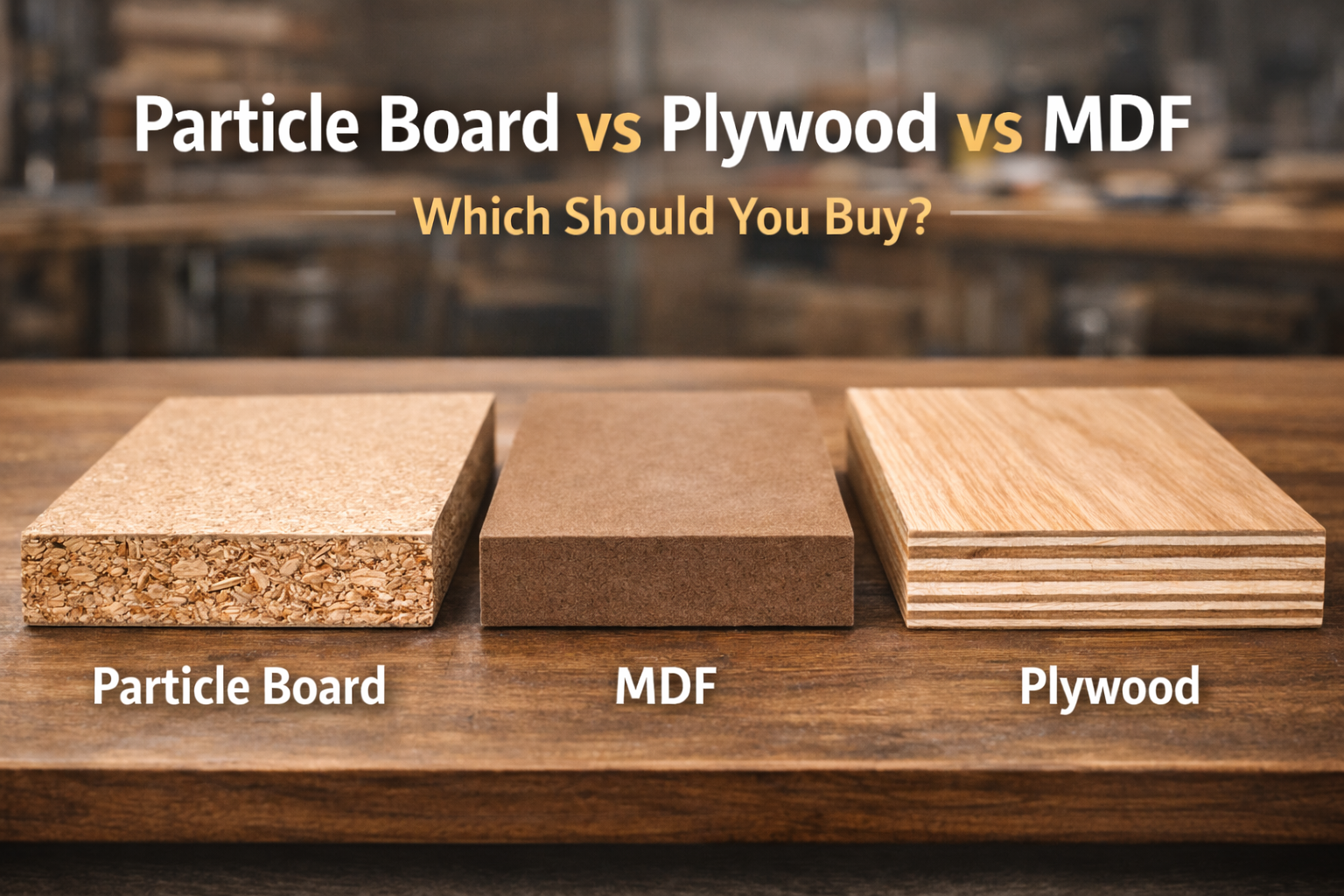
But for most interior carpentry where you’d consider high quality plywood, HDHMR can replace it effectively. Many modular furniture companies have already switched to HDHMR or similar for carcases due to consistency and termite/moisture factors. Plywood is still very common though, partly due to decades of habit and trust.
-
Q5. What about Action Tesa vs other products like "Novopan" or "Merino boards"?
A: Novopan is actually a brand that was historically known for particle boards in India. If someone mentions Novopan, they often mean basic particle board or maybe their prelam. It’s not comparable to HDHMR – HDHMR is a far superior product. Merino (famous for laminates) does have Merino Laminates HDHMR boards or similar products (I recall something like Merino had an offering in panel boards, possibly imported or tie-up). They might be fine, but Merino’s network for boards is not as big as for laminates. Essentially, when looking at alternatives, ensure they specifically say HMR or HDHMR and check density. If someone is offering a “moisture-resistant board” at much lower cost, it could be regular MR MDF which is lower density (not as strong as Action’s). Always compare specs: Action Tesa’s ~850 kg/m3 and typically green colored core (they sometimes have a green tint to differentiate HMR). Cheaper HMR boards might be 740-780 kg/m3 which is still okay but a bit less strong. So, verify if the alternative is truly in the same class or just similar sounding.
In summary, Action Tesa HDHMR is a top-tier engineered wood for interiors known for moisture and termite resistance with plywood-like strength. It fits well in kitchens, wardrobes, and furniture where you want longevity and stability. Alternatives exist, such as similar HMR boards from competitors or simply using waterproof plywood, each with their own considerations of cost, availability, and slight performance differences. If you choose Action Tesa, you’re aligning with a lot of positive user feedback in the market – it’s widely accepted now as a reliable plywood alternative. Just weigh it against your specific needs and perhaps get quotes for both it and its alternatives to make a cost-effective choice.
Disclaimer: This content is provided for general informational purposes based on industry practices and publicly available information. Product specifications, standards, prices, and availability may vary by manufacturer, region, and time. Readers should independently verify details with manufacturers, dealers, or qualified professionals before making purchase or construction decisions.