Is Century WPC Worth Your Investment in 2026?
Century Ply's entry into the WPC (Wood Plastic Composite) segment came later than competitors, but the brand leveraged its decades-long reputation in plywood to quickly establish credibility. For homeowners evaluating waterproof boards for bathrooms, kitchens, or outdoor applications, Century WPC presents an interesting proposition: premium pricing backed by a trusted name, but does the product quality justify the cost difference over alternatives?
This review dissects Century's WPC product range—Starke Neo, Select, and Prime—examining real-world performance, pricing dynamics across Indian markets, and situations where Century excels or falls short. Whether you're a homeowner planning a modular kitchen or a contractor comparing material options, this analysis provides the decision framework you need.
Understanding Century's WPC Product Architecture
Century markets its WPC boards under the Starke brand umbrella, segmented into three distinct tiers based on density and performance characteristics. This tiered approach allows Century to compete across price points while maintaining brand positioning.
Starke Neo: Entry-Level WPC
The Neo variant represents Century's most affordable WPC offering, designed for applications where budget constraints outweigh performance requirements. With density around 500-520 kg/m³, Neo boards provide basic waterproofing and termite resistance but sacrifice structural rigidity compared to higher tiers.
Best suited for: Back panels, internal partitions in dry areas, ceiling applications where load-bearing isn't critical.
Starke Select: The Mid-Range Workhorse
Select boards occupy Century's sweet spot, available in both WPC and PVC variants. The density improvement to approximately 550 kg/m³ translates to better screw-holding capacity and dimensional stability. Most dealers push this variant for residential projects due to its balance of cost and capability.
Best suited for: Modular kitchen carcasses, bathroom vanities, wardrobe backs in humid climates.
Starke Prime: Premium Performance
Prime represents Century's flagship WPC offering, with density reaching 580-600 kg/m³. The higher density provides noticeably better machining characteristics—cleaner cuts, tighter edge-banding adhesion, and improved fastener retention over multiple cycles.
Best suited for: High-traffic furniture, commercial installations, exterior-adjacent applications requiring maximum durability.
Technical Specifications Comparison
| Parameter | Starke Neo | Starke Select | Starke Prime |
|---|---|---|---|
| Density (kg/m³) | 500-520 | ~550 | 580-600 |
| Available Thickness | 6mm to 18mm | 5mm to 17mm | 6mm to 18mm |
| Sheet Size | 2440 × 1220mm | 2440 × 1220mm | 2440 × 1220mm |
| Water Resistance | 100% Waterproof | 100% Waterproof | 100% Waterproof |
| Termite Resistance | Complete | Complete | Complete |
| Warranty | 15 Years | 25 Years | 25 Years |
| Screw Holding | Moderate | Good | Excellent |
| Edge Finish Quality | Acceptable | Good | Very Good |
Century WPC Pricing Analysis: 2026 Market Rates
WPC pricing in India varies significantly based on region, dealer relationships, and order volumes. The figures below represent typical retail rates in North Indian metros as of early 2026—actual prices may differ by 10-15% based on location and negotiation.
| Product Variant | Thickness Range | Price Range (₹/sq.ft.) |
|---|---|---|
| Starke Neo | 6mm – 18mm | ₹80 – ₹225 |
| Starke Select (WPC/PVC) | 6mm – 18mm | ₹87 – ₹250 |
| Starke Prime | 6mm – 18mm | ₹101 – ₹288 |
| Starke Doors – Select | 25mm – 30mm | ₹387 – ₹471 |
| Starke Doors – Grey | 11mm – 17mm | ₹130 – ₹202 |
Price-to-Value Assessment
Century commands a 15-25% premium over lesser-known WPC brands, positioning itself between economy options and ultra-premium imports. This pricing strategy works because:
- Brand assurance: Century's established service network provides genuine warranty support—a significant advantage over brands with patchy after-sales presence
- Consistent availability: Starke products maintain steady stock levels at most authorised dealers, reducing project delays
- Quality consistency: Batch-to-batch variation remains minimal compared to smaller manufacturers
However, contractors working on budget-sensitive projects often find the premium difficult to justify when mid-tier alternatives perform adequately for basic applications.
Real-World Performance: What Installers Report
Technical specifications tell part of the story; actual job-site performance reveals the rest. Based on feedback from carpenters and fabricators across Delhi NCR, Mumbai, and Bangalore, here's what Century WPC delivers in practice.
Machining Characteristics
Century's higher-density Prime boards machine cleanly with standard woodworking tools. The material cuts without significant chipping when using carbide-tipped blades, and router edges remain crisp. Neo boards, however, tend to show minor edge fraying—acceptable for concealed applications but problematic for exposed edges without additional finishing.
Fastener Performance
Screw-holding capacity correlates directly with density tier. Prime boards accept repeated screw insertions reasonably well, though pre-drilling remains advisable for edge placements. Select boards perform adequately for typical furniture hardware, but hinge mounting on Neo boards requires careful technique to avoid stripping.
Lamination and Finishing
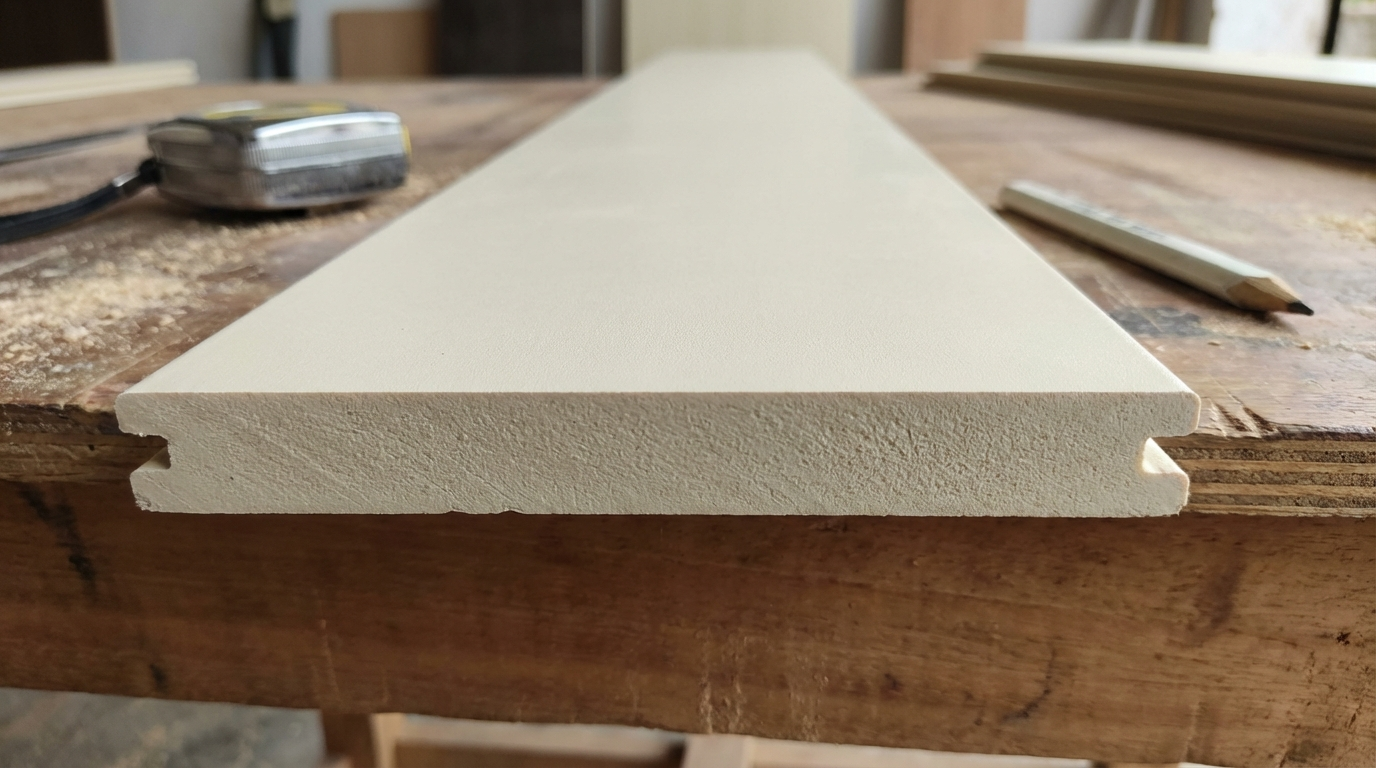
All Starke variants accept lamination, paint, and PU finishes effectively. The smooth factory surface provides good adhesion without extensive preparation. Edge-banding adheres well to Prime and Select boards; Neo boards occasionally require additional adhesive application for reliable bonding.
Dimensional Stability
In high-humidity environments like coastal Karnataka or Kerala, Century WPC maintains dimensional stability significantly better than MDF or particle board alternatives. Swelling and warping remain negligible even after prolonged moisture exposure—this characteristic alone justifies WPC selection for bathroom and kitchen applications.
Century WPC vs. Competing Brands
Choosing WPC boards involves comparing Century against established alternatives. Each brand presents distinct trade-offs worth understanding before commitment.
| Factor | Century Starke | Action Tesa WPC | Greenply WPC | Local/Regional Brands |
|---|---|---|---|---|
| Price Positioning | Premium | Mid-Premium | Premium | Economy |
| Dealer Network | Extensive | Good | Extensive | Variable |
| Warranty Support | Reliable | Good | Reliable | Often Poor |
| Product Range | Three tiers + doors | Multiple variants | Limited WPC focus | Basic options |
| Quality Consistency | High | High | High | Inconsistent |
| Availability | Excellent | Good | Good | Regional |
When Century Makes Sense Over Alternatives
Choose Century WPC if:
- Your project requires reliable warranty backing and you value service accessibility
- You're working in a tier-2 or tier-3 city where Century's distribution reach exceeds competitors
- The application demands consistent quality without surprises—commercial projects or high-end residential work
- You already work with Century dealers and can leverage existing relationships for better pricing
When Alternatives Deserve Consideration
Consider other brands if:
- Budget constraints require maximizing material coverage—regional brands can cost 25-35% less
- The application involves concealed structural elements where premium finishing characteristics add no value
- You're in a metro market where multiple brands compete actively, creating pricing leverage
- Project specifications already mandate a specific alternative brand
Application-Specific Recommendations
WPC board selection depends heavily on intended use. Here's how Century's product tiers align with common applications in Indian homes and commercial spaces.
Modular Kitchen Carcasses
For kitchen cabinet boxes exposed to steam, splashes, and humidity fluctuations, Starke Select provides the optimal balance. The 15-17mm thickness handles hardware mounting adequately, and waterproofing protects against the inevitable moisture exposure kitchens generate. Reserve Prime for base cabinets in high-use kitchens; Neo suffices for upper cabinet backs and internal shelving.
Bathroom Vanities and Storage
Bathrooms demand uncompromising moisture resistance. Starke Select or Prime in 12-18mm thickness handles vanity construction effectively. Avoid Neo for structural bathroom furniture—the lower density struggles with heavy basin loads over time. For wall-mounted cabinets with lighter storage requirements, Select performs reliably.
Outdoor and Semi-Outdoor Applications
Balcony furniture, covered patio storage, and exterior-adjacent installations benefit from Starke Prime exclusively. The density advantage provides better weathering resistance, and the warranty coverage applies more reliably to intended outdoor use with Prime products.
Internal Partitions and Dry-Area Furniture
For bedroom wardrobes, living room units, and general storage furniture in climate-controlled interiors, the waterproofing advantages of WPC become less critical. Consider whether HDHMR or MDF might offer better value for these applications—WPC's premium makes sense primarily where moisture resistance delivers tangible benefit.
The Honest Pros and Cons
What Century WPC Does Well
- Moisture immunity: Genuine 100% waterproof performance—not water-resistant, but actually waterproof
- Termite and borer proof: The plastic component eliminates biological degradation entirely
- Brand reliability: Century's network ensures warranty claims get processed, unlike smaller brands
- Consistent stock: Major dealers maintain inventory, reducing project timeline risks
- Finish compatibility: Accepts lamination, paint, veneer, and PU coatings without special preparation
Where Century WPC Falls Short
- Weight: WPC boards are notably heavier than equivalent MDF or particle board, complicating installation
- Cost premium: The 15-25% price increase over alternatives hurts budget-constrained projects
- Thermal expansion: Greater expansion/contraction than wood-based boards requires attention during installation
- Limited structural strength: Not suitable for load-bearing applications—shelving span limits apply
- Repair difficulty: Damaged WPC repairs less gracefully than plywood—often requires panel replacement
Quick Decision Guide: Choosing Your Century WPC Variant
Use this framework to match product tier with project requirements:
Select Starke Neo when:
- Application involves concealed panels, back boards, or ceiling cladding
- Budget constraints are primary, and structural demands are minimal
- The panel won't receive direct hardware mounting or edge exposure
Select Starke Select when:
- Building kitchen or bathroom furniture requiring waterproofing
- Standard residential applications with typical hardware requirements
- You want Century's quality without paying the Prime premium
Select Starke Prime when:
- Commercial installations requiring maximum durability
- Outdoor-adjacent or high-humidity applications
- Visible edges requiring clean machining without additional finishing
- Heavy-use furniture with repeated hardware stress
Installation Considerations for Indian Conditions
WPC behaves differently from traditional wood products during installation. These practical considerations prevent common issues:
Thermal Movement Allowance
WPC expands more than wood-based boards when heated. In installations receiving direct sunlight—window-adjacent furniture, balcony applications—leave 2-3mm expansion gaps at panel edges. Failure to accommodate thermal movement causes buckling or joint stress over seasonal temperature cycles.
Fastening Technique
Pre-drill pilot holes for all screw placements, especially within 25mm of panel edges. WPC doesn't split like plywood, but the material can crack under direct screw pressure without pilot holes. Use coarse-thread screws designed for composite materials rather than fine-thread wood screws.
Adhesive Selection
Standard wood adhesives (Fevicol SH, etc.) work for WPC lamination and edge-banding, but PU-based adhesives provide stronger bonds for structural joints. Epoxy adhesives offer maximum strength for hardware blocks and load-bearing connections.
Buyer Action Steps
Before finalising Century WPC for your project, complete this verification process:
- Confirm application suitability: Verify that WPC's waterproofing justifies the cost premium over HDHMR or marine plywood for your specific use case
- Request density documentation: Ask dealers to confirm which Starke variant (Neo/Select/Prime) they're quoting—pricing without variant specification invites substitution
- Check local stock: Verify immediate availability at your dealer before committing project timelines
- Compare delivered pricing: Get quotes including GST and delivery for accurate budget comparison
- Inspect sample boards: Request physical samples to verify density, surface quality, and edge characteristics match specifications
- Confirm warranty terms: Understand what the 25-year warranty covers and excludes—installation errors typically void coverage
Century WPC delivers genuine performance advantages for moisture-prone applications, backed by reliable brand support. The premium pricing finds justification when waterproofing requirements are non-negotiable, but budget-conscious projects may find equivalent value in alternatives for less demanding applications.
Disclaimer: This content is provided for general informational purposes based on industry practices and publicly available information. Product specifications, standards, prices, and availability may vary by manufacturer, region, and time. Readers should independently verify details with manufacturers, dealers, or qualified professionals before making purchase or construction decisions.