Why Door Skins Have Become India's Smartest Door Renovation Hack
Your solid wood door from 2015 still works perfectly—hinges intact, no warping, closes smoothly. But that outdated finish screams "previous decade" every time guests walk in. Replacing the entire door costs ₹8,000-25,000 plus carpentry charges. The smarter alternative? A door skin transformation for ₹400-1,200 that delivers a brand-new aesthetic in under three hours.
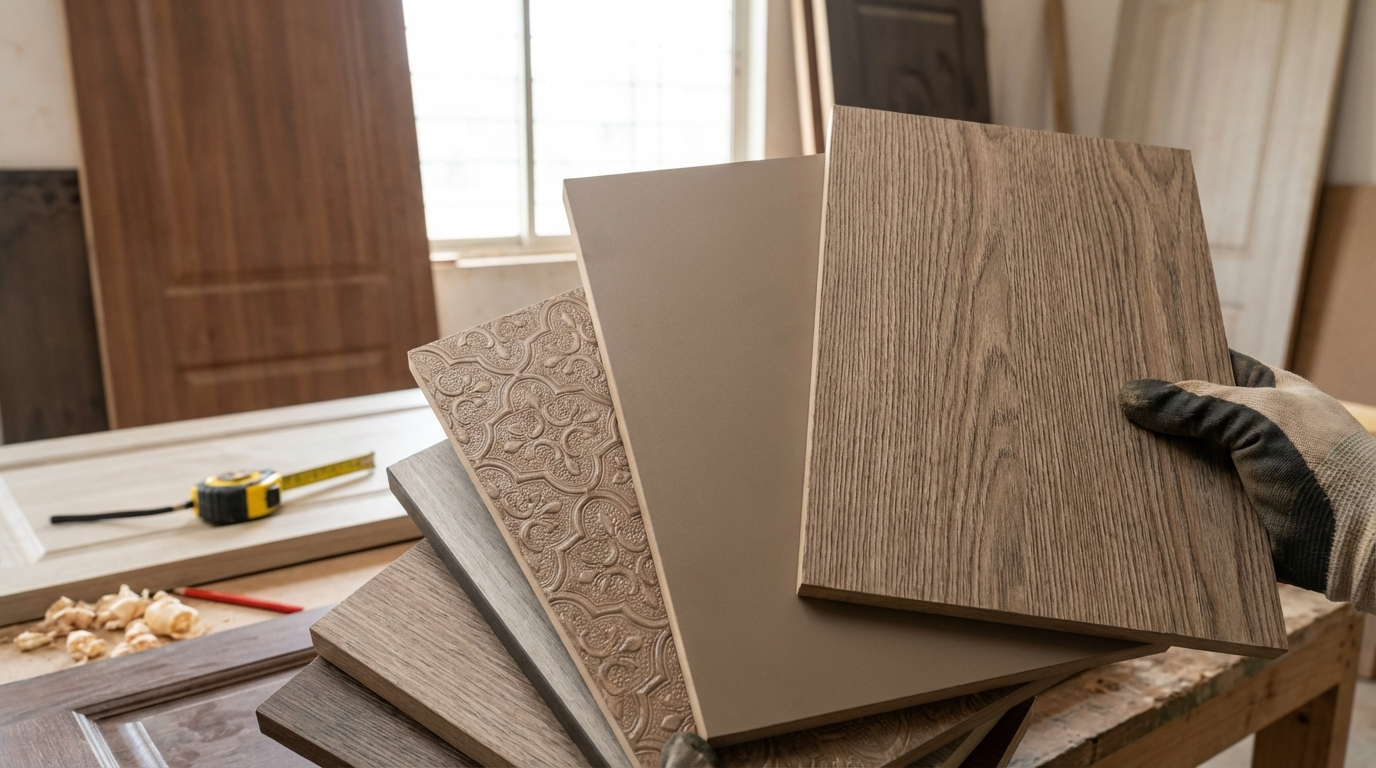
Door skins are thin decorative panels—typically 2.5mm to 4mm thick—designed to overlay existing door surfaces. Unlike laminate sheets that require professional pressing equipment, door skins use adhesive backing or simple fevicol application that skilled homeowners can manage themselves. The Indian market has exploded with options: HDF moulded skins with 3D patterns, HDHMR skins for moisture-prone areas, PVC skins for bathrooms, and premium veneer skins for luxury aesthetics.
This guide cuts through the marketing noise to help you select the right door skin type for your specific doors, budget, and climate conditions across different Indian regions.
Understanding Door Skin Materials: What Actually Matters
The material composition of a door skin determines three critical factors: how long it lasts, how it handles humidity, and whether it looks premium or plasticky after installation. Here's the technical breakdown that dealers rarely explain clearly.
HDF (High-Density Fibreboard) Door Skins
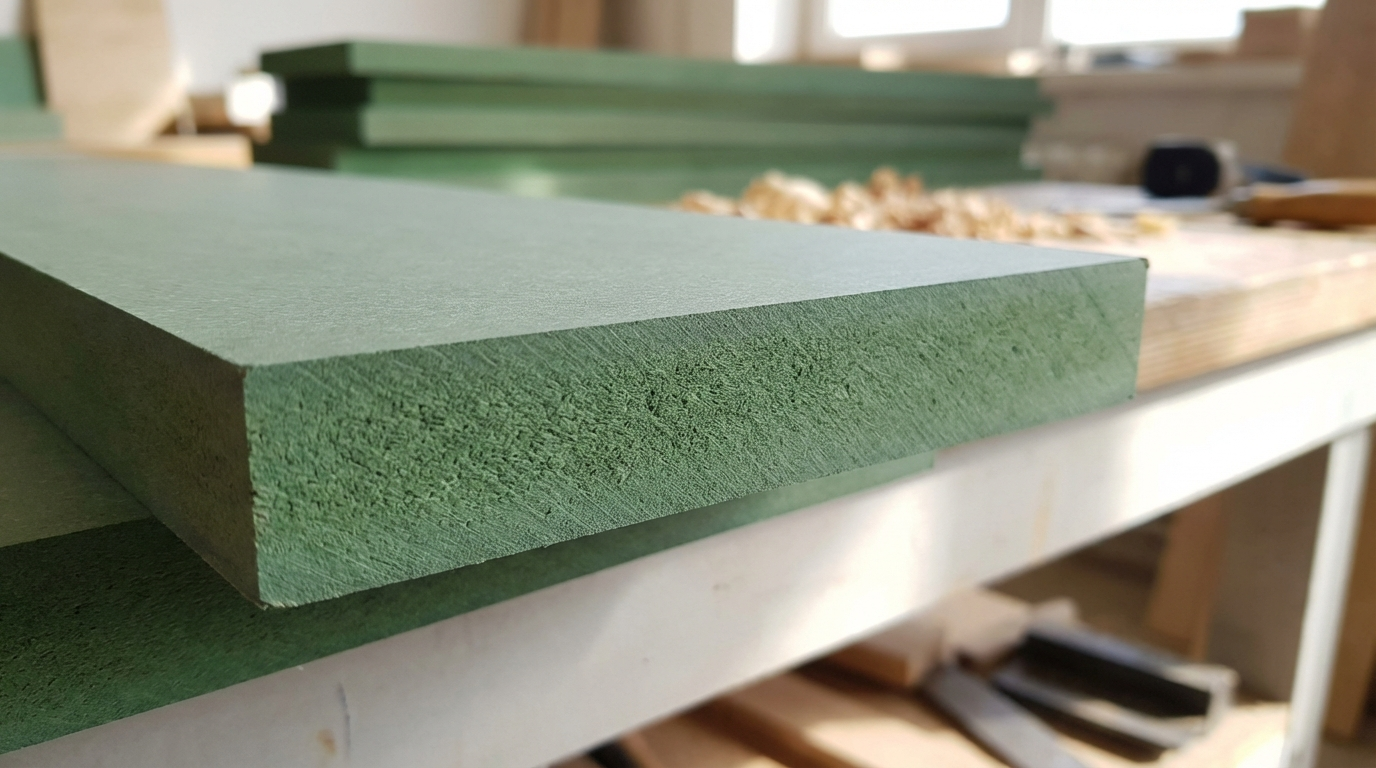
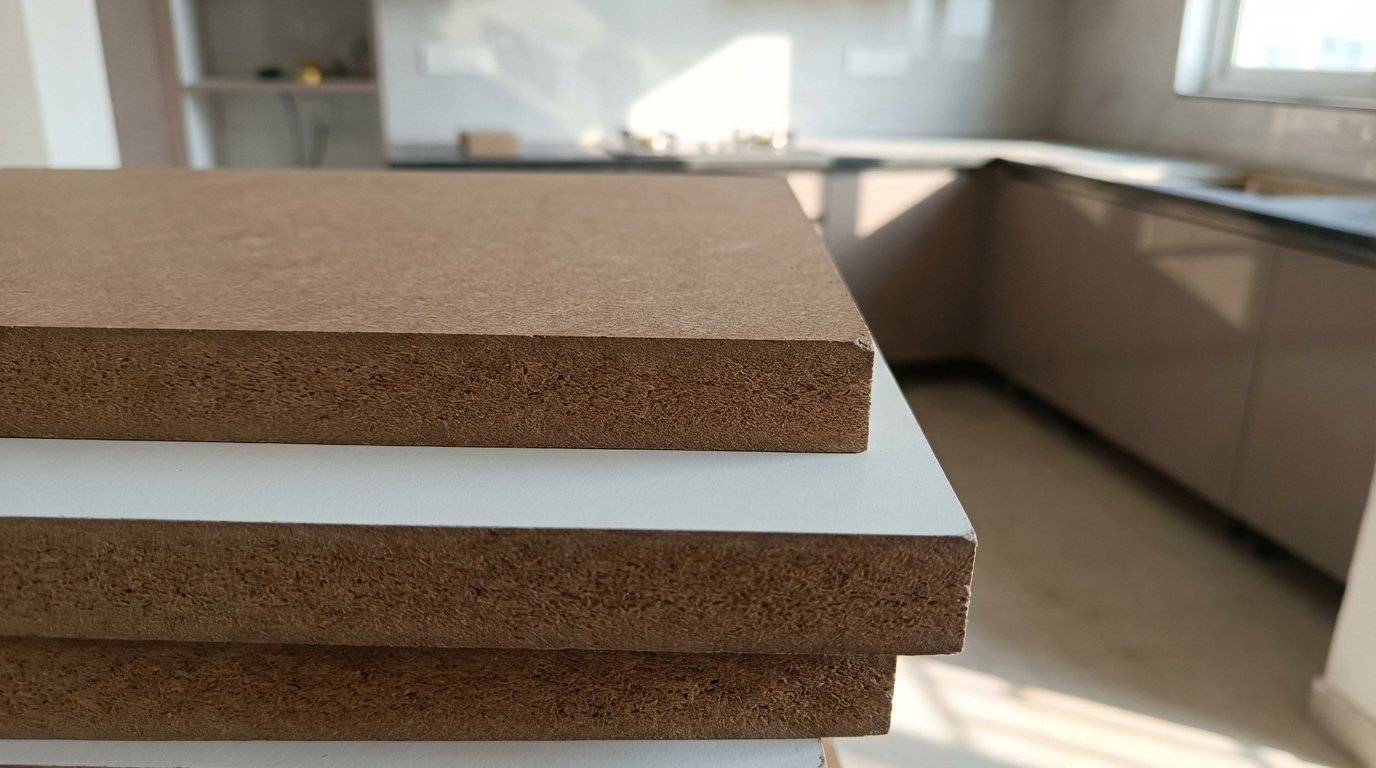
HDF door skins dominate the Indian market for good reason. With density ranging from 850-1000 kg/m³, HDF provides excellent dimensional stability and accepts embossed patterns beautifully. The moulded variants—featuring grooves, panels, and geometric designs—have become particularly popular for bedroom and living room doors where visual impact matters.
Standard HDF skins measure 2150mm × 960mm (approximately 7ft × 3.2ft), designed to fit most Indian door sizes with trimming. Thickness typically ranges from 2.7mm to 4mm, with 3mm being the sweet spot between flexibility during application and rigidity after installation.
The limitation? HDF absorbs moisture over time. In coastal cities like Mumbai, Chennai, or Kochi—or anywhere with consistent humidity above 70%—standard HDF skins may swell at edges within 2-3 years. Look specifically for "moisture-resistant HDF" or upgrade to HDHMR for such conditions.
HDHMR (High-Density High Moisture Resistance) Door Skins
HDHMR door skins represent the premium evolution of HDF technology. The manufacturing process incorporates moisture-resistant resins throughout the fibreboard—not just surface treatment—resulting in significantly better performance in humid environments.
For doors near kitchens, bathrooms (not inside—that needs PVC or WPC), or in basement apartments with dampness issues, HDHMR skins justify their 25-40% price premium over standard HDF. The density typically exceeds 870 kg/m³, providing superior screw-holding capacity if you need to re-attach handles or fittings through the skin.
PVC Door Skins
PVC skins serve a specific purpose: complete water resistance for bathroom doors, utility areas, and outdoor-facing applications. They're essentially rigid PVC sheets with printed or textured surfaces that mimic wood grain patterns.
The trade-off is aesthetic authenticity. Even high-quality PVC skins look noticeably plastic upon close inspection. They work well for bathroom doors where moisture protection trumps visual refinement, but using them on main entrance doors or bedroom doors screams "budget renovation" to design-conscious visitors.
Veneer Door Skins
Natural wood veneer skins—typically 0.5mm to 1mm actual wood bonded to MDF or HDF backing—deliver unmatched visual authenticity. Teak, walnut, oak, and ash veneers provide the warmth and grain variation that laminate and printed skins simply cannot replicate.
The cost jumps significantly (₹800-2,500 per skin), and application requires more precision to avoid visible seams. Veneer skins also need proper finishing—lacquer or PU coating—after installation to prevent moisture damage to the natural wood surface.
Door Skin Price Analysis: What You'll Actually Pay in 2026
Door skin pricing varies dramatically based on material, finish quality, brand positioning, and your purchasing channel. Here's a realistic breakdown based on current market rates across major Indian cities.
| Door Skin Type | Price Range (Per Piece) | Standard Size | Best Application |
|---|---|---|---|
| Plain HDF (Primer Coated) | ₹300-500 | 7ft × 3ft × 3mm | Budget renovation, rental properties |
| Moulded HDF (3D Designs) | ₹550-900 | 7ft × 3.5ft × 3mm | Bedrooms, living areas |
| Laminated HDF | ₹650-1,100 | 7ft × 3.5ft × 3mm | Pre-finished, minimal post-work |
| HDHMR Plain | ₹500-750 | 7ft × 3ft × 3mm | Humid areas, coastal cities |
| HDHMR Moulded | ₹750-1,200 | 7ft × 3.5ft × 3.5mm | Premium humid-area doors |
| PVC Door Skins | ₹450-800 | 7ft × 3ft × 2.5mm | Bathrooms, utility rooms |
| Natural Veneer Skins | ₹1,200-2,500 | 7ft × 3.5ft × 3mm | Main doors, premium interiors |
| Decorative Laminate Skins | ₹500-950 | 8ft × 4ft × 1mm | Modern minimalist aesthetics |
Hidden Costs to Budget For
The door skin itself represents only 60-70% of your total expenditure. Factor in:
- Adhesive: Quality wood adhesive (Fevicol SH or equivalent) costs ₹150-300 per door
- Edge banding: PVC edge strips for clean borders add ₹50-100 per door
- Finishing materials: Primer, paint, or lacquer for HDF skins runs ₹200-400 per door
- Carpenter labour: Professional application typically charges ₹300-600 per door
- Handle/hardware reinstallation: ₹100-200 if existing fittings need adjustment
Total realistic budget: Multiply your door skin cost by 1.5-2x for the complete installed cost.
Regional Considerations: Why Location Affects Your Choice
India's climate diversity means the "best" door skin varies dramatically by geography. What works perfectly in Jaipur's dry heat fails miserably in Kolkata's humidity.
Humid Coastal Regions (Mumbai, Chennai, Kochi, Visakhapatnam)
Average humidity above 65% for 8+ months annually makes standard HDF risky for long-term installations. HDHMR skins become the practical minimum for any door exposed to humid air. For bathroom-adjacent doors or homes without air conditioning, consider laminated HDHMR that doesn't require post-installation painting—paint surfaces trap moisture and accelerate swelling.
Northern Plains (Delhi-NCR, Lucknow, Chandigarh, Jaipur)
Extreme temperature variations—5°C winters to 45°C summers—stress adhesive bonds. Use flexible adhesives designed for thermal expansion, and avoid rigid PVC skins on metal doors that conduct temperature extremes. Standard HDF performs well here due to lower humidity, making this region ideal for cost-effective moulded HDF renovations.
Hill Stations and Northeast (Shimla, Darjeeling, Shillong, Gangtok)
Cold, damp conditions create condensation on interior door surfaces—especially in homes with heating systems. HDHMR with proper edge sealing prevents moisture ingress at vulnerable borders. Primer-coated skins require thorough painting including all edges to prevent moisture absorption.
Southern Peninsular (Bangalore, Hyderabad Interior Areas)
Moderate, consistent climate makes this region the easiest for door skin installations. Standard HDF works well, premium options perform excellently, and even budget skins last reasonably if applied correctly. The widest material choice flexibility exists here.
Brand Landscape: Navigating Indian Door Skin Manufacturers
Unlike plywood where established brands dominate, the door skin market features a mix of large laminate companies, specialized manufacturers, and regional players. Quality consistency varies significantly.
Established Laminate Brands with Door Skin Lines
Samrat Laminates offers their "Classic Door Skins" series with extensive design catalogues and consistent quality through their dealer network. Their laminated HDF skins come pre-finished, reducing post-installation work. Availability is strong across North and West India.
Advance Laminates focuses specifically on door renovation products with detailed application guidance. Their distribution centres in Gujarat ensure good availability in western India, though eastern regions may face supply constraints.
Merino and Greenlam—primarily laminate giants—offer door skin variants through their existing dealer networks. Quality remains consistent with their laminate reputation, though door skin-specific innovation is limited compared to specialists.
Specialized Door Skin Manufacturers
Decostic has emerged as a notable player in premium HDHMR door skins, particularly 3D moulded designs and decorative panels. Their pricing sits at the higher end (₹7,000+ for premium 12mm HDHMR skins), targeting architect and designer specifications rather than retail renovation projects.
SVS Composites based in Hyderabad manufactures composite and FRP door skins primarily for commercial and institutional applications. Their minimum order quantities (100+ units) target bulk buyers rather than individual homeowners.
Regional and Unbranded Options
Local plywood dealers across India stock door skins from smaller manufacturers—often unlabeled or regional brands. Prices run 20-35% lower than branded options. Quality varies: some perform identically to branded products (often from the same factories), while others use inferior adhesives or thinner HDF. Request material samples and check density by weight comparison before bulk purchasing.
Matching Door Skin Type to Specific Doors
Different doors in your home have different requirements. Using bathroom-grade PVC on your main entrance wastes money on unnecessary water resistance while sacrificing aesthetics. Here's a room-by-room decision framework.
Main Entrance Doors
Your entrance door faces maximum scrutiny from visitors and handles significant environmental stress (direct sunlight, rain exposure on exterior surface, temperature differentials). Prioritize:
- HDHMR base material for dimensional stability
- Laminated or lacquered finish for UV resistance
- Thicker skins (3.5-4mm) for durability
- Proper edge sealing to prevent moisture ingress
Budget allocation: This is where premium spending pays off. Allocate 40-50% more than average room doors.
Bedroom Doors
Interior bedroom doors face controlled environments—low humidity, no direct water exposure, moderate traffic. This is where moulded HDF skins shine, offering maximum design impact at reasonable cost. Primer-coated skins with custom painting allow colour matching to room interiors.
Kitchen Doors
Kitchen doors encounter steam, grease particles, and frequent cleaning with wet cloths. HDHMR with laminated finish handles these conditions better than painted HDF. Avoid natural veneer—cooking vapours damage unfinished wood surfaces over time.
Bathroom Doors (Exterior Surface)
The exterior surface of bathroom doors faces humidity spillover when doors open. HDHMR with waterproof laminate finish works well. For complete peace of mind, WPC or PVC-clad doors may be more appropriate than skin renovation—the underlying door material matters more than surface treatment in consistently wet environments.
Children's Rooms
Expect impact damage, crayon marks, sticker residue, and frequent cleaning. Laminated surfaces resist stains better than painted finishes. Avoid matte textures that trap dirt—semi-gloss or gloss laminates clean easier.
Application Methods: DIY Feasibility Assessment
Door skin application isn't complicated, but it requires patience, proper surface preparation, and methodical execution. Understanding the process helps you decide between DIY and professional installation.
Surface Preparation (Critical Step)
Existing door surface condition determines 80% of final results. Requirements:
- Remove all hardware: handles, hinges, locks, latches
- Sand existing finish to create adhesive grip (120-150 grit sandpaper)
- Fill dents, scratches, and holes with wood filler
- Clean thoroughly—remove all dust, grease, and debris
- Apply primer on porous surfaces for better adhesion
Time investment: 1-2 hours per door for proper preparation.
Adhesive Application
Use quality synthetic resin adhesive (Fevicol SH, Araldite wood adhesive, or equivalent). Apply evenly on both door surface and skin back using serrated spreader. Allow 3-5 minutes open time before positioning the skin.
Positioning and Pressing
This step requires precision—repositioning after contact damages adhesive bond. Align from one edge, gradually pressing across while smoothing out air bubbles. Use rubber roller or flat wooden board for even pressure distribution.
Edge Treatment
Trim excess skin flush with door edges using sharp utility knife. Apply PVC edge banding or wood putty for clean borders. This step distinguishes professional-looking results from amateur installations.
DIY Verdict
Confident DIYers with basic woodworking tools can achieve good results on bedroom and interior doors. Entrance doors and visible high-traffic areas benefit from professional application—the labour cost (₹300-600 per door) is worthwhile for critical doors.
Common Mistakes That Ruin Door Skin Installations
Learning from others' failures saves money and frustration. These are the recurring problems reported by homeowners and contractors:
Inadequate Surface Cleaning
Dust particles, grease films, or old polish residue prevent proper adhesive bonding. The skin may appear attached initially but develops bubbles or peeling within months. Solution: Clean with appropriate solvent, then wipe with slightly damp cloth, then dry completely before adhesive application.
Wrong Adhesive Choice
White glue (Fevicol MR) and instant adhesives don't provide the flexibility needed for door skins. Use specifically synthetic resin adhesives designed for veneer/laminate bonding. The cost difference is negligible—don't economize here.
Ignoring Edge Sealing
Exposed HDF or HDHMR edges absorb moisture like sponges. Within one monsoon season, unprotected edges swell and delaminate. Always seal edges with paint, edge banding, or dedicated edge sealant.
Applying on Damaged Doors
Door skins don't fix structural problems. Warped doors remain warped, rotted areas continue deteriorating under the skin, and poor-quality hollow doors still feel hollow. Assess underlying door condition honestly before investing in skin application.
Mismatched Skin and Door Sizes
Standard door skin sizes don't accommodate all Indian door dimensions. Older homes often have non-standard doors (28" width instead of 32", 6.5ft height instead of 7ft). Measure precisely and confirm skin dimensions before purchasing—cutting down is possible, but seams from joining multiple skins look unprofessional.
Quick Decision Guide: Which Door Skin Should You Buy?
Use this framework to narrow your choices efficiently:
Choose standard HDF moulded skins if:
- You're in a low-humidity region (Delhi, Jaipur, interior Karnataka)
- Budget optimization is priority
- The door is in a climate-controlled interior space
- You're comfortable with post-installation painting
Choose HDHMR skins if:
- You're in coastal or high-humidity areas
- The door is near kitchen or bathroom
- Long-term durability matters more than initial cost
- You want moisture warranty backing
Choose laminated/pre-finished skins if:
- You want minimal post-installation work
- Colour consistency across multiple doors matters
- You're renovating rental property (faster tenant turnover)
- Professional painter availability is limited
Choose PVC skins only if:
- The door directly faces water exposure
- Budget constraints are severe
- Aesthetic requirements are low (utility areas, bathrooms)
Choose veneer skins if:
- Authentic wood appearance is non-negotiable
- Budget allows premium investment
- You'll apply proper finishing (lacquer, PU coating)
- The door is a focal design element
Buyer Action Steps Before Purchasing
Before visiting dealers or placing orders, complete this checklist:
- Inventory your doors: Count exact numbers, measure heights and widths (don't assume standard sizes), note which face moisture-prone areas
- Assess existing door condition: Check for warping, core damage, hinge stability—door skins can't rescue structurally compromised doors
- Calculate total budget: Door skin cost × 1.8 gives realistic installed cost including adhesives, finishing materials, and labour
- Request physical samples: Online photos and catalogue images differ from actual products. Visit dealers, feel material quality, compare densities
- Verify return policies: Damaged skins during transport or cutting errors happen. Understand replacement terms before purchasing
- Plan installation timing: Avoid monsoon months in humid regions—high humidity during application weakens adhesive bonds. Winter months work best across most of India
Door skin renovation delivers remarkable value when material selection matches your specific conditions and application is executed properly. The difference between a ₹400 budget skin failing within two years and a ₹800 quality skin lasting a decade often comes down to these selection and application decisions—not just price alone.
Disclaimer: This content is provided for general informational purposes based on industry practices and publicly available information. Product specifications, standards, prices, and availability may vary by manufacturer, region, and time. Readers should independently verify details with manufacturers, dealers, or qualified professionals before making purchase or construction decisions.