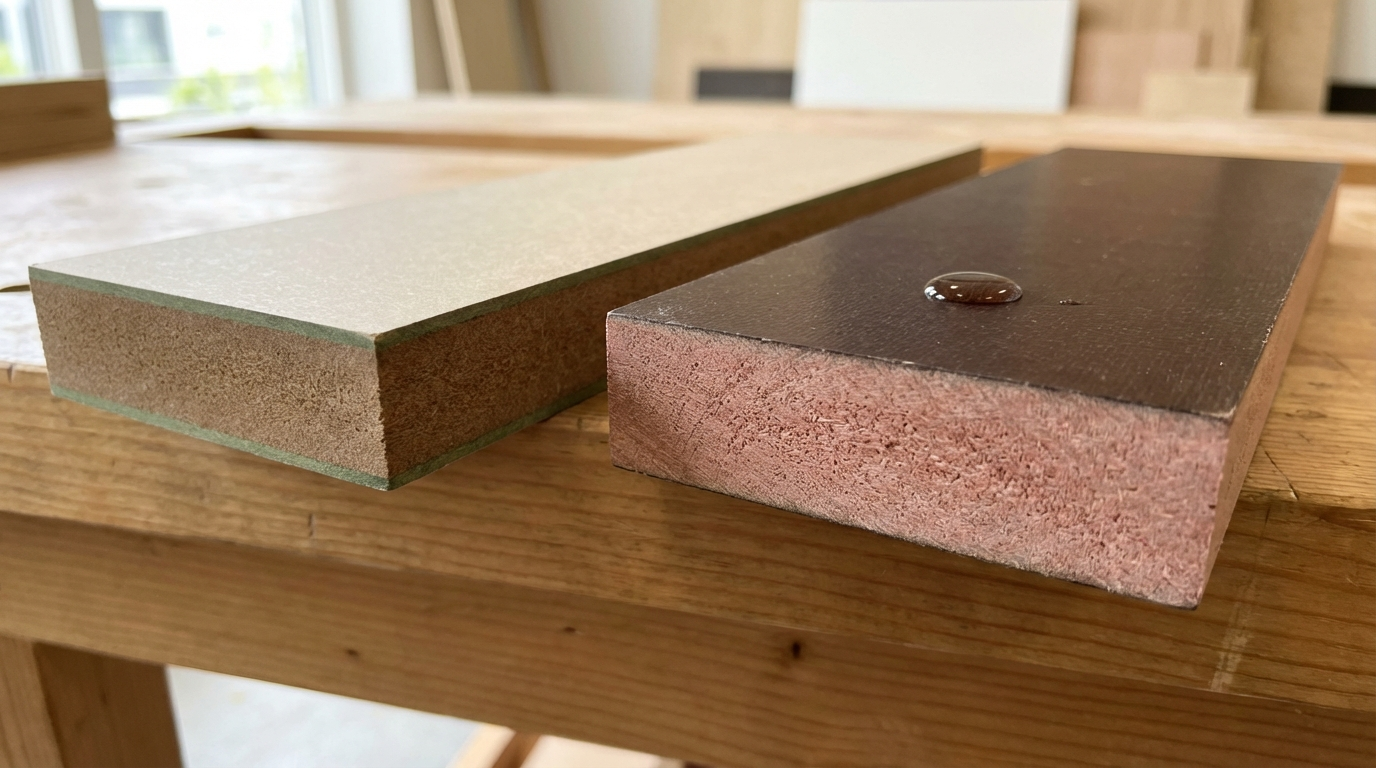
Why Waterproof Boards Matter More Than Ever in Indian Interiors
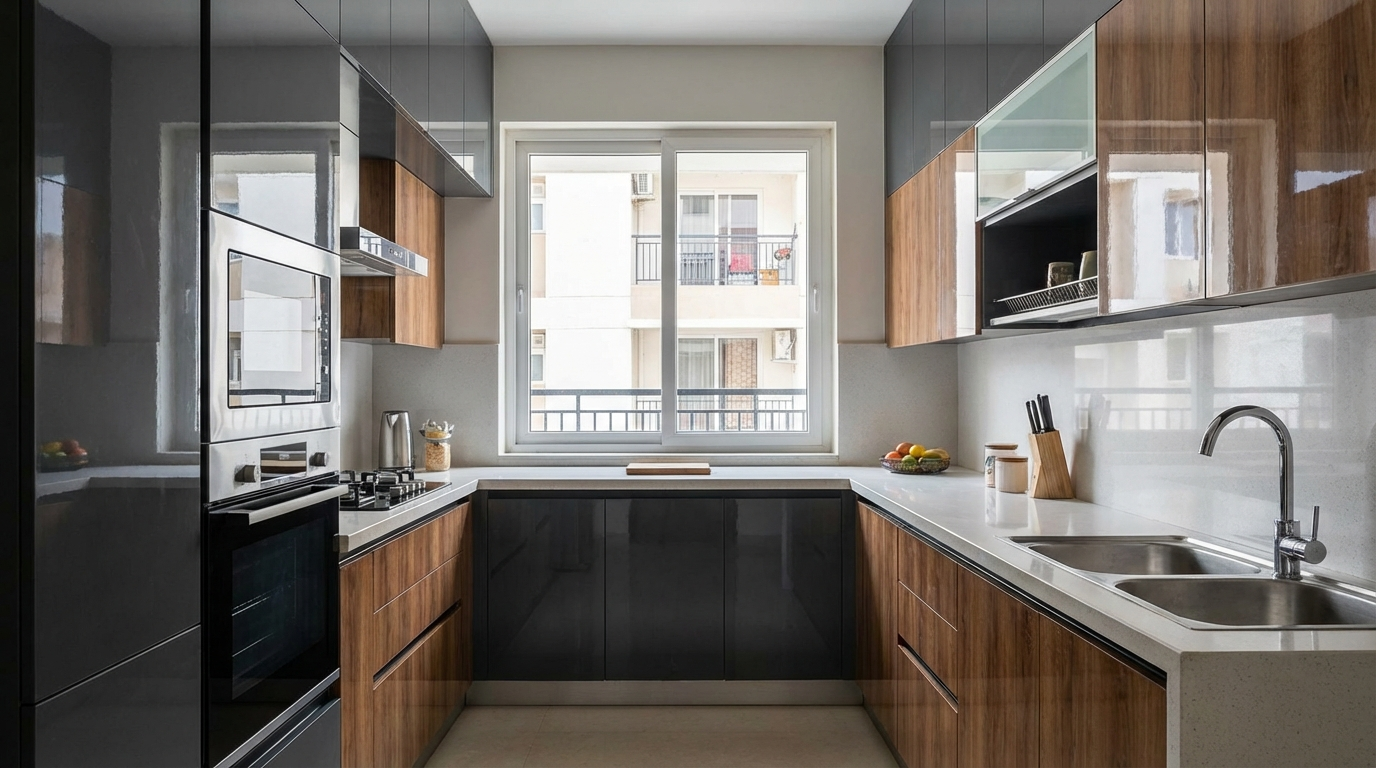
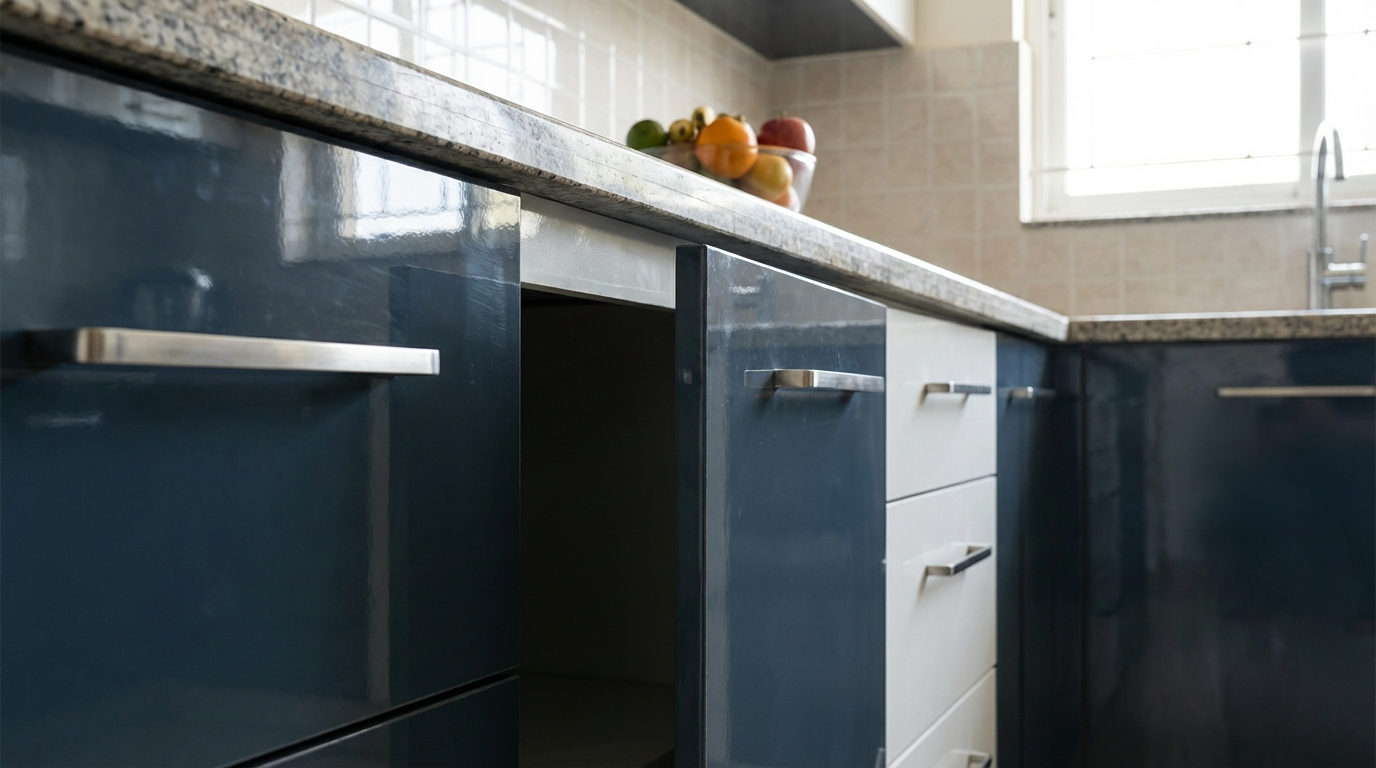
Your kitchen sink cabinet just started swelling after two monsoon seasons. The bathroom vanity doors won't close properly anymore. Sound familiar? These failures happen because someone chose the wrong board for wet areas—a mistake that costs thousands in replacements and weeks of disruption.
In 2026, Indian homeowners and contractors face a critical decision: which board actually survives moisture without breaking the bank? Two materials dominate this conversation—HDF (High Density Fiberboard) and Boilo BWP (Boiling Water Proof) boards. Both claim waterproof credentials. Both come at different price points. And choosing wrong means watching your cabinetry deteriorate within years instead of decades.
This guide cuts through marketing claims to give you actual performance data, real pricing context, and decision frameworks based on where moisture actually attacks your furniture. Whether you're a homeowner planning a modular kitchen, a contractor specifying materials, or an architect balancing performance with budget—you'll find answers that manufacturer brochures conveniently skip.
What Exactly Are HDF and Boilo BWP Boards?
HDF Board: The Engineered Fiberboard Approach
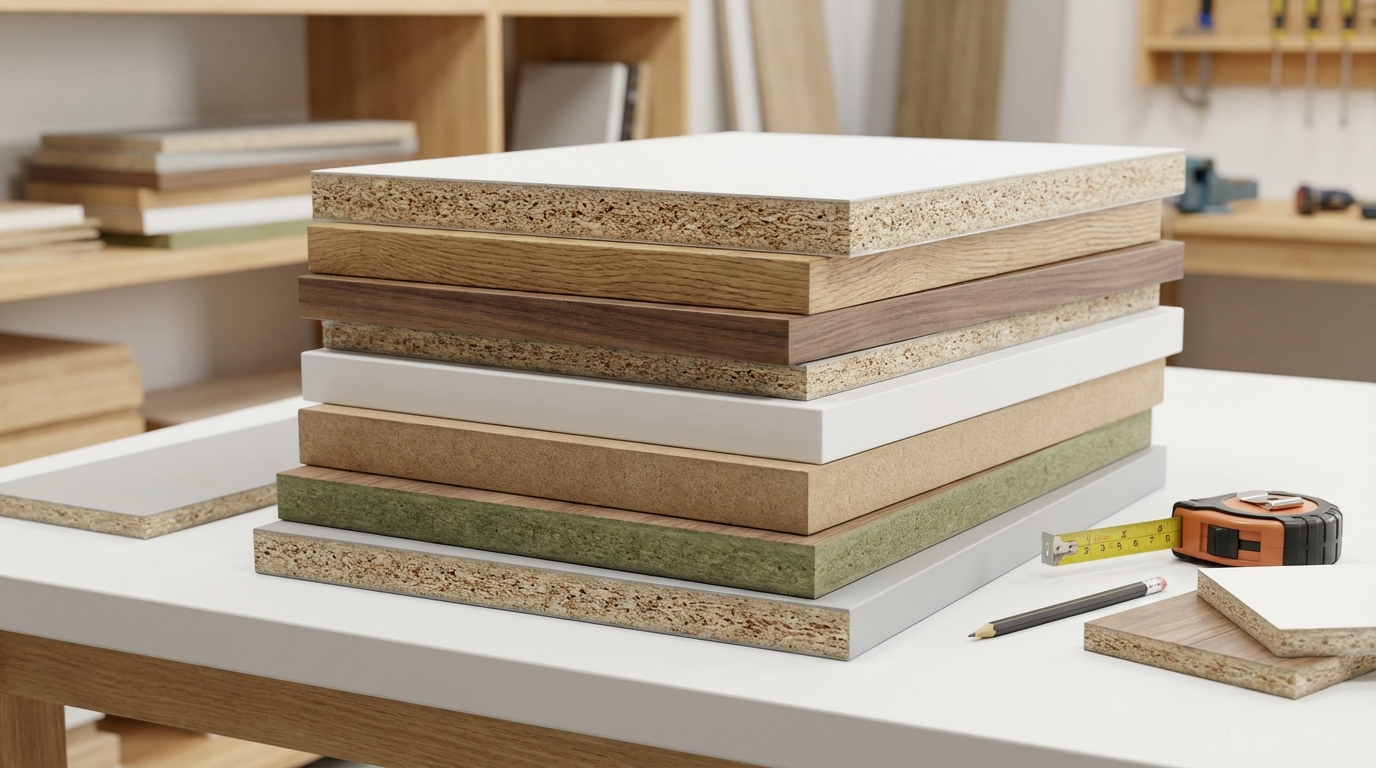
HDF (High Density Fiberboard) is an engineered wood panel made by breaking down hardwood or softwood into fibres, combining them with resin binders, and compressing under extreme heat and pressure. The result is a homogeneous board with density typically ranging from 800–1000 kg/m³ for standard HDF, making it significantly denser than MDF (Medium Density Fiberboard).
HDF board is a compressed fiberboard with uniform density throughout its thickness, offering excellent dimensional stability and a smooth surface ideal for lamination and painting. Unlike plywood's layered veneer structure, HDF has no grain direction, which eliminates warping tendencies but also means different mechanical properties.
Standard HDF comes in moisture-resistant variants (often marketed with "MR" or "HMR" designations), but these should not be confused with truly waterproof grades. The moisture resistance in regular HDF comes from modified resins that slow water absorption—they don't prevent it entirely.
Boilo BWP: Action Tesa's Waterproof HDF Innovation
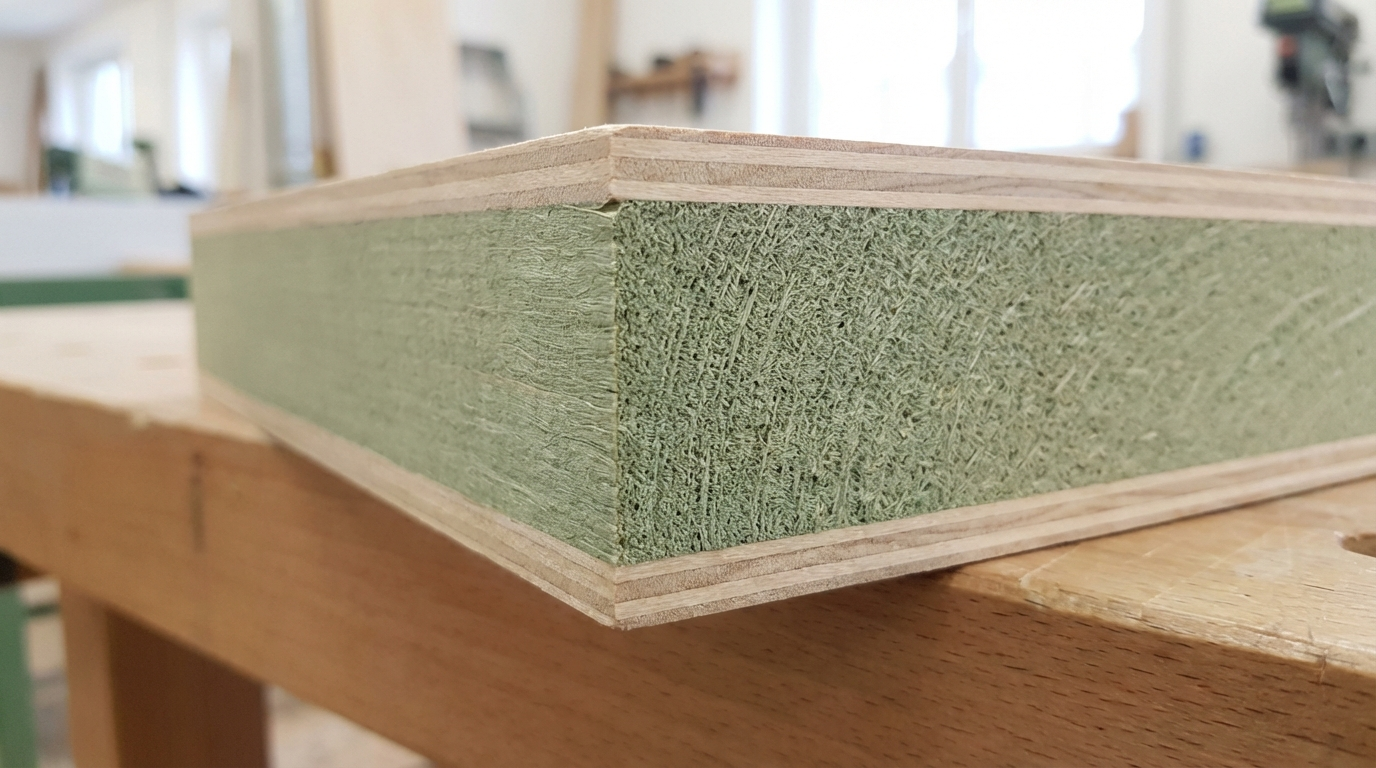
Boilo is Action Tesa's branded BWP (Boiling Water Proof) HDF board, engineered specifically for wet area applications. What sets it apart from standard HDF is its composition and testing standard—Boilo uses phenolic resins and achieves density exceeding 1000 kg/m³, with surface density reaching approximately 1180 kg/m³ according to manufacturer specifications.
Boilo BWP is a high-density HDF board designed to pass boiling water tests, combining the machinability of fiberboard with moisture resistance approaching marine plywood standards. It's also fire-retardant (FR), conforming to IS:5509 standards—a feature that standard HDF lacks entirely.
The "BWP" designation means the board's adhesive system can withstand boiling water exposure without delamination or significant strength loss. This positions Boilo as a direct competitor to marine plywood (IS 710) for wet area applications, but with the surface smoothness and routing capability of engineered boards.
Waterproof Board Price Comparison: 2026 Market Reality
Price varies significantly based on brand, thickness, region, and whether you're buying retail or wholesale. These ranges reflect current market conditions across major Indian cities—always verify locally before finalising specifications.
| Board Type | Thickness | Sheet Size | Price Range (₹/sheet) | Price Range (₹/sq ft) |
|---|---|---|---|---|
| Standard HDF (MR grade) | 8 mm | 8×4 ft | ₹1,400–₹1,900 | ₹44–₹60 |
| Standard HDF (MR grade) | 12 mm | 8×4 ft | ₹2,000–₹2,600 | ₹62–₹81 |
| HDHMR (High Moisture Resistance) | 18 mm | 8×4 ft | ₹2,200–₹3,200 | ₹69–₹100 |
| Boilo BWP HDF | 12 mm | 8×6 ft | ₹3,800–₹4,800 | ₹79–₹100 |
| Boilo BWP HDF | 18 mm | 8×4 ft | ₹4,200–₹5,500 | ₹131–₹172 |
| Marine Plywood (BWP IS 710) | 19 mm | 8×4 ft | ₹3,000–₹6,000+ | ₹94–₹188+ |
Understanding the Price Premium
Boilo BWP commands a 40–70% premium over standard HDHMR boards of similar thickness. This premium reflects three factors: the phenolic resin system (more expensive than urea-formaldehyde), the higher density achieved during manufacturing, and the fire-retardant additives included in the formulation.
However, comparing Boilo to marine plywood reveals interesting value dynamics. In the 18–19mm range crucial for cabinet carcasses, Boilo often matches or slightly undercuts premium marine plywood brands while offering superior surface smoothness. The decision then becomes: do you need marine plywood's proven 72-hour boiling water performance, or is Boilo's BWP certification sufficient for your application?
Regional Price Variations
Prices in metro cities like Mumbai, Delhi, and Bangalore typically run 8–15% higher than tier-2 cities due to real estate costs affecting dealer margins. Coastal cities (Chennai, Kochi, Kolkata) sometimes see higher demand for waterproof boards, affecting availability more than price. Always factor in GST (18% on boards) and transportation when comparing quotes.
Head-to-Head: HDF vs Boilo BWP Performance Comparison
| Parameter | Standard HDF (MR) | Boilo BWP HDF | Winner For Wet Areas |
|---|---|---|---|
| Density | 800–950 kg/m³ | 1000–1180 kg/m³ | Boilo BWP |
| Water Resistance | Moisture resistant (slows absorption) | Boiling water proof (resists penetration) | Boilo BWP |
| Fire Retardancy | None | IS:5509 compliant | Boilo BWP |
| Surface Smoothness | Excellent | Excellent | Tie |
| Screw Holding | Good | Very Good (higher density) | Boilo BWP |
| CNC Routing | Excellent | Excellent | Tie |
| Weight per Sheet | Moderate | Heavy | Standard HDF (easier handling) |
| Price | Budget-friendly | Premium | Standard HDF (cost-sensitive projects) |
| Termite Resistance | Good | Excellent (borer proof certified) | Boilo BWP |
| Edge Swelling Risk | Moderate (needs sealing) | Low (needs sealing) | Boilo BWP |
The Weight Factor: A Practical Consideration
Boilo's higher density translates to heavier panels. An 18mm Boilo sheet weighs approximately 15–20% more than equivalent HDHMR. This affects hardware selection—soft-close hinges, gas lifts, and drawer slides must be rated for higher loads. Carpenters unfamiliar with BWP HDF sometimes undersize hardware, leading to premature hinge failures on tall shutters.
Edge Behaviour Under Moisture Stress
Both standard HDF and Boilo BWP share a common vulnerability: cut edges. Despite Boilo's BWP core, exposed edges can still absorb moisture through capillary action if left unsealed. The difference is that Boilo's edges swell less and recover better once dried, while standard HDF edges may permanently distort after significant moisture exposure.
Critical rule for both materials: every cut edge, drill hole, and routing groove must be sealed with edge banding, PU sealant, or epoxy—especially in wet zones.
Best Applications: Where Each Board Type Excels
When Standard HDF Makes Sense
Standard HDF (including MR variants) performs reliably in controlled indoor environments with normal humidity levels. Choose it for:
- Bedroom wardrobes – Humidity exposure is minimal; the smooth surface takes laminates beautifully
- Living room TV units and bookshelves – No water contact; cost savings are significant
- Office furniture and partitions – Climate-controlled environments pose no moisture threat
- Wall panelling in dry areas – Excellent dimensional stability prevents warping
- Flooring underlayment – Thinner HDF works well under laminate flooring
The key question: will this board ever face standing water, persistent humidity above 70%, or regular splashing? If the answer is no, standard HDF delivers excellent value without overengineering.
When Boilo BWP Is Worth the Premium
Boilo BWP justifies its cost in applications where moisture exposure is certain or probable:
- Under-sink kitchen cabinets – The highest-risk zone in any kitchen; plumbing leaks happen
- Bathroom vanity units – Persistent humidity, splashing, and potential floor puddling
- Balcony storage units – Exposed to rain ingress and humid outdoor air
- Kitchen base units near dishwashers – Steam and condensation accumulate
- Utility area cabinetry – Washing machines and utility sinks create wet environments
- Restaurant and commercial kitchen furniture – High-traffic wet cleaning routines
- Hospital and laboratory casework – Frequent sanitisation with liquid cleaners
The Hybrid Specification Strategy
Experienced contractors increasingly specify materials zone-by-zone rather than using one board throughout. This approach optimises both performance and cost:
- Under-sink and wet base units: Boilo BWP or marine plywood carcass
- Kitchen shutters and drawer fronts: HDHMR (visible, needs smooth finish, lower water risk)
- Upper kitchen cabinets: Standard HDF or HDHMR (rarely exposed to direct water)
- Tall pantry units away from sink: HDHMR (humidity only, no immersion risk)
This hybrid approach typically reduces total board costs by 15–25% compared to specifying BWP throughout, while concentrating waterproof performance where failures actually occur.
Boilo BWP vs Marine Plywood: The Wet Area Showdown
For seriously wet applications, the real comparison is between Boilo BWP and marine plywood (IS 710). Both claim boiling water proof credentials—how do they actually differ?
Testing Standards and What They Mean
Marine plywood conforming to IS 710 undergoes a 72-hour boiling test where samples are boiled continuously and must maintain specified bond strengths without delamination. This is an extreme test simulating decades of moisture exposure compressed into hours.
Boilo BWP undergoes BWP testing as well, but the exact protocol and duration aren't always specified equivalently to IS 710's 72-hour requirement. This doesn't mean Boilo fails—it means the testing regimes aren't directly comparable. For most residential applications, both exceed practical requirements significantly.
Construction Differences
Marine plywood's cross-laminated veneer construction gives it inherent advantages in certain scenarios:
- Impact resistance: Veneer layers distribute impact forces better than homogeneous fiberboard
- Screw holding in edge grain: Plywood accepts screws into edges more reliably
- Structural spanning: Cross-grain construction resists bending across longer spans
Boilo BWP's homogeneous construction offers different advantages:
- Surface smoothness: No grain telegraphing through laminates; paint finishes are flawless
- CNC routing precision: Complex profiles and designs machine cleanly
- No delamination possibility: Without veneer layers, there's nothing to separate
- Consistent density: No voids or overlaps that can occur in lower-quality plywood
Decision Framework: BWP HDF or Marine Plywood?
Choose Boilo BWP when:
- Surface finish quality is paramount (high-gloss shutters, painted finishes)
- Complex routing or CNC work is planned
- The application is primarily vertical (shutters, panels, partitions)
- Fire retardancy is required or valued
Choose Marine Plywood when:
- The board forms a structural base that must span distances (floor of cabinet)
- Direct, prolonged water immersion is possible (not just humidity)
- Edge screwing is essential to the construction method
- Proven 72-hour boiling performance is specified
Installation and Fabrication Guidelines
Working with Boilo BWP: Carpenter's Notes
Boilo's high density affects fabrication in practical ways that standard HDF or HDHMR workers should anticipate:
Cutting: Standard circular saw blades work, but carbide-tipped blades last significantly longer. The dense material dulls steel blades quickly. Feed rate should be moderate—pushing too fast causes edge chipping.
Drilling: Pre-drilling for screws is essential, not optional. The density that gives excellent screw holding also means driving screws directly can split the board or strip threads. Use drill bits 1mm smaller than screw shank diameter.
Routing: Boilo routes beautifully for profiles and designs. However, router bits heat up faster due to the density—take multiple shallow passes rather than single deep cuts to prevent scorching.
Hardware mounting: Factor in the board's weight when selecting hinges, lifts, and slides. A standard two-hinge setup for a 600mm tall shutter in HDHMR may need three hinges in Boilo BWP to prevent sagging over time.
Edge Sealing: The Non-Negotiable Step
Both HDF variants require meticulous edge treatment in wet areas. Options include:
- PVC edge banding: 1mm or 2mm PVC applied with hot-melt adhesive; most common for visible edges
- ABS edge banding: Similar to PVC but more environmentally friendly
- Polyurethane sealant: Clear PU applied to hidden edges and cutouts
- Epoxy coating: For maximum protection on sink cutouts and plumbing penetrations
- Silicone bead: Behind sinks and along countertop joints where water pools
The weakest point in any cabinet is where the sink cut-out meets the countertop. Apply generous sealant here, and re-inspect annually—especially if you notice any bubbling or lifting in adjacent laminate surfaces.
Quick Decision Guide: Choosing Your Waterproof Board
Use this flowchart logic to select the right board for each application:
Step 1: Assess Moisture Exposure Level
Low exposure (dry rooms, climate-controlled spaces): Standard HDF or MDF is sufficient. Save your budget.
Medium exposure (humid areas, occasional splashing, kitchens away from sink): HDHMR provides good protection at reasonable cost.
High exposure (under-sink, bathrooms, utility areas, balconies): Proceed to Step 2.
Step 2: Determine Primary Function
Primarily shutters, panels, or decorative elements: Boilo BWP—surface quality and routing capability matter.
Primarily carcass, shelves, or load-bearing structure: Consider marine plywood for base units, Boilo BWP for sides and backs.
Floor-touching or submersion-risk elements: Marine plywood (IS 710) is safest.
Step 3: Evaluate Budget Constraints
If budget is constrained: Use hybrid specification—BWP only where essential, HDHMR elsewhere.
If budget allows: Specify BWP throughout wet zones for consistency and future protection.
Common Mistakes and How to Avoid Them
Mistake 1: Assuming "Waterproof" Means Invincible
Even Boilo BWP and marine plywood have limits. "Boiling water proof" refers to adhesive integrity under extreme testing—it doesn't mean the board can sit in standing water indefinitely without consequence. Always design for drainage: slope base shelves slightly, install drip trays under sinks, and ensure ventilation in enclosed cabinets.
Mistake 2: Skipping Edge Sealing on "Waterproof" Boards
The most common fabrication error. Cut edges on any wood-based panel—including BWP grades—are more absorbent than faces. Unsealed edges can wick moisture into the board core over time, compromising the very waterproofing you paid for.
Mistake 3: Using Standard Hardware on Heavy BWP Panels
Boilo's density means weight. A 600×2100mm shutter in 18mm Boilo BWP weighs substantially more than the same shutter in 18mm HDHMR. Soft-close hinges rated for 8kg shutters will fail prematurely. Upgrade hardware proactively rather than reactively.
Mistake 4: Ignoring Ventilation
Enclosed under-sink cabinets trap humid air from plumbing condensation and minor drips. This persistent humidity stresses even BWP materials over years. Install ventilation holes in concealed plinths, or use open-frame designs where aesthetics permit.
Mistake 5: Buying on Price Alone Without Verification
Counterfeit and substandard boards exist in Indian markets. A "BWP" stamp means nothing if the board wasn't actually manufactured to BWP specifications. Purchase from authorised dealers, verify ISI marks where applicable, and request test certificates for large orders.
Maintenance for Maximum Lifespan
Routine Care
- Wipe up spills immediately – Even on BWP surfaces, standing water shouldn't become permanent
- Check under-sink areas monthly – Catch slow leaks before they cause damage
- Ensure adequate ventilation – Open cabinet doors periodically in humid weather
- Re-seal edges after modifications – If you add new holes or cutouts, seal them
Annual Inspection Checklist
- Check all edge banding for lifting or peeling
- Inspect sink cutout perimeter for sealant integrity
- Test hinge and hardware tightness
- Look for swelling or discolouration at board edges
- Verify plinth and floor clearances haven't been compromised
Buyer's Action Plan: Getting the Right Board at the Right Price
Before Visiting Dealers
- Map your moisture zones: List every cabinet and classify as low/medium/high moisture risk
- Decide on hybrid or uniform specification: Hybrid saves money; uniform simplifies procurement
- Calculate sheet requirements: Standard 8×4 ft sheets yield approximately 28–30 sq ft of usable material after cutting waste
At the Dealer
- Request specific brand and grade: Don't accept substitutes without understanding the differences
- Verify markings and documentation: Check stamps, batch numbers, warranty cards
- Compare multiple quotes: Get written quotes from 2–3 dealers for identical specifications
- Ask about bulk pricing: Orders exceeding 10 sheets often qualify for 5–10% discounts
During Fabrication
- Supervise edge sealing: This step is frequently rushed or skipped—insist on proper execution
- Verify hardware ratings: Check that hinge and lift specifications match panel weights
- Inspect before lamination: Once laminated, board defects become invisible
After Installation
- Document your specifications: Keep records of board types, brands, and locations for future reference
- Schedule annual inspections: Catching problems early prevents catastrophic failures
- Maintain sealant and hardware: Replace worn components before they fail completely
Choosing between HDF and Boilo BWP isn't about finding the "best" board—it's about matching material capabilities to actual exposure conditions. Standard HDF excels in dry environments at budget-friendly prices. Boilo BWP earns its premium in zones where moisture is inevitable. And for many projects, the smartest specification uses both strategically.
Your cabinets should outlast your next renovation. Specify thoughtfully, seal edges religiously, maintain proactively—and that swelling under-sink cabinet becomes someone else's problem, not yours.
Disclaimer: This content is provided for general informational purposes based on industry practices and publicly available information. Product specifications, standards, prices, and availability may vary by manufacturer, region, and time. Readers should independently verify details with manufacturers, dealers, or qualified professionals before making purchase or construction decisions.