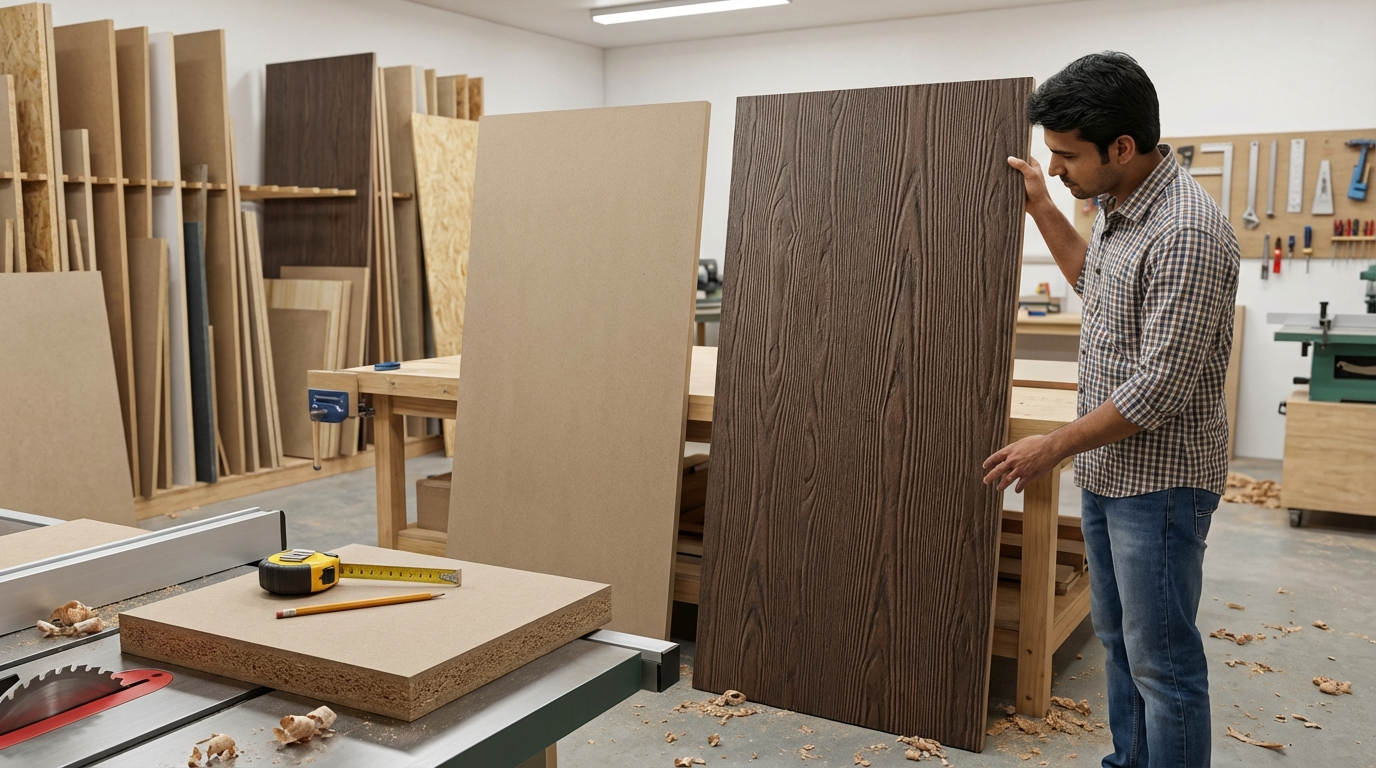
What Is an HDF Panel? Understanding High-Density Fiberboard
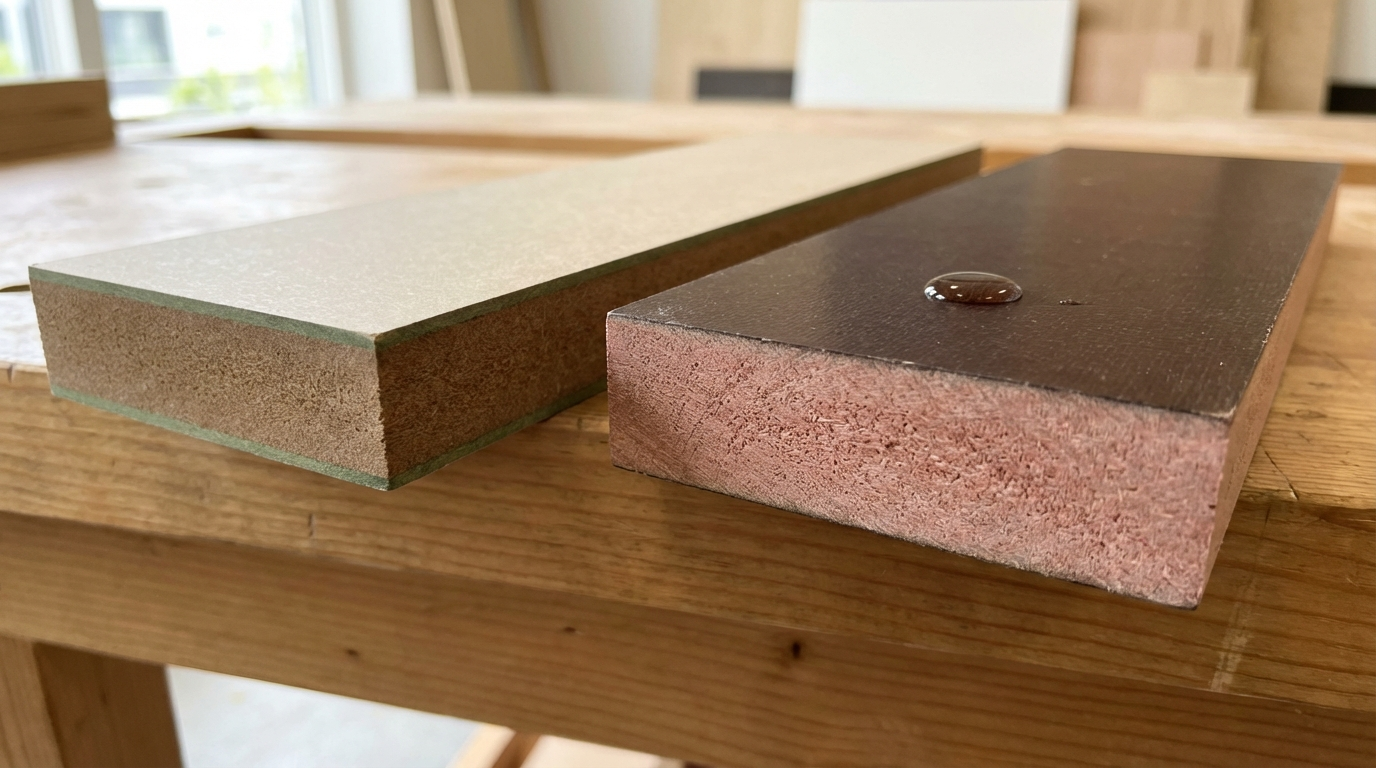
HDF (High-Density Fiberboard) is an engineered wood panel made by compressing wood fibres under extreme heat and pressure with synthetic resins. The result is a board with density typically ranging from 800–900 kg/m³—significantly denser than MDF (Medium-Density Fiberboard) which sits around 600–750 kg/m³.
This density difference isn't just a number on a spec sheet. It translates to harder surfaces, better screw retention, improved impact resistance, and superior performance under foot traffic. That's why HDF panels have become the substrate of choice for laminate flooring across India and increasingly for wall applications and furniture components where durability matters.
Key distinction: While MDF and HDF share similar manufacturing processes, HDF undergoes higher compression during production. This creates a panel that can withstand loads and wear that would damage standard MDF within months.
HDF Panel Types: Plain, Laminated, and Embossed Variants
Not all HDF panels serve the same purpose. The Indian market offers three primary categories, each engineered for specific applications:
Plain HDF Panels
These are raw, unfinished HDF boards sold without any surface treatment. They're used primarily as:
- Substrates for custom lamination or veneer application
- Backing material for furniture and cabinetry
- Base layer for flooring installations
- DIY projects where custom finishing is required
Plain HDF typically costs ₹45–65 per sq ft for 8mm thickness and ₹55–80 per sq ft for 12mm, depending on brand and region. The lower price point makes it attractive for projects where the surface won't be visible or where you're applying your own finish.
Laminated HDF Panels
Factory-laminated HDF comes with a decorative paper layer fused to the surface using heat and pressure. This laminate layer provides:
- Scratch and abrasion resistance (rated by AC classes for flooring)
- Decorative finishes—wood grains, stone patterns, solid colours
- Moisture protection on the surface (though edges remain vulnerable)
- Ready-to-install convenience
Laminated HDF panels dominate the Indian laminate flooring market. Prices range from ₹70–150 per sq ft depending on the laminate quality, AC rating, and brand reputation.
Embossed HDF Boards
Embossed HDF represents the premium tier. During manufacturing, the surface is textured to replicate the feel of real wood grain, stone, or other patterns. This creates what's called "Embossed-in-Register" (EIR) when the texture aligns perfectly with the printed pattern beneath.
What makes embossed HDF different: Run your hand across a standard laminated panel and it feels uniformly smooth. Embossed HDF actually has physical grooves and ridges that mimic natural wood texture. This tactile authenticity commands a premium—typically ₹100–180 per sq ft for quality embossed flooring panels.
Embossed HDF Board: Technical Specifications and Quality Markers
When evaluating embossed HDF boards, several technical parameters determine performance and longevity:
| Parameter | Standard HDF | Premium Embossed HDF | Why It Matters |
|---|---|---|---|
| Core Density | 800–850 kg/m³ | 850–920 kg/m³ | Higher density = better dent resistance |
| Thickness | 6mm, 8mm | 8mm, 10mm, 12mm | Thicker panels absorb impact better |
| AC Rating (flooring) | AC3–AC4 | AC4–AC5 | Higher rating = more traffic tolerance |
| Surface Texture | Smooth or light texture | Deep EIR texturing | Affects visual realism and slip resistance |
| Moisture Resistance | Standard (swells >15%) | Enhanced (swells 8–12%) | Critical for Indian humidity conditions |
| Formaldehyde Class | E1 | E0 or E1 | E0 has lower emissions—safer for bedrooms |
Understanding AC Ratings for HDF Flooring
AC (Abrasion Class) ratings specifically apply to laminated HDF flooring and indicate wear resistance:
- AC1: Light residential—bedrooms with minimal traffic
- AC2: General residential—living rooms, dining areas
- AC3: Heavy residential / light commercial—busy homes, small offices
- AC4: General commercial—retail stores, restaurants, busy offices
- AC5: Heavy commercial—malls, public buildings, high-traffic zones
For Indian homes, AC3 is the minimum sensible choice. The cost difference between AC3 and AC4 is typically ₹15–25 per sq ft—worth the investment considering India's tendency toward multi-generational households with higher foot traffic than Western homes.
Where HDF Panels Excel: Application Guide
Laminate Flooring (Primary Application)
HDF's original and still dominant use case. The panel's density allows it to handle the compression cycles of walking without denting or delaminating. In India, HDF-core laminate flooring has largely displaced solid wood flooring in the ₹70–200 per sq ft segment because:
- Installation is faster (click-lock systems vs. nail-down hardwood)
- Maintenance is simpler (no polishing, no refinishing)
- Cost is 40–60% lower than equivalent-look hardwood
- Termite resistance is inherent (no natural wood to attract borers)
Caution for Indian conditions: Standard HDF flooring struggles in consistently humid environments like coastal cities or ground-floor installations without moisture barriers. For Chennai, Mumbai, or Kolkata projects, specify HDF with enhanced moisture resistance (look for "water-resistant core" or "HDF-WR" designations) or consider alternatives like SPC (Stone Plastic Composite) flooring.
Wall Panelling and Cladding
Embossed HDF panels have gained traction for accent walls and full-room cladding. Advantages over alternatives:
- Lighter than solid wood—easier wall mounting, less structural stress
- More affordable than veneer or solid timber panels
- Available in consistent patterns—no natural wood variation to match
- Can be installed over existing walls without major prep work
For wall applications, 6mm or 8mm HDF suffices since there's no load-bearing requirement. This keeps material costs around ₹50–80 per sq ft for plain panels or ₹80–120 for pre-laminated decorative options.
Furniture Components
HDF serves specific roles in furniture manufacturing:
- Drawer bottoms: 3mm–6mm HDF provides smooth, durable bases
- Cabinet backs: Better rigidity than hardboard at similar thickness
- Door skins: Smooth surface accepts paint or laminate uniformly
- Shelving substrates: Under veneer or laminate for flat-pack furniture
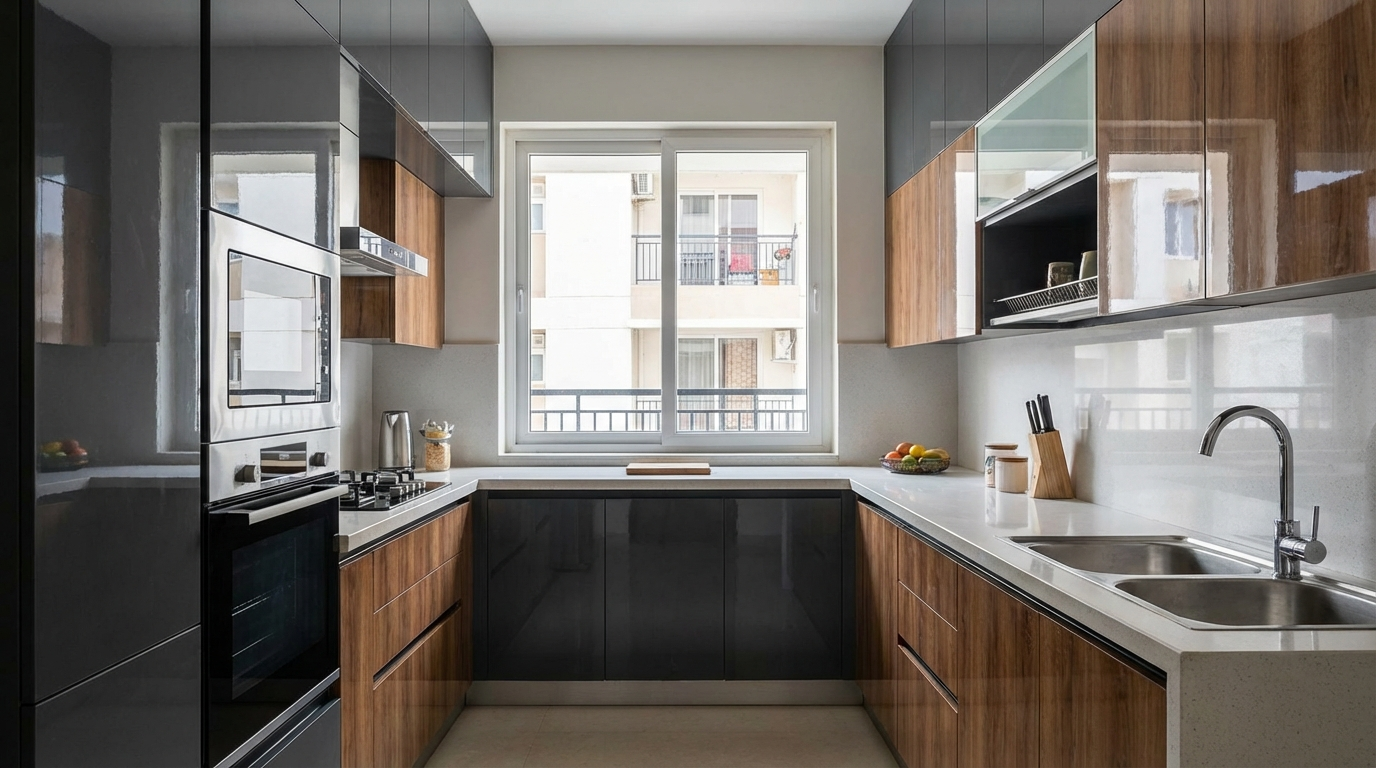
However, HDF is not recommended for primary furniture structure. For cabinet carcasses, wardrobe boxes, or load-bearing shelves, HDHMR (High-Density High-Moisture Resistant) boards are the better choice—they offer similar density with significantly better moisture tolerance and screw-holding in structural applications.
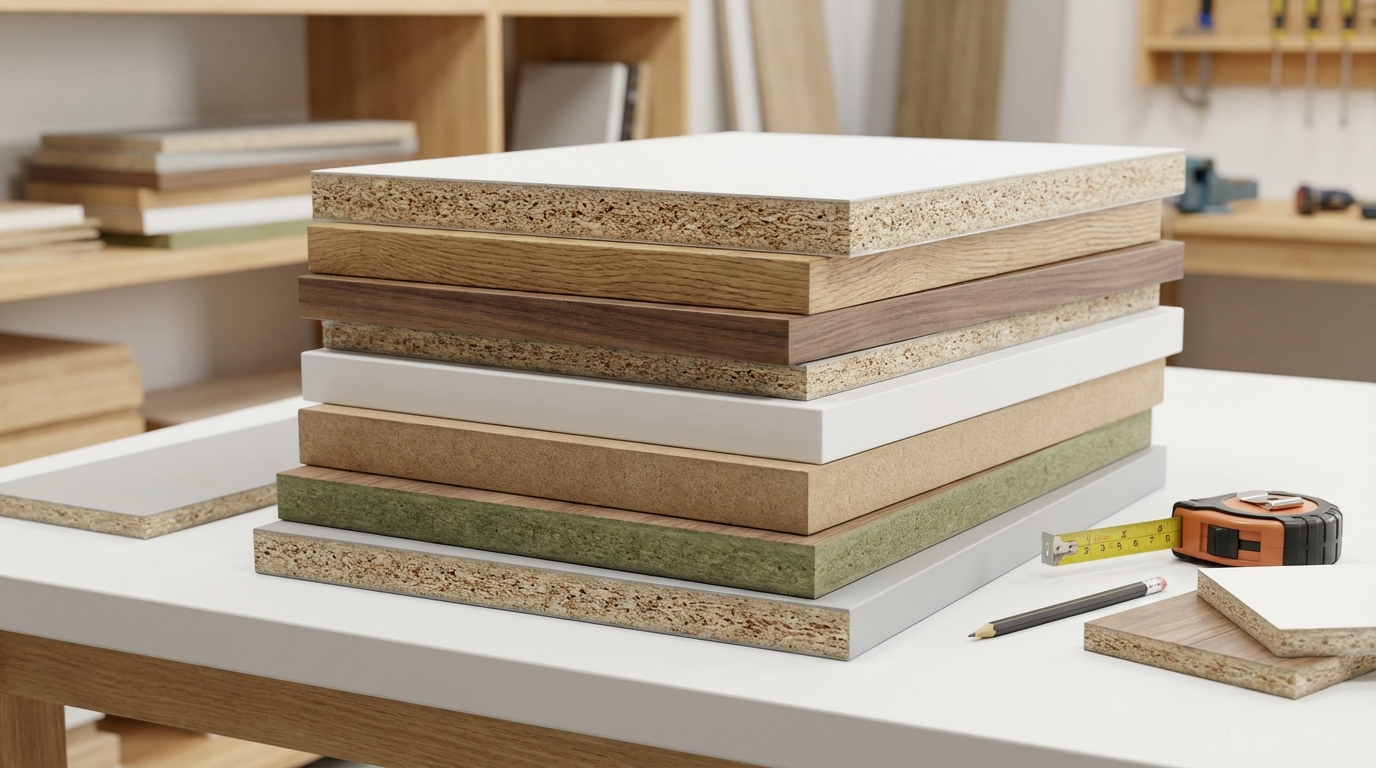
HDF vs HDHMR vs MDF: Choosing the Right Board
The confusion between these three board types costs Indian buyers money when they select the wrong material. Here's how to think about each:
| Factor | MDF | HDF | HDHMR |
|---|---|---|---|
| Density | 600–750 kg/m³ | 800–900 kg/m³ | 850–900 kg/m³ |
| Moisture Resistance | Poor (swells quickly) | Moderate (better than MDF) | High (treated resins) |
| Typical Price (18mm) | ₹35–50 per sq ft | ₹50–75 per sq ft | ₹80–110 per sq ft |
| Best For | Painted furniture, decorative panels | Flooring cores, door skins, backing | Kitchen cabinets, wardrobes, bathrooms |
| Screw Holding | Adequate (face), weak (edges) | Good overall | Excellent (designed for hardware) |
| Termite Resistance | Low | Moderate | High (treated) |
Decision logic:
- Choose MDF when budget is tight, the application is purely decorative, and moisture exposure is zero
- Choose HDF when you need a hard, wear-resistant surface—flooring, door skins, thin backing panels
- Choose HDHMR when building furniture that needs to last—kitchens, bathrooms, wardrobes, any humid environment
HDF Panel Prices in India: 2026 Market Rates
Pricing varies significantly based on type, thickness, brand, and regional availability. The following represents typical dealer rates across major Indian cities:
Plain HDF Panels
| Thickness | Price Range (₹/sq ft) | Approx. Sheet Cost (8×4 ft) |
|---|---|---|
| 3mm | ₹25–35 | ₹800–1,120 |
| 6mm | ₹40–55 | ₹1,280–1,760 |
| 8mm | ₹50–65 | ₹1,600–2,080 |
| 12mm | ₹60–80 | ₹1,920–2,560 |
Laminated HDF Flooring
| Category | AC Rating | Price Range (₹/sq ft) |
|---|---|---|
| Budget | AC3 | ₹55–80 |
| Mid-range | AC3–AC4 | ₹85–120 |
| Premium | AC4 | ₹125–160 |
| Designer/Embossed | AC4–AC5 | ₹150–200+ |
Embossed HDF Panels (Decorative)
| Application | Thickness | Price Range (₹/sq ft) |
|---|---|---|
| Wall panels | 6–8mm | ₹80–130 |
| Premium wall cladding | 8–10mm | ₹120–180 |
| Door skins (embossed) | 3–4mm | ₹45–70 |
Regional price variations: Expect 5–10% higher prices in Tier-2 cities compared to metros due to transportation costs. Coastal cities like Chennai and Mumbai may see premium pricing for moisture-resistant variants.
How to Choose the Right HDF Panel: Quick Decision Guide
Use this framework to match your project requirements with the appropriate HDF specification:
For Flooring Projects
- Assess traffic level: Bedroom only? AC3 is fine. Living room + regular guests? AC4 minimum.
- Check humidity: Ground floor, coastal city, or no AC? Specify water-resistant HDF core or consider SPC alternatives.
- Set visual expectations: Want realistic wood feel? Budget for embossed/EIR panels. Okay with smooth laminate? Standard panels save 20–30%.
- Calculate total cost: Include underlayment (₹8–15/sq ft), installation (₹15–25/sq ft), and scotia/beading for edges.
For Wall Applications
- Determine exposure: Interior accent wall? Standard HDF works. Near kitchen/bathroom? Seal edges or use moisture-resistant grade.
- Choose thickness: 6mm for purely decorative, 8mm if adding mounting brackets or fixtures.
- Pre-laminated vs plain: Pre-laminated saves installation time but limits design flexibility. Plain HDF + site lamination costs more but offers unlimited finish options.
For Furniture Components
- Identify the role: Structural (needs HDHMR) vs. non-structural (HDF acceptable)
- Match thickness: 3mm for door skins, 6mm for backing, 8–12mm for non-load-bearing shelves
- Consider alternatives: For anything that needs screws or hardware, HDHMR outperforms HDF significantly
Common Mistakes When Buying HDF Panels
Based on dealer feedback and customer complaints across Indian markets, these errors cost buyers money and project delays:
Mistake 1: Using Standard HDF in Moisture-Prone Areas
Regular HDF swells 15–20% when exposed to sustained humidity. Installing standard HDF flooring in a Mumbai ground-floor apartment without proper moisture barriers leads to buckling within 2–3 monsoon seasons. Always specify HDF-WR (water-resistant) or upgrade to SPC/WPC for high-humidity applications.
Mistake 2: Ignoring Subfloor Preparation
HDF flooring requires level subfloors (within 3mm variation per metre). Indian construction often leaves uneven screeds. Skipping proper levelling creates hollow spots, creaking, and premature wear. Budget ₹10–20/sq ft for self-levelling compound if needed.
Mistake 3: Confusing HDF with HDHMR for Furniture
HDF's hardness makes it seem ideal for furniture, but it lacks HDHMR's moisture-resistant resins and optimised screw-holding. Kitchen cabinets made from standard HDF fail at hinges and develop moisture damage within 3–5 years. The ₹20–30/sq ft premium for HDHMR prevents thousands in replacement costs.
Mistake 4: Skimping on AC Rating
AC3 flooring in a busy living room with kids and pets degrades visibly within 4–5 years. The ₹15–25/sq ft difference for AC4 extends usable life to 12–15 years—a dramatically better cost-per-year proposition.
Buyer's Checklist: Before You Purchase HDF Panels
Verify these points before finalising any HDF order:
- Density specification: Request the actual density figure (should be 800+ kg/m³ for genuine HDF)
- Moisture resistance rating: Ask about swelling percentage—below 12% is good, below 8% is excellent
- Formaldehyde class: E1 is acceptable, E0 is preferable for bedrooms and children's spaces
- Brand authenticity: Check for edge stamps or embossed brand marks—counterfeit boards lack these
- Warranty terms: Reputable brands offer 10–15 years for flooring; anything less suggests lower quality
- Sample inspection: Always examine a physical sample before ordering in volume
- GST invoice: Ensure proper billing under HSN 4411 with 18% GST—informal sellers may offer lower prices but no recourse for defects
When HDF Isn't the Right Choice
Recognising HDF's limitations prevents costly mistakes:
- Outdoor applications: Even moisture-resistant HDF cannot handle direct rain or sustained outdoor humidity—use WPC or treated solid wood
- Primary furniture structure: Cabinet boxes, wardrobe carcasses, and any screw-heavy construction needs HDHMR, not HDF
- Wet areas: Bathroom floors, kitchen areas near sinks, and laundry rooms require WPC, SPC, or marine plywood—HDF will eventually fail
- Extreme temperature zones: Industrial settings with high heat exposure can cause laminate delamination on HDF substrates
Final Recommendations for Indian Buyers
HDF panels serve a valuable role in specific applications—particularly laminate flooring and decorative wall cladding—where their hardness, surface smoothness, and cost efficiency shine. For 2026, consider these action points:
For flooring: Invest in AC4-rated embossed HDF with water-resistant cores if you want a laminate floor that genuinely lasts a decade in Indian conditions. Budget ₹120–160 per sq ft installed.
For walls: Pre-laminated embossed HDF panels offer the fastest path to designer accent walls at ₹100–150 per sq ft including installation. Ensure edges are sealed in humid climates.
For furniture: Limit HDF use to door skins, drawer bases, and backing panels. Shift to HDHMR for any structural component—the durability difference justifies the price premium.
Always buy from authorised dealers who provide proper invoicing and warranty documentation. The Indian market has significant grey-market boards misrepresented as premium HDF—physical inspection and brand verification protect your investment.
Disclaimer: This content is provided for general informational purposes based on industry practices and publicly available information. Product specifications, standards, prices, and availability may vary by manufacturer, region, and time. Readers should independently verify details with manufacturers, dealers, or qualified professionals before making purchase or construction decisions.