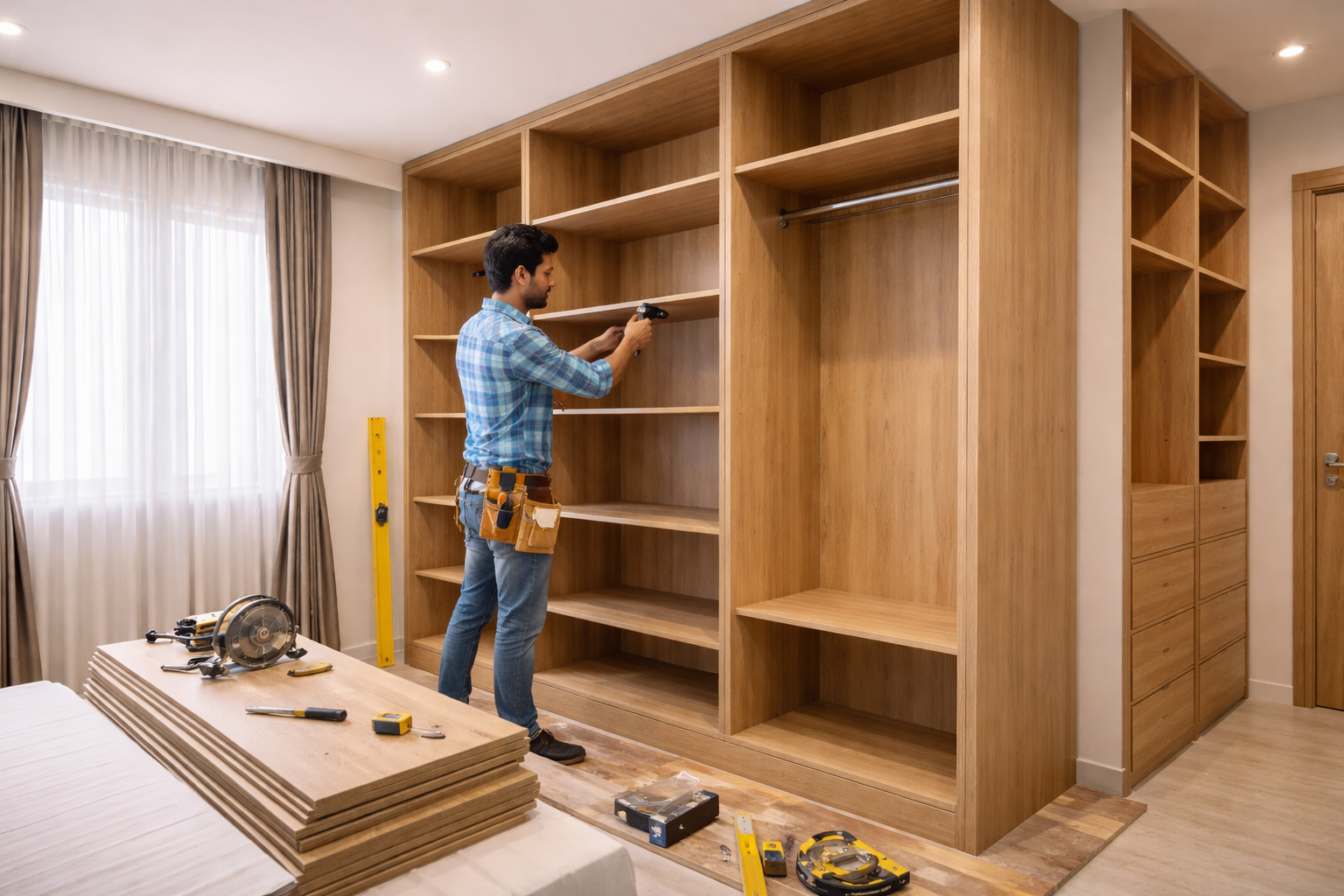
What is an HDHMR Board and Why Use It for Wardrobes?
HDHMR stands for High Density High Moisture Resistant board. It’s an engineered wood product made by compressing hardwood fibers with special resins under high pressure. The result is a dense, strong board that resists moisture far better than standard MDF or particle board. For wardrobe construction, this means shelves and doors that won’t sag easily under weight and can withstand India’s humid conditions without swelling or warping. Unlike regular plywood (made of layered wood veneers) or MDF (medium density fiberboard), HDHMR has a uniform core with no gaps or weak spots, giving it higher load-bearing strength and excellent screw-holding capacity. This strength is why many modular furniture makers and carpenters now recommend HDHMR boards for wardrobes and cabinets over traditional plywood.
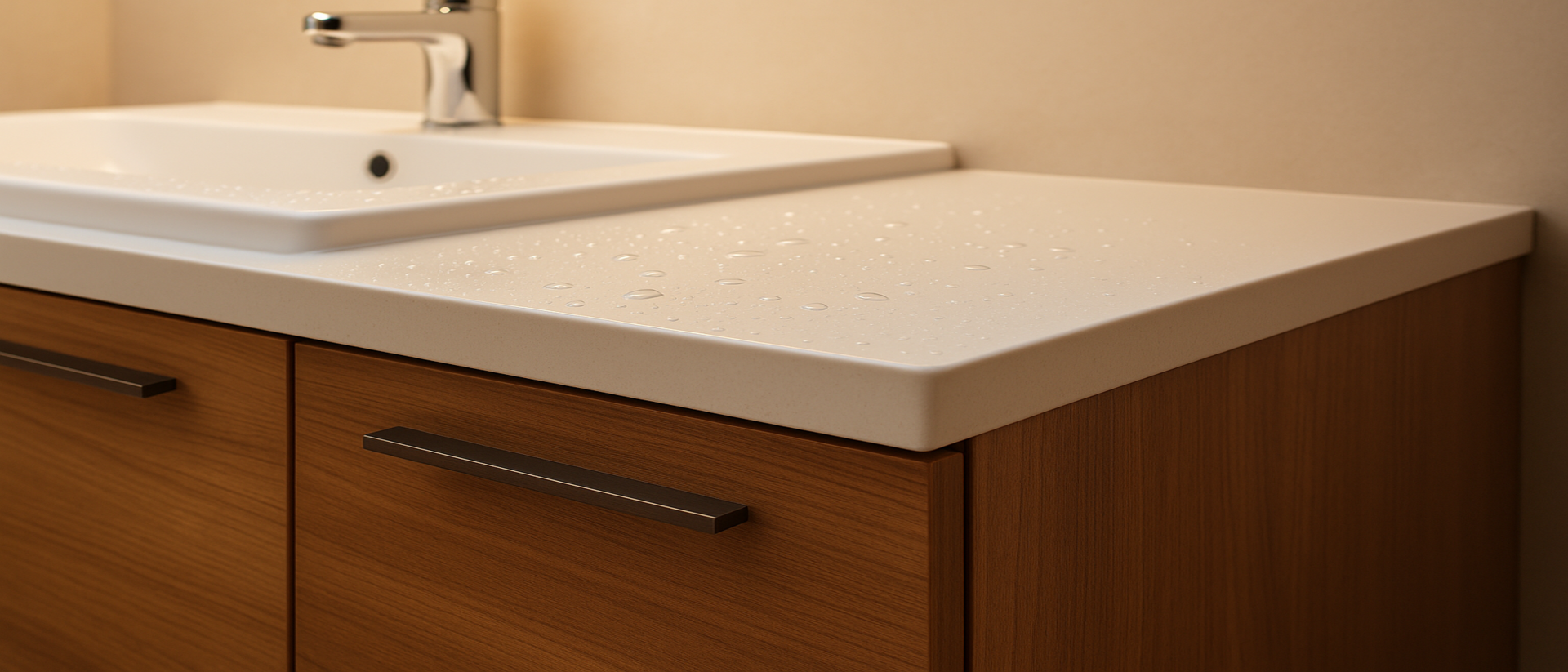
Another major advantage is moisture resistance. In places like Mumbai, Chennai or Kerala with high humidity and monsoon seasons, wardrobes made from normal MDF or low-grade plywood often develop warping, fungal growth, or delamination over time. HDHMR boards are chemically treated to be highly moisture resistant and termite resistant, solving two common problems in wooden closets – swelling due to dampness and pest attack. They aren’t fully waterproof like marine plywood, but they handle everyday humidity and the occasional moisture exposure (like a damp cloth inside the closet) much better than standard wood-based boards. For example, an HDHMR board meeting IS 12823 (HMR grade) standards can have very low thickness swelling even in humid environments. This means an HDHMR wardrobe in a coastal city will stay in shape through many monsoons, provided you take basic precautions like sealing the edges.
Benefits of HDHMR for Wardrobe & Closet Construction
Using HDHMR boards in wardrobes offers several practical benefits for both homeowners and contractors:
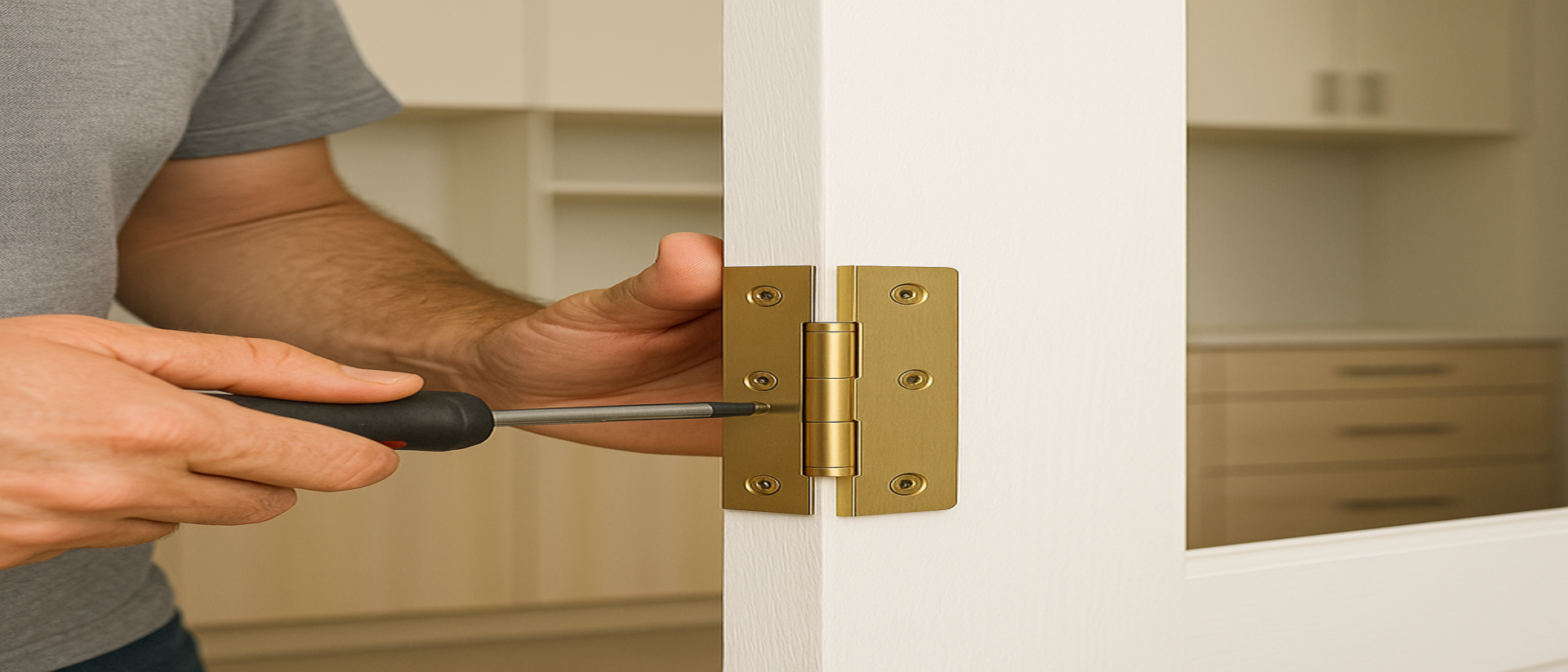
· Superior Strength: HDHMR’s high density (~750–850 kg/m³) gives it robust structural strength. Wardrobe shelves made of HDHMR can bear heavy stacks of clothes or suitcases without bending. The dense core holds screws firmly, so hinges for doors and drawer slides remain tight over years of use.
· Moisture and Termite Resistance: Thanks to special resin binders, HDHMR boards are designed to resist moisture absorption. This is crucial for closets adjacent to bathrooms or in damp climates. The resin and manufacturing also make the board unattractive to termites and borers. Unlike regular plywood that may need periodic pest treatment, HDHMR boards inherently deter termites (though it’s still wise to ensure your board is from a reputable brand with termite-proof claims).
· Smooth Surface Finish: HDHMR comes with a smooth, ready-to-finish surface. You can easily apply laminates, veneers, or paint directly. This is a boon for wardrobe interiors and exteriors – the board’s smoothness ensures laminates stick well without bubbles and paints have an even finish. Many premium wardrobe makers use pre-laminated HDHMR boards to achieve factory-finished panels with minimal effort.
- Uniform Quality: Every part of an HDHMR board has consistent density and strength. This uniformquality means when you cut panels for wardrobe doors or shelves, each piece has equal performance (no soft spots that you sometimes find in plywood). It also means less wastage – you won’t hit voids or knots as in plywood that could ruin a cut piece.
- Carpenter-Friendly: HDHMR boards can be cut, drilled, and routed with precision. Carpenters can create intricate designs like routed patterns on wardrobe doors or fit bespoke hardware without the board chipping or splintering. It’s also less prone to splitting compared to plywood edges when nailing or screwing close to edges.
Real-World Applications in Indian Homes
Indian interiors present some unique challenges: varying climates, space constraints, and preferences for built-in storage. HDHMR boards have proven to be up to the task in several common scenarios:
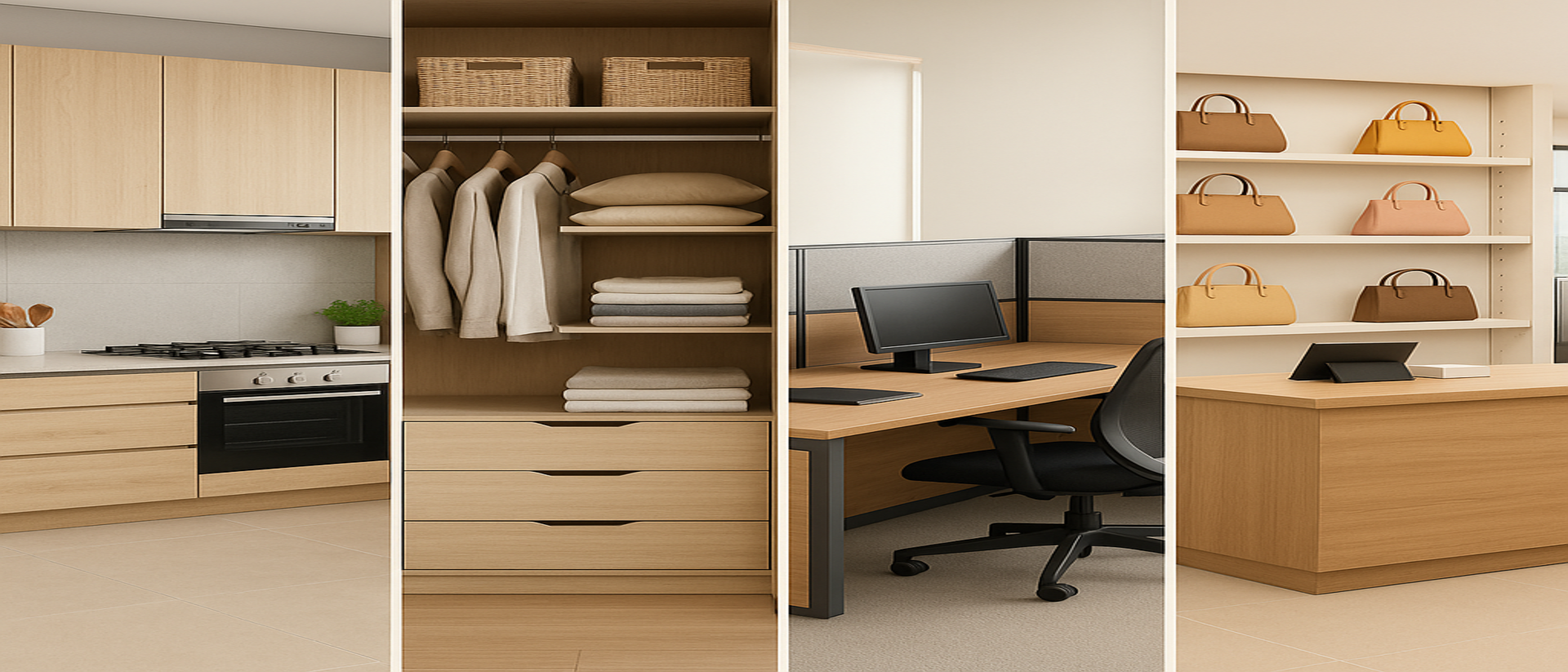
· Bedroom Wardrobes: Whether it’s a sleek modular wardrobe in a Mumbai apartment or a traditional large closet in a Delhi bungalow, HDHMR forms a sturdy carcass (framework) and shutters (doors). Homeowners report that HDHMR wardrobes feel as solid as those made from solid wood. In high-rise flats, built-in wardrobes often butt against external walls that get damp in monsoons – HDHMR’s moisture resistance helps prevent the cupboard from warping or getting moldy in these cases.
· Closets in Humid Areas: In coastal cities like Chennai or Kochi, or tropical areas like Goa and Kolkata, closets face humidity year-round. One real case: a homeowner in Kochi installed an HDHMR board closet and noted zero swelling in 2 years, whereas a previous MDF shelf had expanded at the edges within a year. The dense HDHMR board also kept termites at bay in that coastal climate. Such experiences build confidence that HDHMR can handle Indian humidity better than standard engineered wood.
· Modular Wardrobe Systems: Many urban Indians are opting for factory-made modular wardrobes. These often use 16mm or 18mm HDHMR panels for both structure and doors. The result is a precision-built wardrobe that comes flat-packed and is assembled on-site. Because HDHMR has consistent thickness and strength, modular fittings (like cam locks and connectors) hold very well, giving the assembled wardrobe a robust, wobble-free feel.
· Closet Drawers and Shelves: Thin HDHMR boards (e.g. 6mm or 9mm) can be used for drawer bottoms or closet backs, where they add sturdiness while keeping weight low. For example, a 6mm HDHMR back panel in a wardrobe won’t warp or pop out even if the wardrobe is placed against a slightly damp wall – a common issue in older Indian homes.
· Office or Commercial Closets: In offices or retail showrooms where closets and storage units see heavy daily use, HDHMR offers longevity. The boards can sustain frequent opening/closing and load stress (like files, inventory, etc.) without the fasteners loosening. Plus, the termite resistance is a big plus in commercial settings where preventive maintenance may be infrequent.
Design Tips to Get the Most from HDHMR Wardrobes
Even with a high-quality board like HDHMR, good design and installation practices will ensure your wardrobe lasts long:
· Choose the Right Thickness: For wardrobe side panels, partitions, and doors, 18mm thickness HDHMR is generally recommended for strength and rigidity. Shelves can be 18mm as well, especially for spans wider than 2–3 feet or for heavy loads (books, files, etc.). If you have smaller cabinets or drawer fronts, 12mm HDHMR might suffice there to save weight. Avoid using very thin boards (6mm or 9mm) for any load-bearing part of the wardrobe; those are best reserved for backs or drawer bases.
· Seal the Edges: While HDHMR’s core is moisture resistant, the cut edges are exposed fiber. Always seal all cut edges of each board. Typically, carpenters use edge banding (thin PVC or laminate strips ironed or glued onto edges) for a professional finish. Edge banding not only improves aesthetics but also prevents moisture ingress and termite entry through the raw edges. If edge banding isn’t possible on some hidden edges, at least apply a coat of paint or varnish on those to cover the exposed fiber.
· Avoid Direct Water Contact: Install wardrobes slightly above floor level or ensure there’s a pedestal if it’s a floor-to-ceiling unit. This protects the bottom from floor-mopping water. If a wardrobe shares a wall with a bathroom, ensure proper waterproofing of that wall or leave an air gap. HDHMR can handle humidity but continuous water leakage from a wet wall can eventually damage even the best board. Essentially, treat HDHMR wardrobes as you would treat wood – keep them dry when possible.
· Provide Ventilation: Periodically airing out the wardrobe or installing small vents (louvers) helps prevent mustiness in humid climates. Good airflow keeps both your clothes and the HDHMR board dry and fresh.
· Use Robust Hardware: Heavy HDHMR doors need strong support. Use at least three high-quality hinges on tall wardrobe doors and sturdy slides for drawers. HDHMR holds screws well, but investing in branded hinges/rollers ensures the alignment and motion stay perfect over time (consider Euro screws or insert nuts for extra secure hinge fixing).
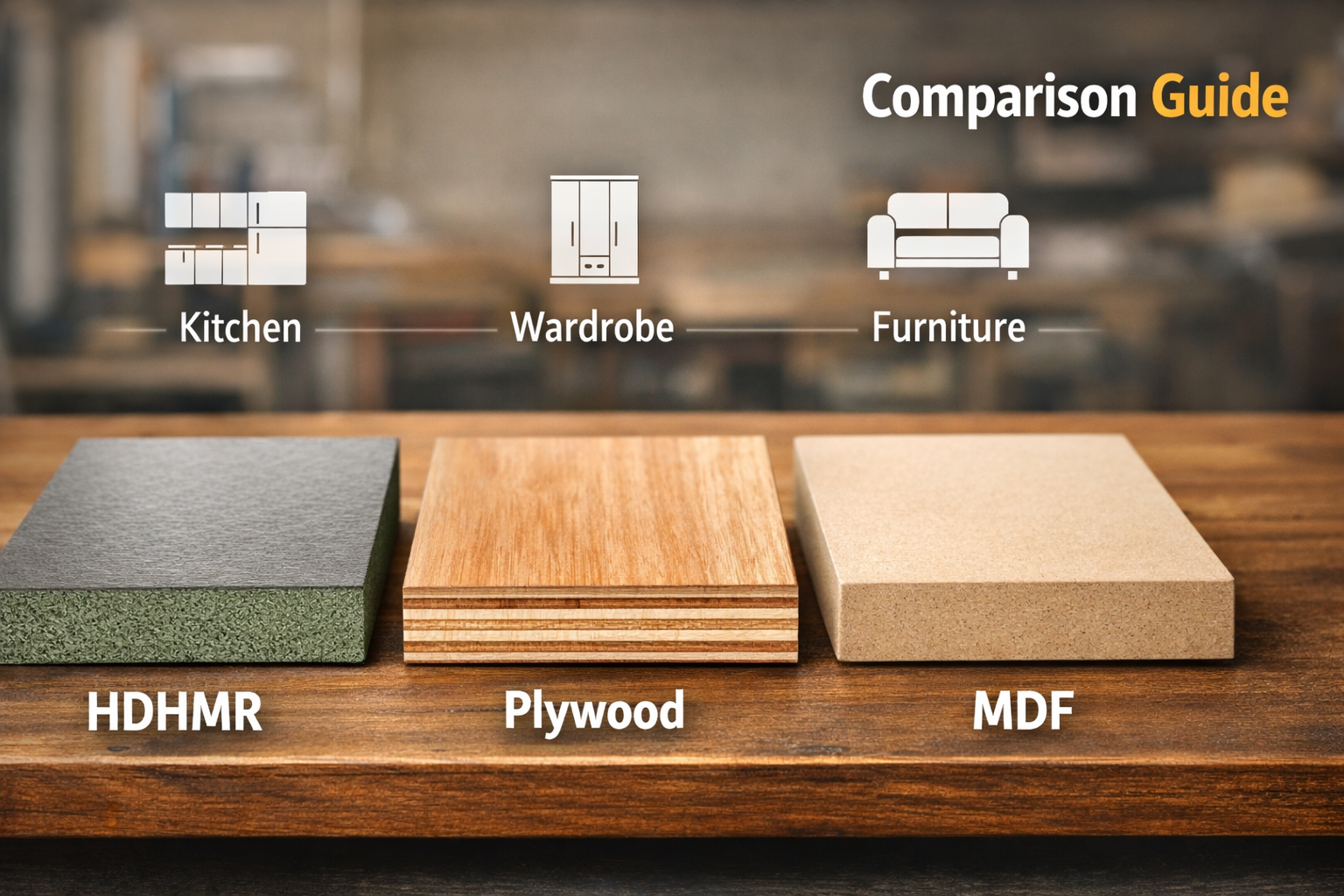
HDHMR vs Plywood vs MDF for Wardrobes
You might be wondering how HDHMR compares to marine plywood or commercial plywood, which have been the go-to materials for decades, or to cheaper MDF in wardrobes. Here’s a quick comparison focusing on wardrobe use:
· Moisture Handling: Marine plywood (BWP grade IS 710) is waterproof and suitable for extremely wet conditions, but it’s often overkill (and expensive) for a typical wardrobe that doesn’t see water directly. Normal MR plywood (IS 303) can resist some humidity but may still warp over time in damp rooms. MDF, on the other hand, swells significantly with any moisture. HDHMR hits a sweet spot – it’s not meant to sit in water, but for high humidity and occasional dampness, it outperforms standard plywood and MDF. For example, if you live in a coastal city and don’t want to invest in costly marine ply for all your wardrobes, HDHMR is an excellent alternative that gives almost comparable moisture resistance at a moderate cost.
· Strength & Load: Plywood is strong along its grain direction but can sometimes flex if the frame isn’t designed well, especially if thinner ply is used. HDHMR’s uniform strength means even a large wardrobe shelf of HDHMR will remain flatter and less prone to bending compared to an MDF shelf of the same thickness. Plywood is quite strong too, but if you end up using a lower-grade plywood with internal voids, its strength is compromised. With HDHMR, you get reliable strength piece to piece. Both premium plywood and HDHMR can handle heavy clothes, but HDHMR has an edge in consistency and screw grip (no layers for screws to slide between).
· Weight: HDHMR is dense, so it is heavier than most plywood of the same size. For instance, a standard 18mm 8×4 ft HDHMR sheet weighs around ~40–45 kg, whereas an 18mm plywood sheet might be around 30–35 kg. This means HDHMR wardrobes are extremely solid, but you should plan for strong hinges and possibly an extra hand during installation. The extra weight is often worth the tradeoff for the improved durability, but for wall-hung units, the lighter weight of plywood could be an advantage.
· Finish and Aesthetics: Both plywood and HDHMR need a finish (laminate, paint, veneer) for a completed look. HDHMR’s perfectly smooth surface means paint finishes come out more uniform compared to plywood which has grain that can show if not well sanded. If doing a laminate inside your wardrobe, you’ll find HDHMR’s surface is already level and doesn’t need the surface filling that some plywood might. MDF similarly has a smooth surface, but MDF can’t match HDHMR’s moisture resistance or strength – so HDHMR sort of combines MDF’s smoothness with better strength than plywood.
· Cost: In general, HDHMR board is priced slightly above good quality MR-grade plywood but below marine plywood. For example, as of 2025 in India, an 18mm HDHMR might cost roughly ₹100 per sq.ft, while a top-brand marine plywood of 19mm could be ₹140+ per sq.ft, and an 18mm commercial MR plywood maybe around ₹75–₹90 per sq.ft (prices vary by city and brand). That means you pay a premium over basic plywood to use HDHMR, but you’re getting near-marine grade performance in return. MDF is cheaper (maybe ₹50–₹60 per sq.ft for 18mm), but using it in a wardrobe is a risk in moist climates. So, for a critical furniture piece like a wardrobe that you expect to last many years, the value offered by HDHMR is quite high – moderate cost and high durability.
HDHMR vs Plywood – Which is Better for Your Needs for a deeper dive into how HDHMR matches up against various plywood grades in different use-cases.
Wardrobe Material Selection Checklist – Getting It Right
✅ Use Genuine HDHMR: Buy from reputable brands and suppliers. Check that each board has the manufacturer’s stamp or QR code on the edge indicating it’s HDHMR/HMR grade. This ensures you’re getting the true moisture-resistant board, not a substandard imitation.
✅ Choose Proper Thickness & Finish: Use the right board thickness for each part (e.g. 18mm for frames/doors, 6mm for back panels) to balance strength and cost. And insist that all cut edges are sealed with edge banding or paint, and all surfaces are laminated or finished. Sealing the board fully locks out moisture and pests.
✅ Ensure Quality Hardware: Fit HDHMR wardrobes with hardware up to the task. Heavy-duty hinges (three per tall door), sturdy drawer slides, and appropriate screws (coarse thread or inserts for fiberboard) will keep the assembly solid. Using the correct tools (sharp saw blades for cutting HDHMR) also results in cleaner work and extends the furniture’s life.
Frequently Asked Questions (FAQs)
Q: Is HDHMR board better than plywood for wardrobes?
A: For most indoor wardrobes, yes, HDHMR board offers better overall performance than standard plywood. It has superior moisture resistance and doesn’t warp as easily in humid conditions. The uniform strength of HDHMR means shelves and doors can be sturdier. However, a high-grade marine plywood also performs excellently, especially in extremely wet conditions – it just comes at a higher cost. If your priority is long-term durability with minimal maintenance in a typical bedroom environment, HDHMR is often the better choice. It provides a balance of strength and moisture resistance ideal for wardrobes, whereas plywood may need to be marine grade to come close (and that can be expensive).
Q: Does HDHMR resist moisture well enough for closet interiors?
A: Yes, HDHMR boards are made to resist moisture and humidity, making them well-suited for closet interiors. They will not swell or delaminate with normal levels of moisture in the air. For example, clothes kept in an HDHMR cupboard during a Mumbai monsoon will stay safe because the board won’t start warping due to the high humidity. That said, it’s still important to prevent direct water exposure – if you mop the floor, don’t slosh water into the closet; if the closet is in a very damp room, periodically airing it out is wise. In essence, HDHMR handles routine humidity and the occasional dampness in closets far better than standard engineered woods.
Q: What thickness of HDHMR board is best for wardrobe doors and shelves?
A: Typically, 18mm thick HDHMR boards are best for wardrobe doors and load-bearing shelves. This thickness gives the doors a solid feel and ensures long shelves don’t sag. Some modular wardrobe systems use 16mm, which can work too, but if you’re going custom, 18mm is a safe bet for the main structure. For drawers or smaller shelves, 12mm can be used if weight is a concern, but many carpenters prefer sticking to 18mm throughout for consistency. Back panels can be thinner (6mm or 9mm) since they mostly just close the unit and don’t bear weight.
Q: How do I know if I’m getting a genuine HDHMR board for my wardrobe?
A: To ensure you get genuine HDHMR, buy from trusted suppliers or brands. When the boards are delivered, look for branding on the edges – most manufacturers print their name, board type (HMR/HDHMR), and sometimes even a QR code or serial number. The board’s surface and weight also give clues: HDHMR is heavier and has a very smooth fine-fiber surface (usually a colored core, like green or red tint, indicating moisture resistance chemicals). If you’re uncertain, ask for a small off-cut piece and do a simple test: try scratching the surface – HDHMR is quite hard and will not powder easily; or put a drop of water on an unlaminated corner and see if it soaks in immediately or not. Genuine HDHMR will resist quick absorption. Don’t hesitate to ask the dealer for a specification sheet. Reputable dealers will also usually offer a warranty or guarantee card from the manufacturer for HDHMR boards.
Q: Can HDHMR boards be used for other furniture besides wardrobes?
A: Absolutely. HDHMR boards are versatile for all kinds of interior furniture. It’s often used in kitchen cabinets, bathroom vanities, office tables, bed boxes, and even door shutters. In fact, any place you want the strength of plywood but with better moisture/termite resistance, HDHMR fits the bill. We’ve focused on wardrobes here because it’s a common use-case with high user interest, but the benefits (strength, smooth finish, moisture resistance) apply to other furniture too. Just remember, for very wet exposure (like outdoor furniture or areas that get rained on), you’d still consider specialized materials (marine ply, WPC, etc.). But for indoor uses, HDHMR can replace plywood or MDF in most applications effectively. If interested, Is HDHMR Board Good for Kitchen Cabinets? is a related article discussing HDHMR’s performance in kitchen environments.
Disclaimer: This article is generated using AI-assisted research and is intended for informational purposes only. While we strive for accuracy, readers are advised to verify all technical, pricing, and brand-specific details with official sources. hdhmr.in is not liable for any decisions made based on this content.