Why Colour Selection Matters More Than You Think
Your high gloss acrylic kitchen cabinets will dominate visual attention for the next 10–15 years. Unlike wall paint that takes a weekend to change, cabinet colours lock in a significant investment—typically ₹400–1,200 per square foot for the acrylic finish alone, before factoring in substrate and fabrication costs. Choose poorly, and you're either living with regret or facing a costly replacement.
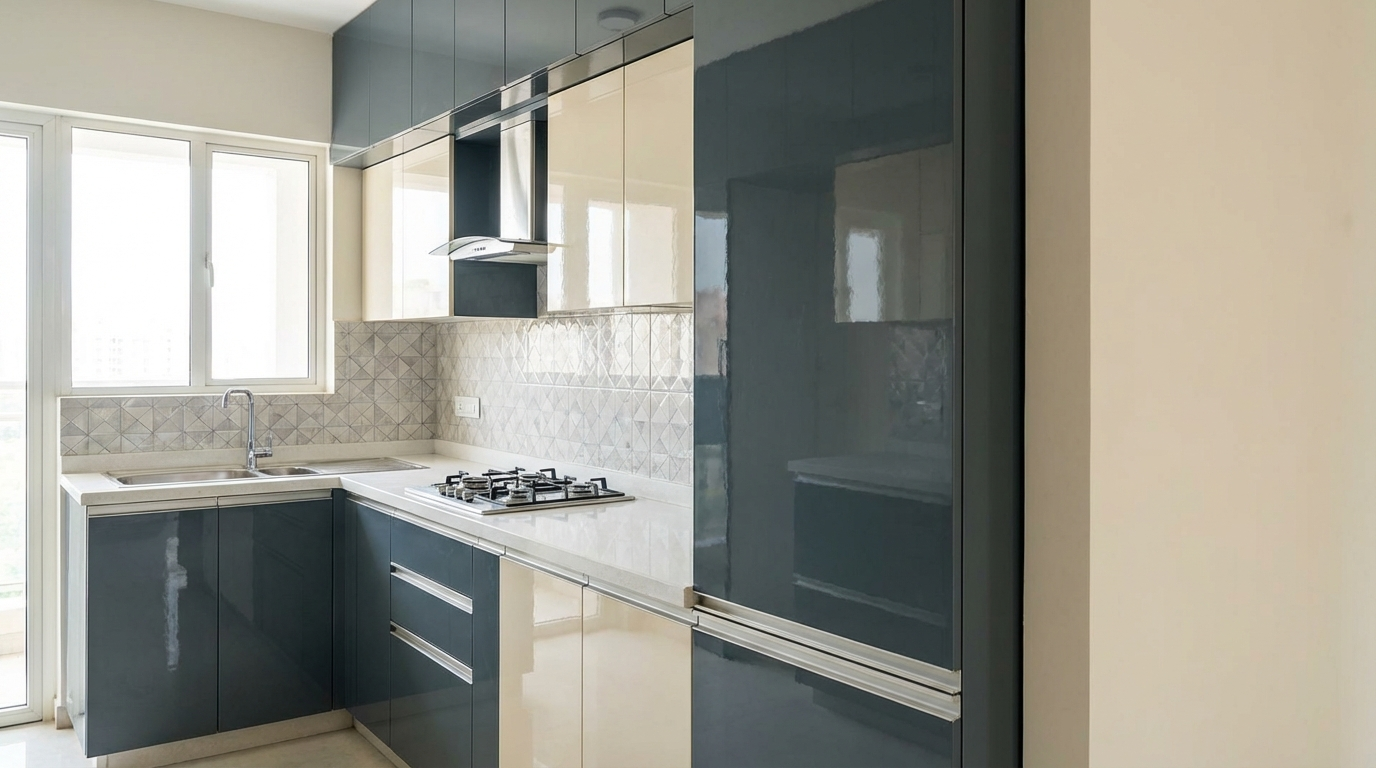
Glossy acrylic kitchens remain fashionable in 2025–2026 because of their eye-catching, mirror-like appearance, which instantly elevates overall aesthetics. These high-gloss surfaces are excellent for small kitchens because they reflect light well, giving the space a feeling of openness and brightness.
But here's the decision point most buyers miss: the colour you pick interacts with your kitchen's orientation, natural light availability, cooking habits (turmeric-heavy Indian cooking versus lighter fare), and whether you prioritise hiding fingerprints or maximising visual impact. This guide unpacks 50+ shades across six colour families, with honest assessments of what works—and what doesn't—in Indian kitchens.
Understanding High Gloss Acrylic: The Substrate-Finish Relationship
Before diving into colours, understand what you're actually buying. Acrylic kitchen cabinets are primarily of two types: solid acrylic doors and acrylic-faced doors. Solid acrylic doors are priced higher as they are made of acrylic all the way through, meaning these doors have a richer and more even colour appearance. Acrylic-faced doors are a less expensive alternative, with acrylic sheets being pasted on an MDF board and sealed at the edges with edge bands.
The substrate beneath the acrylic sheet significantly impacts durability and moisture resistance:
- MDF-backed acrylic: Most common, budget-friendly option. Suitable for upper cabinets away from water sources. Avoid for sink cabinets in humid climates.
- HDHMR-backed acrylic: Superior moisture resistance, ideal for Indian kitchens with heavy steam and humidity. Costs approximately 15–25% more than MDF-backed alternatives.
- Marine plywood-backed acrylic: High-gloss acrylic kitchen cabinets crafted using high-quality acrylic sheets laminated onto marine-grade plywood or MDF ensure durability and resistance to moisture. This is the premium choice for coastal cities or areas with monsoon-related humidity issues.
Gloss Levels and Their Practical Implications
Glossy acrylic offers a mirror-like finish that reflects light, making kitchens appear larger and brighter—perfect for small spaces and modern designs. However, it shows fingerprints and requires frequent cleaning.
Matte acrylic provides a sophisticated look that's more forgiving with fingerprints and everyday wear. Ideal for busy households and traditional kitchen styles, though it offers less light reflection.
| Finish Type | Light Reflection | Fingerprint Visibility | Best For | Maintenance Level |
|---|---|---|---|---|
| High Gloss (85+ GU) | Maximum | Very visible | Small kitchens, modern aesthetics | Daily wiping needed |
| Semi-Gloss (50–85 GU) | Moderate | Moderate visibility | Family kitchens, balanced look | Weekly cleaning |
| Matte/Soft Touch | Minimal | Low visibility | Busy households, fingerprint-prone areas | Easiest maintenance |
50+ High Gloss Acrylic Colours: Organised by Family
Classic Whites and Off-Whites (8 Shades)
White gloss is still a classic choice because it provides a smooth, mirrored surface that enhances small areas. But not all whites are equal—and selecting the wrong undertone can make your kitchen feel clinical or dingy.
- Pure White / Snow White: Maximum brightness, zero undertones. Best for north-facing kitchens starved of natural light. Shows every speck of dust and turmeric splatter.
- Pearl White: Pearl White never loses its appeal, making it an enduring pick. Light reflections on this colour create the illusion of more space and openness for your kitchen.
- Ivory / Cream White: Warmer undertone suits south-facing kitchens where harsh sunlight needs softening.
- Arctic White: Cool blue undertone, pairs well with stainless steel appliances and grey countertops.
- Oyster White: Subtle grey undertone, excellent for contemporary industrial aesthetics.
- Warm White: Yellow undertone, creates inviting warmth but can look dated in very modern settings.
- Champagne White: Hint of gold shimmer, works beautifully with brass hardware.
- Dove White: Soft, muted white that hides minor imperfections better than pure white.
Indian kitchen reality check: Pure white shows turmeric, haldi, and oil splatters instantly. If your cooking involves heavy tempering (tadka), opt for ivory or cream undertones that are more forgiving.
Sophisticated Greys (7 Shades)
The all-white everything look is giving way to warmer whites and layered neutrals. Cool grays and glossy finishes are also fading, replaced by matte textures and more natural warmth. However, warm greys remain relevant in 2026 when executed correctly.
- Slate Grey: Deep, almost charcoal tone. Charcoal matte is becoming a growing trend because of its remarkable muted look, making it excellent for kitchens with an industrial feel.
- Concrete Grey: Industrial aesthetic, pairs well with exposed brick or cement-look backsplashes.
- Silver Grey: Metallic shimmer, creates high-tech look but can feel cold without warm accents.
- Storm Grey: Blue undertone, works well in coastal-themed kitchens.
- Mushroom Grey / Greige: Shades like mushroom and taupe are stepping into the spotlight. These hues bring warmth and depth without feeling dark or heavy.
- Graphite: Near-black grey, dramatic and fingerprint-visible—choose matte version for easier maintenance.
- Pebble Grey: Light warm grey, highly versatile and forgiving with everyday wear.
Blues: From Navy to Teal (8 Shades)
Navy blue has emerged as an eye-catching statement color that gives depth without taking over the room. However, market saturation is a consideration—"As we head into 2026, navy kitchens are starting to feel a little dated. It can sometimes feel heavy and overused, and no longer gives the warmth or personality that people increasingly seek in their homes."
- Navy Blue: Navy Blue creates an elegant and rich appearance which enriches kitchen style trends. A deep concentration of this tone generates dramatic visual power when applied to cabinets or used as a wall accent.
- Peacock Blue: "Expect deeper, richer jewel tones, like peacock-inspired navy or intense sage green, to replace their brighter cousins, bringing depth and sophistication to interiors."
- Deep Teal: Green-blue hybrid gaining traction in 2026 for those seeking an alternative to overused navy.
- Cobalt Blue: Vibrant, statement-making shade for accent cabinets or islands—too intense for full kitchen application.
- Powder Blue: Soft, vintage appeal. Works in retro-styled or cottage kitchens but can feel dated in ultra-modern settings.
- Ocean Blue: Mid-tone blue with grey undertones, versatile and less committal than navy.
- Aegean Blue: Mediterranean-inspired, pairs beautifully with white countertops and terracotta accents.
- Steel Blue: Industrial edge with warmth, works with both brass and chrome hardware.
Greens: From Sage to Emerald (9 Shades)
Green kitchen ideas have dominated for years, but kitchen colour trends 2026 are all about the softer end of the spectrum: sage, olive, eucalyptus, moss. These herbal tones feel calm, grounded, and quietly upscale—the opposite of the moody khaki and nearly black forest shades that came before.
- Sage Green: Sage green is still holding strong in 2026. It's soft, earthy and sits beautifully alongside pale timbers like oak or ash.
- Olive Green: Expect to see shades like sage, olive, and forest working alongside lighter woods and neutral countertops.
- Eucalyptus: Valspar's Color of the Year for 2026, warm eucalyptus, is a warm, vintage-inspired green chosen for its ability to make spaces feel restorative and settled.
- Emerald Green: For vividness, Emerald Green is one of the colours that are trending nowadays. It adds vibrancy whilst retaining modernity. This bright colour brings life and warmth to your kitchen space.
- Forest Green: A must-have for the past two seasons, muted green kitchen cabinets soothe and connect you with nature. Sage works perfectly for wall-facing cabinets, while forest green lends structure to islands.
- Moss Green: Organic, natural aesthetic perfect for biophilic design approaches.
- Mint Green: Anyone in search of kitchen refreshment will find Mint Green the ideal decorative choice. Mint green creates a soft atmosphere which promotes serenity and cleanliness.
- Hunter Green: Deep, British racing green tone—sophisticated but requires ample lighting.
- Pistachio: Light, fresh green ideal for small kitchens seeking colour without heaviness.
Warm Earth Tones: Terracotta, Beige, and Browns (10 Shades)
In 2026, there is a marked return to natural and warm colours. Muted greens, earthy tones (terracotta, caramel, ochre) and sophisticated neutrals (mushroom taupe, beige cream) dominate.
- Terracotta: Terracotta kitchen cabinets stand out for their enveloping and artisanal effect, a look in high demand for 2026. The kitchen becomes a welcoming environment through Terracotta because of its natural and grounding colour palette. Traditional kitchen designs match well with this colour which can integrate into modern spaces through sleek acrylic finishes.
- Caramel: Earthy hues bring grounding and warmth. A tobacco caramel on the base cabinets creates a warm, deep ambience, especially when combined with mineral surfaces.
- Champagne Gold: Champagne gold provides a sense of warmth and richness, making it appropriate for homeowners who want to combine elegance with glamour.
- Soft Taupe: Soft Taupe may be neutral but remains stylish as it suits various designs very well. Its slight warmth makes it perfect for making kitchens that are friendly and warm.
- Glossy Beige: With its mix of glamour and functionality, glossy beige stands out as an adaptable shade for any type of kitchen including small ones.
- Mocha Brown: "Soft brown shades have long been an underrated colour within interiors, but Mocha Mousse is really changing things up. This cozy and creamy coffee colour has a rich modernity which inherently feels comforting."
- Tobacco Brown: Deep, masculine brown ideal for statement islands or lower cabinets.
- Ochre: Mustard-adjacent warm yellow-brown, works as an accent colour on islands.
- Sand: Light, neutral beige that photographs well and adapts to changing décor trends.
- Walnut: Wood-inspired brown with realistic grain patterns in some high-end acrylic collections.
Bold Statements: Reds, Blacks, and Metallics (8 Shades)
- Charcoal Black: When you need a high gloss for the kitchen wall that is modern, trendy as well as dramatic, choose Charcoal black. The high gloss shade adds a luxury touch which goes well against lighter components.
- Piano Black: Ultra-high gloss, near-mirror finish—stunning but shows every fingerprint and scratch.
- Burgundy / Wine Red: Dusty pinks and deep, moody burgundy are particularly rising to the top at the moment.
- Cherry Red: Classic bold choice, works best as an accent on islands or feature walls.
- Sunset Orange: If you want to create an active space that invites people over always, use Sunset Orange.
- Dusty Pink: If you're feeling brave, dusty pink is one of the most unexpected but beautiful kitchen trends this year. It's soft, warm and surprisingly versatile.
- Metallic Champagne: Reflective, sophisticated finish adding glamour to modern kitchens.
- Bronze / Copper: Metallic warm tones that work as accent panels alongside neutral base cabinets.
Two-Tone Combinations That Work in 2026
Two-tone kitchens are a top trend heading into 2026, often featuring a lighter upper cabinet and a deeper lower cabinet or island. This look adds dimension and visual interest without overwhelming the space.
You can achieve a striking yet balanced aesthetic by pairing bold navy blue or emerald green lower cabinets with crisp white or soft grey upper acrylic kitchen units.
Proven Two-Tone Combinations
| Upper Cabinet Colour | Lower Cabinet / Island | Style Effect | Best Hardware |
|---|---|---|---|
| Pearl White | Navy Blue | Classic nautical elegance | Brass or gold |
| Soft Grey | Emerald Green | Contemporary sophistication | Matte black |
| Cream White | Terracotta | Warm Mediterranean | Burnished brass |
| Dove White | Sage Green | Calm, organic modern | Brass or brushed nickel |
| Light Grey | Charcoal Black | Dramatic contrast | Chrome or stainless steel |
| Off-White | Walnut Brown | Timeless warmth | Oiled bronze |
| Mushroom Grey | Deep Teal | Sophisticated depth | Brushed nickel |
Colour Selection by Kitchen Size and Lighting
Small Kitchens (Under 80 sq ft)
High gloss white acrylic kitchen cabinets can brighten up your kitchen and make it feel more spacious. Pairing them with stainless steel appliances and a minimalist design creates a chic and contemporary ambience.
Recommended colours: Pearl white, soft grey, light sage, champagne, pale blue. Avoid dark colours on all cabinets—if using dark tones, limit to lower cabinets only.
Medium Kitchens (80–150 sq ft)
Two-tone combinations work excellently here. Upper cabinets in lighter shades, lower cabinets or islands in medium-to-dark tones.
Recommended approach: Light uppers (white, cream, light grey) with coloured lowers (navy, sage, terracotta, deep teal).
Large Kitchens (150+ sq ft)
You have the luxury of going bold. Deep colours across all cabinets won't feel oppressive when the space is generous and well-lit.
Recommended colours: Full charcoal, navy throughout, emerald green, or walnut brown. Use island in contrasting accent colour.
Lighting Considerations
- North-facing (limited natural light): Prioritise whites, creams, and light warm tones. Avoid deep greens, blues, or blacks.
- South-facing (abundant sunlight): Can handle cooler tones and darker colours. Consider tones with grey undertones to counteract warm light.
- East-facing (morning light): Warm colours like terracotta and caramel will glow beautifully in morning light.
- West-facing (afternoon light): Cool blues and greens balance intense afternoon sun.
Indian Climate and Usage Factors
Humidity and Moisture Resistance
Acrylic sheets offer the perfect balance of longevity, hygienic qualities, and aesthetic appeal. Due to their non-porous surface, which keeps out moisture and bacteria, they are extremely hygienic for Indian cooking settings.
Acrylic laminates provide a non-porous surface that keeps water and other liquids from penetrating, lowering the chance of swelling or warping in kitchens where spills and splashes are likely to occur.
For Mumbai, Chennai, Kolkata, and coastal regions with high humidity, always specify HDHMR or marine plywood substrate rather than standard MDF.
Turmeric and Spice Stain Considerations
The honest truth: high gloss surfaces show stains more readily than matte finishes, but they're also easier to wipe clean. Light colours (whites, creams) show turmeric stains instantly. Medium tones (sage, grey, light brown) are more forgiving. Dark colours hide stains but show fingerprints and dust.
Best colour families for heavy Indian cooking:
- Warm beiges and taupes (hide turmeric splatter)
- Medium greens (sage, olive)
- Terracotta and ochre (naturally camouflage warm-toned splatters)
- Medium greys with warm undertones
Acrylic Sheet Brands Available in India
| Brand | Origin | Colour Range | Price Tier | Key Features |
|---|---|---|---|---|
| Senosan | Austria | 80+ colours | Premium | World leader in acrylic sheets manufacturing. Colour-fast surfaces with near zero colour variation over batches. Super-high scratch resistance—even against steel wool. |
| REHAU (RAUVISIO Brilliant) | Germany | 60+ colours | Premium | Long-term UV resistance—proven to last for at least 20 years of indoor use. |
| Action TESA Acrylic | India | 49 exhaustive colours having gloss level higher than any High Gloss Laminate & Glossy boards. | Mid-Premium | TESA Acrylic Faced MDF combines the look and feel of a solid surface acrylic with an ultra high gloss surface. All TESA Acrylic Surface Boards have a near mirror quality surface. |
| Advance Laminates | India | 40+ colours | Mid-Range | Good quality-price ratio, widely available |
| Euro Panel / Asian Prelam | India | 35+ colours | Budget-Mid | Accessible pricing, regional availability |
Price Expectations: What You'll Actually Pay
Acrylic kitchens are sold by square foot. The cost of an acrylic modular kitchen ranges between ₹500 and ₹3,000 per sq ft. The cost, size, and type of material used affect the price.
Breaking this down more precisely:
| Component | Budget Range | Mid-Range | Premium |
|---|---|---|---|
| Acrylic sheet only (per sq ft) | ₹80–150 | ₹150–300 | ₹300–500+ |
| Acrylic on MDF shutter | ₹400–600 | ₹600–900 | ₹900–1,200 |
| Acrylic on HDHMR shutter | ₹550–750 | ₹750–1,100 | ₹1,100–1,500 |
| Complete modular kitchen (per sq ft) | ₹1,200–1,800 | ₹1,800–2,500 | ₹2,500–4,000+ |
Premium acrylic finish costs around ₹5,500 per sq ft (shutter price), significantly higher than laminate. This represents the ultra-premium segment with imported Senosan or REHAU acrylic on marine plywood substrates.
Maintenance and Care: Keeping the Gloss Alive
For day-to-day finger marks, wiping with a dry soft microfibre cloth is enough to do the trick when cleaning acrylic kitchen doors. For greasier clean-ups, wipe the cabinets with a dampened cloth.
Weekly Maintenance Routine
Every week, use a mild soap solution to get rid of any fingerprints or smudges. To bring back the gloss and fix any small scratches, it's also advised to deep clean the surface once a month with a particular acrylic cleaner.
What to Avoid
- Ammonia-based cleaners: Can damage the acrylic surface over time
- Abrasive scrubbing pads: Will scratch the high gloss finish
- Dry wiping with rough cloths: Creates micro-scratches that dull the shine
- Harsh chemicals or degreasers: Never reach for a household glass cleaner or one that contains a degreaser. Those cleaners might work around the home, but they can cause damage to your acrylic.
Recommended Cleaning Products
- Mild dish soap diluted in lukewarm water
- Specialised acrylic cleaners (Novus, Brillianize)
- 50% isopropyl alcohol can be used in the placement of specialised sprays for removing stubborn fingerprints
- Microfibre cloths (essential—never use paper towels)
Design Ideas by Kitchen Style
Contemporary Minimalist
Handleless cabinets in pure white or soft grey with integrated appliances. Pair with quartz or Dekton countertops in coordinating tones. Chrome or invisible hardware.
Colour palette: Pearl white uppers, dove grey lowers, or monochromatic white throughout with a charcoal island.
Industrial Modern
Charcoal black or graphite grey cabinets with exposed brick or concrete countertops. Matte black hardware, stainless steel appliances, Edison bulb lighting.
Colour palette: Charcoal throughout with stainless steel accents, or two-tone with concrete grey uppers and black lowers.
Warm Mediterranean
Terracotta and sage green kitchens are stealing the spotlight for their earthy, serene charm and timeless appeal. These two colours create a harmonious balance, blending the cozy warmth of terracotta with the fresh, soothing vibe of sage green.
Colour palette: Sage green cabinets with terracotta accent island, or cream cabinets with terracotta lower section. Brass hardware essential.
Coastal Fresh
Soft blues, whites, and natural wood accents. Light and airy feel with ocean-inspired colour choices.
Colour palette: Powder blue or aegean blue lowers with white uppers. Light wood open shelving. Brushed nickel or chrome hardware.
Traditional with Modern Twist
Classic colour choices in high gloss finish create an interesting tension between traditional palette and contemporary execution.
Colour palette: Navy blue with white, cream with forest green, or burgundy island with neutral main cabinets.
Quick Decision Guide: Choose Your Colour in 3 Steps
Step 1: Assess Your Space
- Small kitchen + limited light = Light colours only (whites, creams, light grey, pale sage)
- Medium kitchen + average light = Two-tone combinations work well
- Large kitchen + good light = Full creative freedom including dark colours
Step 2: Consider Your Lifestyle
- Heavy Indian cooking = Avoid pure white; choose warm neutrals, medium greens, or terracotta family
- Young children = Matte finish over high gloss; medium tones that hide fingerprints
- Minimal cooking, maximum aesthetics = Go bold; pure whites, blacks, or jewel tones work
Step 3: Think Long-Term
- Planning to sell in 5 years? Stick to neutrals (whites, greys, light greens)
- Forever home? Choose colours you genuinely love, including bolder options
- Trend-conscious? Choose glossy for small kitchens needing brightness and modern aesthetics. Choose matte for low-maintenance needs and classic design preferences.
Buyer's Checklist: Before You Finalise Your Order
- Request physical samples: View them in your kitchen space at different times of day
- Confirm substrate material: MDF for budget, HDHMR for moisture resistance, marine plywood for coastal/humid areas
- Check edge banding: Colour-matched ABS or laser edge banding prevents visible seams
- Verify warranty terms: Acrylic cabinets can last over 10 years, retaining their finish and durability with proper care. Ensure warranty covers yellowing and delamination
- Ask about batch consistency: For larger kitchens, ensure all panels come from the same production batch to avoid colour variation
- Plan hardware early: Hardware and metal finishes matter—oiled bronze or burnished brass work stunning with terracotta, while matte black suits greens and greys.
- Get cleaning instructions in writing: Different acrylic brands may have specific care requirements
Disclaimer: This content is provided for general informational purposes based on industry practices and publicly available information. Product specifications, standards, prices, and availability may vary by manufacturer, region, and time. Readers should independently verify details with manufacturers, dealers, or qualified professionals before making purchase or construction decisions.