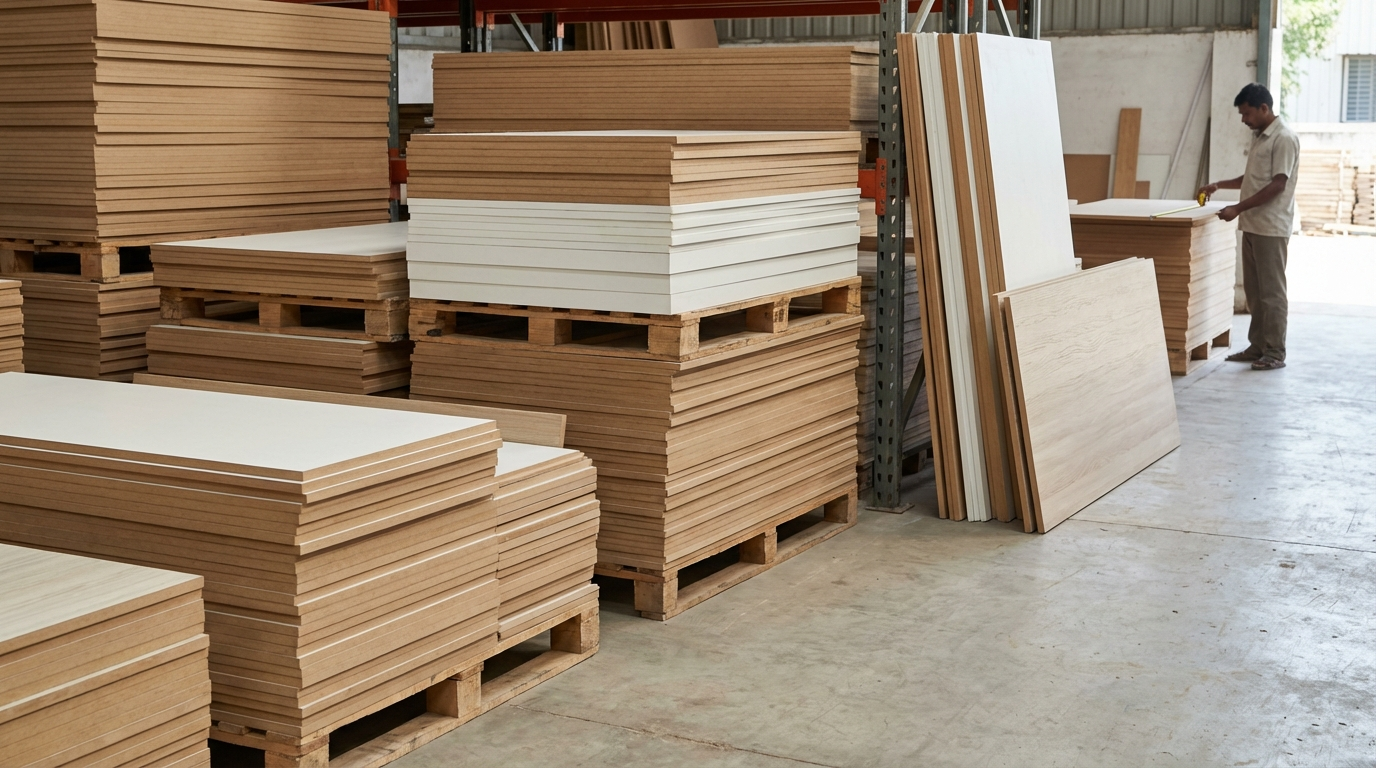
What You'll Actually Pay for an 8x4 MDF Sheet in India (2026 Reality)
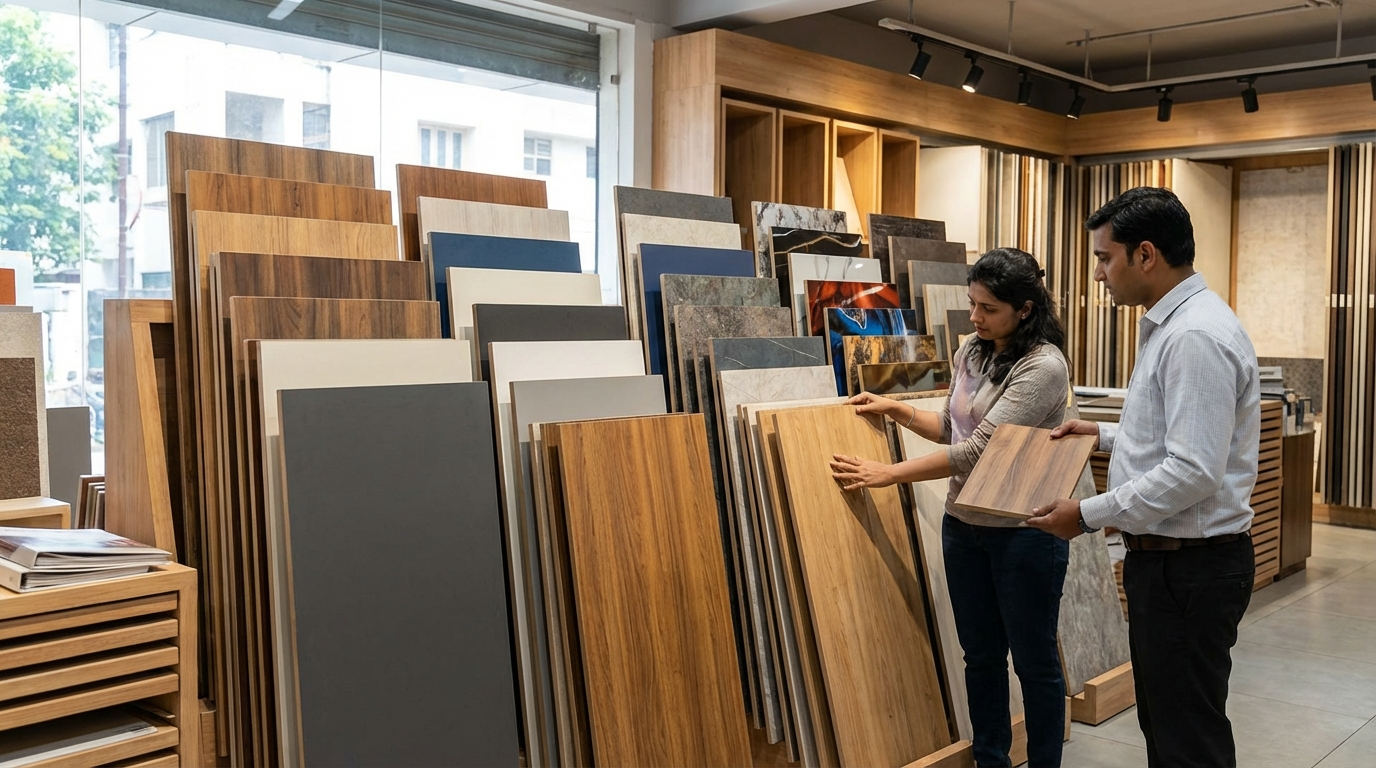
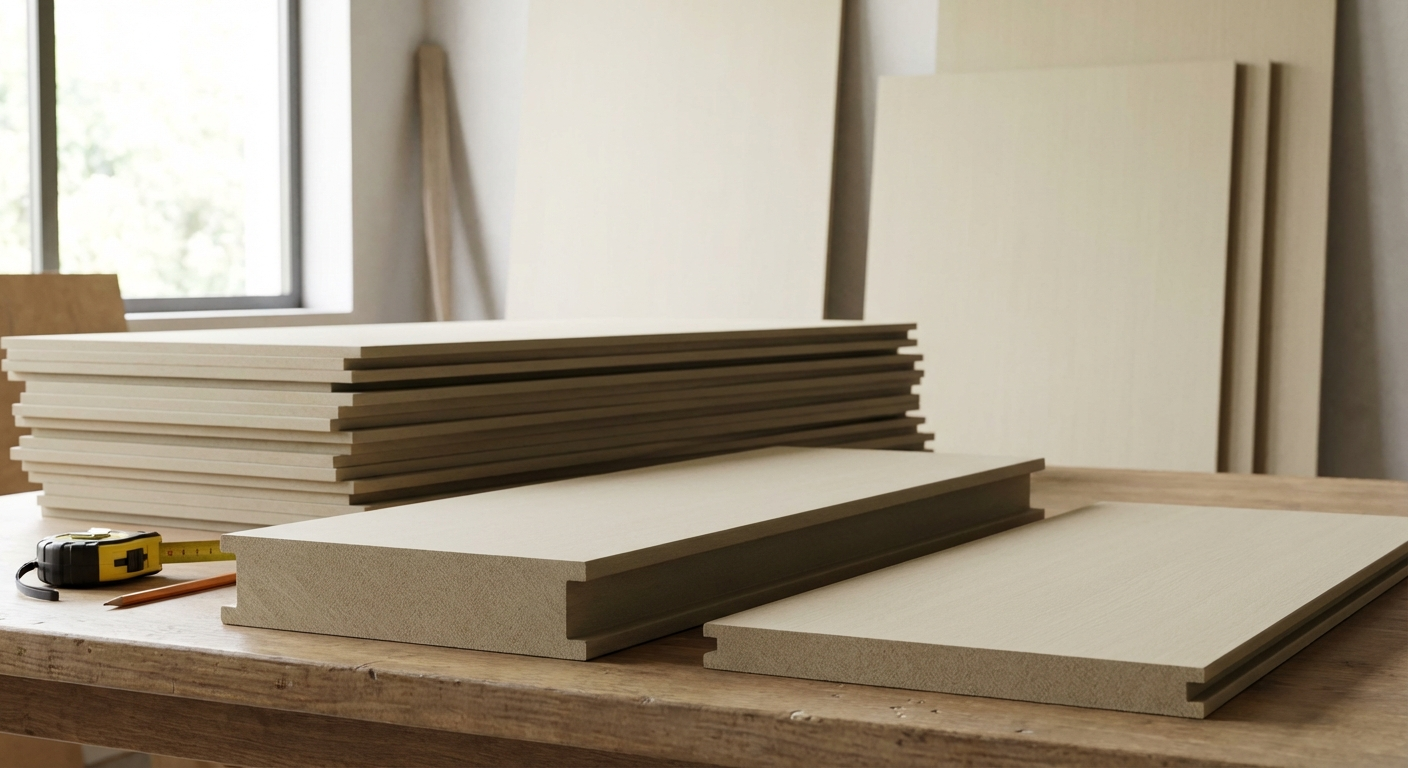
Shopping for MDF boards in India means facing a price spread that can confuse even experienced buyers. MDF board costs between ₹20 to ₹50 per square foot, depending on the thickness and quality. For a standard 8x4 feet sheet (32 sq ft), this translates to roughly ₹640 to ₹1,600 per sheet for plain interior-grade MDF—but that's just the starting point.
The actual number on your invoice depends on five factors: thickness, grade (interior vs exterior vs moisture-resistant), brand tier, city, and whether you're buying plain or pre-laminated boards. This guide breaks down each variable so you can budget accurately before visiting the dealer.
MDF Board 8x4 Price by Thickness: The Real Numbers
Thickness is the single biggest price driver for MDF sheets. Thinner boards cost less per sheet but may need doubling for structural applications, while thicker boards carry premium pricing but deliver better screw-holding and rigidity.
| Thickness (mm) | Approx. Price per Sq Ft (₹) | 8x4 Sheet Price Range (₹) | Common Applications |
|---|---|---|---|
| 2–3 mm | ₹7–₹15 | ₹224–₹480 | Backing panels, laser cutting, craft projects |
| 4–6 mm | ₹10–₹22 | ₹320–₹700 | Drawer bottoms, wall panels, jali work |
| 8–9 mm | ₹18–₹32 | ₹576–₹1,024 | Light shelving, cabinet backs, decorative elements |
| 12 mm | ₹28–₹45 | ₹896–₹1,440 | Wardrobe internals, side panels, partitions |
| 16–17 mm | ₹38–₹55 | ₹1,216–₹1,760 | Cabinet doors, furniture panels, TV units |
| 18 mm | ₹42–₹70 | ₹1,344–₹2,240 | Kitchen shutters, wardrobe doors, table tops |
| 25 mm | ₹60–₹95 | ₹1,920–₹3,040 | Heavy-duty shelving, commercial furniture, counters |
Note: Prices exclude GST (18%) and may vary by 10–15% across regions. Delhi, Mumbai, and Bengaluru typically have competitive pricing due to dealer density, while Northeast and remote areas see higher transport-added costs.
Brand-wise MDF Board Price Comparison (8x4 Sheet)
India's MDF market features several established players, each occupying different price-quality tiers. The cost always depends on the brand from which you are buying it like VIR MDF, Action TESA, Greenply, ASIS India, and others.
Action Tesa MDF
Action TESA uses German Technology and Hard Wood precisely to manufacture their MDF boards. With its homogenous structure and consistent quality, the Action TESA MDF board has earned a unique edge over available products in the marketplace. Action TESA produces both Interior and Exterior Grade MDF boards.
Action Tesa MDF - Interior Grade starts from Rs. 6.97 per sq. feet. For an 18mm 8x4 sheet, expect approximately ₹1,400–₹2,100 depending on grade and dealer margin.
Emission classes E1 and E2 were created by European Standard EN 13986 for use in construction. Action TESA manufactures the necessary CARB-certified E0, E1 & E2 quality MDF boards.
Century Prowud MDF
Century Prowud is dedicated to providing a wide range of boards that not only protect your haven from fire, water, termite, borer, and fungus threats but also prioritize your well-being. Their boards emit minimal harmful fumes, ensuring a healthy sanctuary.
Century MDF is available at approximately Rs 60 per sq ft for standard grades in Bengaluru, putting an 18mm 8x4 sheet at roughly ₹1,900–₹2,400.
Greenply MDF
Greenply Interior MDF is a long-lasting and highly versatile board created with PROD-IQ NEO TECH that uses Artificial Intelligence to analyse microfibers for delivering each board with supreme quality.
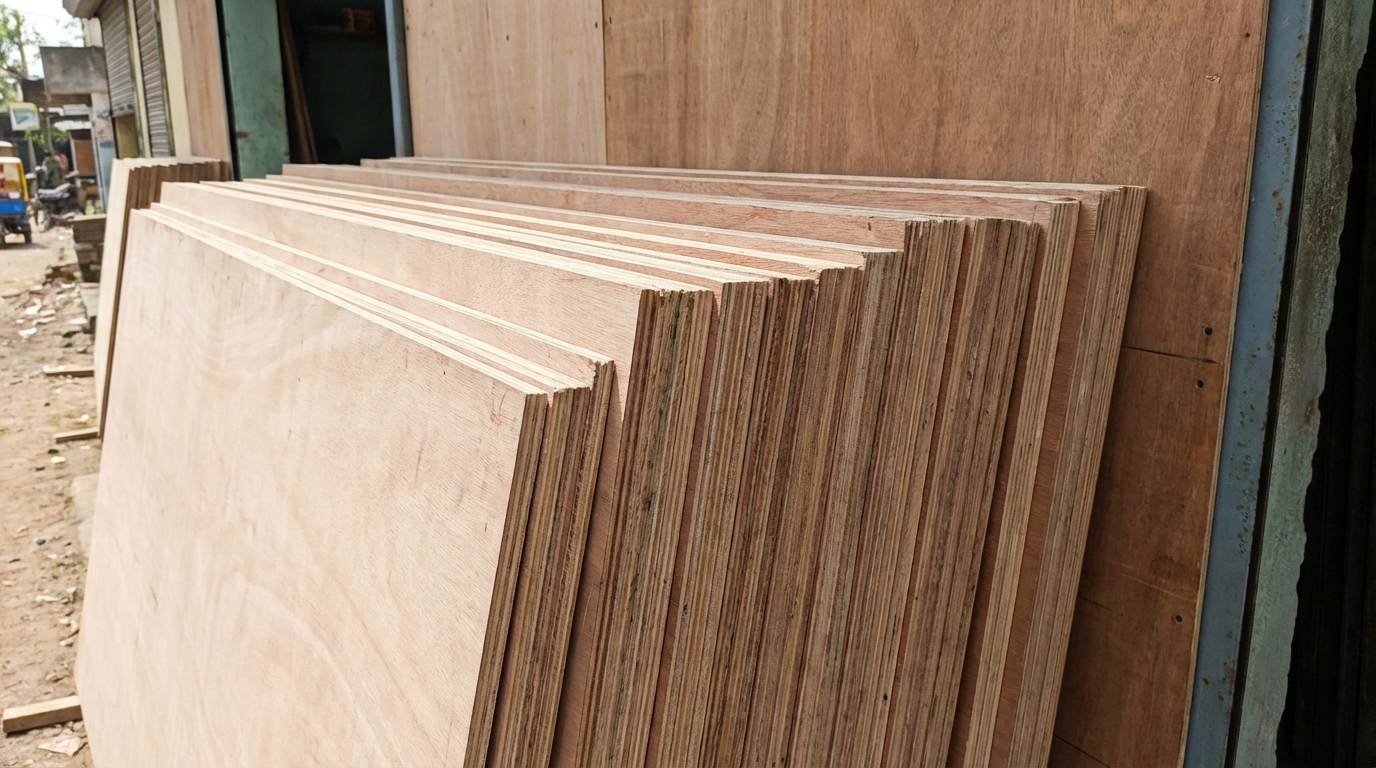
MDF tends to be cheaper than plywood. This is mainly because MDF is compounded from wood fibers, resin, and adhesive processed into panels under high pressure and heat. It's cheaper to manufacture than plywood.
Greenpanel MDF
Greenpanel Industries Ltd., India's No. 1 MDF Company and India's Largest Wood Panel Manufacturer, manufactures high-performance HDWR boards, MDF, Pre-Laminated MDF, Plywood, and Wooden Flooring.
Premium Greenpanel MDF boards are made from 100% renewable agro-forestry wood, reflecting commitment to sustainability.
VIR MDF
VIR PRO MDF boards (Interior Grade MDF) are homogeneous in structure. Since it has no layers, it is extremely easy for carpenters to work, polish and paint.
VIR MDF is available in thicknesses: 4.6 mm, 5.5 mm, 7.3 mm, 9.5 mm, 11 mm, 14.5 mm, 16 mm, 16.5 mm, 17 mm, 18 mm, and 25 mm.
Brand Price Positioning Table (18mm Plain MDF 8x4)
| Brand | Price Tier | Estimated 18mm 8x4 Price (₹) | Key Differentiator |
|---|---|---|---|
| Action Tesa | Mid-Premium | ₹1,400–₹2,100 | German technology, wide dealer network |
| Century Prowud | Premium | ₹1,900–₹2,400 | Termite/borer resistance, low emissions |
| Greenply | Mid-Premium | ₹1,500–₹2,200 | AI-driven production (PROD-IQ), CARB P2 options |
| Greenpanel | Mid-Premium | ₹1,400–₹2,000 | Largest capacity, agro-forestry sourcing |
| VIR MDF | Budget-Mid | ₹1,200–₹1,800 | Wide thickness range, value pricing |
| Local/Unbranded | Budget | ₹800–₹1,400 | Price advantage, inconsistent quality |
Pre-Laminated MDF vs Plain MDF: What's the Price Difference?
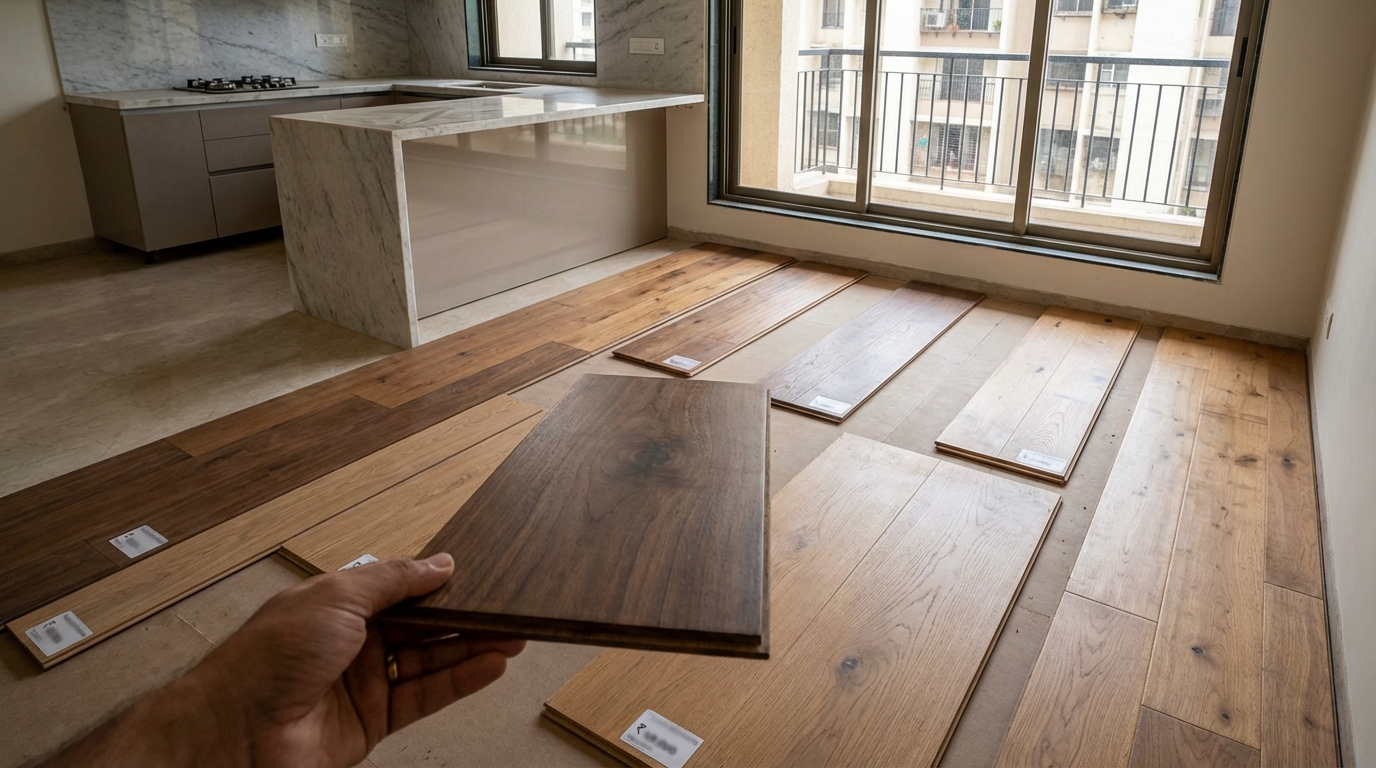
A plain MDF board is raw and needs surface finishing, while pre-laminated MDF boards come with decorative laminates on one or both sides. Prelam boards are ideal for modular furniture, wall paneling, and ready-to-install applications.
The cost difference between plain and pre-laminated MDF typically runs 40–80% higher for prelam, depending on the laminate grade:
| MDF Type (18mm 8x4) | Approx. Price Range (₹) | When to Choose |
|---|---|---|
| Plain Interior MDF | ₹1,200–₹2,200 | When applying laminate/veneer/paint separately |
| Pre-Laminated MDF (Standard) | ₹1,800–₹3,000 | Wardrobe interiors, basic furniture |
| Pre-Laminated MDF (Premium) | ₹2,800–₹4,500 | Kitchen shutters, visible furniture faces |
Rule of thumb: If you are paying significant labor for lamination, prelam can be cost-neutral or even cheaper in total cost, especially for large modular jobs.
MDF vs HDHMR: Understanding the Price Gap
Many buyers confuse standard MDF with HDHMR (High Density High Moisture Resistant) boards. The distinction matters significantly for both price and application suitability.
MDF is generally cheaper than HDHMR. In India, standard MDF board of 18mm might cost in the range of ₹20–₹50 per sq ft depending on brand and quality. HDHMR boards of 18mm typically range around ₹60–₹100 per sq ft. In other words, HDHMR can be roughly 1.5 to 2 times the price of MDF of equivalent thickness.
When MDF Makes Sense
MDF is better suited for low-budget projects or decor elements – e.g., a painted console table in a dry room or wall shelves for light items. It provides a smooth finish at a low cost and is easy to fabricate for DIY projects. Just avoid MDF in critical structural parts or wet areas.
When to Upgrade to HDHMR
For most furniture applications in Indian homes, especially in kitchens or places with any humidity, HDHMR is the superior choice over MDF. The exceptional strength and moisture resistance of HDHMR make it a more robust, longer-lasting material. If you're building a wardrobe, modular kitchen, bathroom cabinet, or any furniture that you want to endure wear and tear, HDHMR will give you peace of mind.
MDF vs HDHMR Quick Comparison
| Parameter | Standard MDF | HDHMR |
|---|---|---|
| Density | 600–800 kg/m³ | 850–950+ kg/m³ |
| Moisture Resistance | Low (swells with humidity) | High (resists occasional moisture) |
| Screw Holding | Moderate | Excellent |
| 18mm 8x4 Price | ₹1,200–₹2,200 | ₹2,800–₹4,200 |
| Best For | Dry interiors, decorative panels | Kitchens, bathrooms, heavy-use furniture |
| Expected Lifespan | 5–8 years | 12–15 years |
HDHMR boards have a lifespan of 12–15 years and can withstand humid environments better than MDF and HDF. Due to its strength and density, HDHMR can be drilled and screwed, making it a versatile choice.
Understanding MDF Emission Grades: E0, E1, E2
E0, E1, E2 are the Formaldehyde Emission standards for plywood, MDF, HDF, particleboard, OSB, veneered plywood, blockboard, melamine faced board, and flooring.
Formaldehyde is naturally present in many materials, but in furniture manufacturing it mainly comes from the resin used to bond wood fibers together. The lower the emission level, the safer the panel is for indoor use.
What Each Grade Means
E0 Plywood/MDF: This grade contains not more than 0.5 mg/L of formaldehyde and can be termed to be the best grade. It is suitable for residential, educational, or healthcare facilities where there is a need for cleaner air. E1: Although it is higher than E0, it is still acceptable for indoor applications.
E0 is classified as having less than 3 mg of formaldehyde out of every 100 g of the glue used. E1 and E2 are classified as having 9 and 30 mg of formaldehyde per 100 g of glue, respectively.
E0 boards have extremely low emissions and are the safest option for indoor air quality. They meet the strictest international standards and are often used in schools, hospitals, and homes where air quality matters.
Price Impact of Emission Grades
E0 MDF typically costs 15–25% more than E1 grade of the same thickness and brand. For budget-conscious buyers, E1 grade offers acceptable safety for most residential applications where ventilation is adequate. E2 is rarely recommended for bedroom furniture or poorly ventilated spaces.
MDF Board Thickness Selection Guide
MDF boards can be classified into 3 categories based on thickness: Thin MDF boards are ideal for delicate woodworking projects, crafting and making different models. Their low weight and flexibility accommodate designing intricate pieces. Even though the 7.5mm boards are slightly more durable than the 2mm boards, both can be used effectively for small-scale woodworking undertakings.
Application-Based Thickness Recommendations
| Application | Recommended Thickness | Reasoning |
|---|---|---|
| Cabinet/furniture backs | 3–6 mm | No structural load, cost efficiency |
| Drawer bottoms | 4–6 mm | Light load, flexibility for fitting |
| Wall paneling, wainscoting | 6–9 mm | Adequate rigidity without excess weight |
| Shelving (light loads) | 12 mm | Books/decorative items up to 15 kg/shelf |
| Wardrobe side panels | 16–18 mm | Screw holding for hardware, structural integrity |
| Kitchen shutter doors | 17–18 mm | Routing possible, laminate adhesion, durability |
| Table tops, counters | 25 mm | Maximum rigidity, edge banding support |
Regional Price Variations Across India
MDF pricing varies by 10–20% depending on your city. Manufacturing hubs (Uttar Pradesh, Uttarakhand, Andhra Pradesh) tend to have lower prices due to proximity to plants, while transport costs push prices up in remote regions.
| Region | Price Index (Delhi = 100) | Notes |
|---|---|---|
| Delhi NCR | 100 | Kirti Nagar is the largest wholesale hub |
| Mumbai | 102–108 | Higher real estate adds to dealer margins |
| Bengaluru | 100–105 | Strong dealer competition in Hosur Road area |
| Chennai | 103–108 | Port proximity helps imports |
| Kolkata | 98–104 | Lower demand keeps prices competitive |
| Northeast India | 115–130 | Transportation costs significantly higher |
| Tier-2 Cities | 105–115 | Fewer dealers, limited brand options |
Hidden Costs You Should Budget For
The board price is only part of your total expense. Factor in these additional costs:
- GST: 18% on top of the quoted price (some dealers quote inclusive, others exclusive)
- Cutting charges: ₹5–₹15 per cut if you need custom sizes
- Transport: ₹200–₹800 depending on distance and quantity
- Edge banding: ₹8–₹25 per running foot for PVC edge tape application
- Laminate (if buying plain MDF): ₹15–₹90 per sq ft depending on brand and finish
- Adhesive: ₹150–₹400 per litre for lamination
Buyer Checklist: Before You Purchase MDF
Use this checklist when visiting dealers to avoid common purchasing mistakes:
- Confirm the exact product: Thin-board pricing is the most inconsistent online because some listings include different grades or even different board families. Always confirm "HDHMR" vs "MR MDF".
- Check emission grade: Ask specifically for E0 or E1 certification if indoor air quality matters
- Verify thickness: Actual thickness may be slightly less than nominal (e.g., 17.5mm sold as 18mm)
- Inspect edges: Check for chips, delamination, or surface damage before accepting delivery
- Get GST invoice: Ensures authenticity and warranty claims
- Compare prelam total cost: If you need lamination, calculate plain + laminate + labor vs prelam board price
- Ask about bulk discounts: Orders above 10 sheets typically qualify for 5–10% discount
- Confirm return policy: Most dealers don't accept returns on cut boards
Quick Decision Guide: Which MDF Should You Buy?
Choose Standard Interior MDF if:
- Your application is in a dry, well-ventilated area
- Budget is the primary constraint
- You're making decorative panels, craft projects, or temporary fixtures
- The furniture won't face heavy loads or humidity
Choose Exterior/Moisture-Resistant MDF if:
- The installation area has moderate humidity (not direct water contact)
- You need better dimensional stability
- Applications near windows or in rooms without AC
Upgrade to HDHMR if:
- You're building kitchen cabinets or bathroom vanities
- The furniture will face heavy daily use
- You want a 15-year lifespan without swelling or sagging
- Budget allows for the 1.5–2x premium over standard MDF
Frequently Asked Questions
What is the price of 18mm MDF board 8x4 in India?
An 18mm plain interior-grade MDF board in 8x4 size typically costs ₹1,200–₹2,200 depending on brand and city. Pre-laminated 18mm MDF ranges from ₹1,800–₹4,500. Add 18% GST to all quoted prices.
Which brand of MDF is best in India?
Popular brands for MDF include Action Tesa, CenturyPly, and Greenply. Greenpanel Industries is India's largest wood panel manufacturer. The "best" brand depends on your budget, required grade, and local dealer availability. Action Tesa and Greenply offer wide distribution; Century Prowud focuses on premium positioning.
Is MDF cheaper than plywood?
MDF tends to be cheaper than plywood. This is mainly because MDF is compounded from wood fibers, resin, and adhesive processed into panels under high pressure and heat. It's cheaper to manufacture than plywood. However, for moisture-prone applications, HDHMR (which costs more than MDF) may be more cost-effective long-term than equivalent plywood.
Can MDF be used in kitchens?
MDF is a great choice for budget-friendly furniture and decorative wall panels. However, it's not ideal for areas with high moisture, such as kitchens and bathrooms as these boards won't be able to handle much water exposure or humidity. For kitchen applications, HDHMR or HDF-HMR is recommended.
What thickness of MDF should I use for wardrobe shutters?
17–18mm MDF is standard for wardrobe shutter doors. This thickness provides adequate screw holding for hinges, allows CNC routing for design elements, and offers sufficient rigidity to prevent warping over time.
What do E0, E1, and E2 grades mean?
These grades indicate how much formaldehyde the board releases into the air under standard testing conditions. Lower emission levels mean better indoor air quality and higher safety standards for furniture and interior use. E0 is the safest, E1 is acceptable for most homes, and E2 should be avoided in enclosed spaces.
Final Advice: Balancing Budget and Quality
MDF remains one of the most cost-effective materials for interior furniture in India, but the cheapest option isn't always the smartest choice. For visible furniture faces, invest in branded boards with proper E1/E0 certification. For internal components like drawer bottoms or cabinet backs, budget options work fine.
Using MDF in areas where it fails can be a false economy. For example, if an MDF kitchen starts swelling or needs replacement in 5 years, whereas HDHMR would have lasted 15 years, the life-cycle cost of HDHMR is lower. For critical pieces like kitchen or expensive wardrobe, many consider the higher initial cost of HDHMR worth it.
Always get quotes from at least 2–3 dealers, verify the exact product grade, and factor in GST plus finishing costs before finalizing your purchase decision.
Disclaimer: This content is provided for general informational purposes based on industry practices and publicly available information. Product specifications, standards, prices, and availability may vary by manufacturer, region, and time. Readers should independently verify details with manufacturers, dealers, or qualified professionals before making purchase or construction decisions.