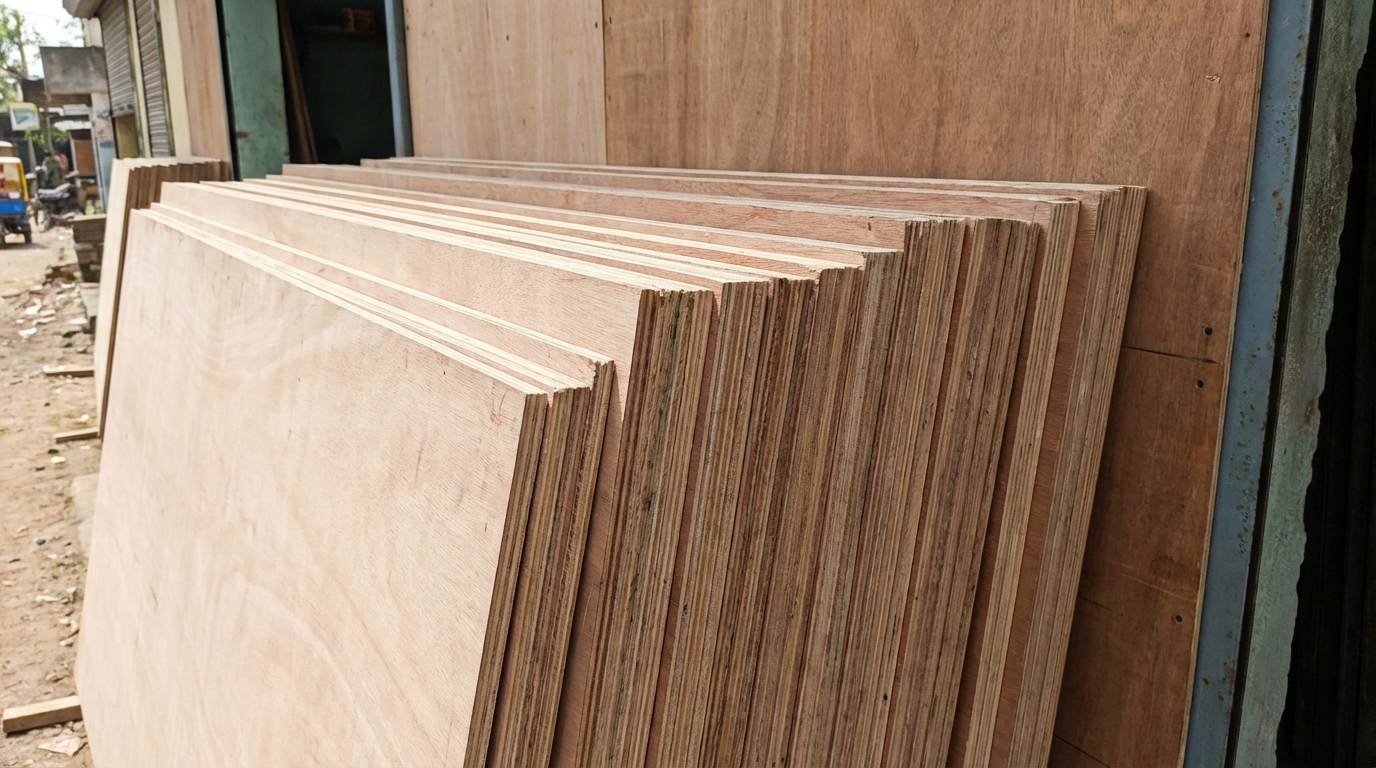
What Does an 8×4 Ply Board Actually Cost in India Right Now?
If you're budgeting for furniture, modular kitchens, or interior work in 2026, you've likely encountered wildly different plywood quotes—some dealers quoting ₹1,400 for an 8×4 sheet while others demand ₹7,500 for seemingly the same size. The confusion isn't accidental. Plywood pricing in India depends on a matrix of factors that dealers rarely explain upfront: grade classification, core wood species, thickness tolerance, bonding resin type, and whether you're buying from a distributor or retail showroom.
This price guide cuts through the noise. Here's what you'll actually pay for standard 8×4 (8 feet × 4 feet = 32 square feet) plywood sheets across grades and thicknesses in the Indian market as of January 2026.
2026 Ply Board 8×4 Price List: Grade-wise Breakdown
Plywood in India follows distinct grade classifications based on moisture resistance and bonding standards. The price gap between grades is significant—choosing incorrectly either wastes money or risks furniture failure.
MR Grade (Moisture Resistant) Plywood Prices
MR grade plywood uses urea-formaldehyde resin bonding and handles normal indoor humidity but fails under direct water contact. It's the most affordable option, suitable only for dry interior applications.
| Thickness | Price Range (per 8×4 sheet) | Per Sq Ft Equivalent | Common Applications |
|---|---|---|---|
| 6mm | ₹1,200 – ₹1,800 | ₹38 – ₹56 | Back panels, drawer bottoms, wall cladding |
| 9mm | ₹1,600 – ₹2,400 | ₹50 – ₹75 | Partition backing, ceiling panels |
| 12mm | ₹2,100 – ₹3,200 | ₹66 – ₹100 | Wardrobe carcasses, bedroom furniture |
| 18mm/19mm | ₹2,800 – ₹4,200 | ₹88 – ₹131 | Study tables, shelving, non-kitchen cabinets |
Key insight: MR grade pricing varies up to 50% between economy and branded options. Economy MR plywood often uses poplar or lower-density cores that compress under screws and degrade faster. For furniture expected to last beyond 5 years, spending ₹400–600 extra per sheet on branded MR plywood typically pays off.
BWR Grade (Boiling Water Resistant) Plywood Prices
BWR plywood uses phenol-formaldehyde resin, offering substantially better moisture resistance than MR grade. It handles steam, occasional splashes, and high-humidity environments without delamination—making it the standard choice for kitchens and semi-wet areas.
| Thickness | Price Range (per 8×4 sheet) | Per Sq Ft Equivalent | Common Applications |
|---|---|---|---|
| 6mm | ₹1,800 – ₹2,600 | ₹56 – ₹81 | Kitchen back panels, modular shutters (light duty) |
| 9mm | ₹2,400 – ₹3,400 | ₹75 – ₹106 | Cabinet interiors, drawer components |
| 12mm | ₹3,000 – ₹4,200 | ₹94 – ₹131 | Kitchen carcasses, bathroom vanity frames |
| 18mm/19mm | ₹4,200 – ₹5,800 | ₹131 – ₹181 | Kitchen shutters, wardrobe structures, load-bearing shelves |
Practical consideration: BWR grade costs roughly 35–45% more than equivalent MR plywood, but the durability difference in moisture-prone areas is dramatic. MR plywood in a kitchen typically shows edge swelling within 2–3 monsoon seasons; BWR grade maintains structural integrity for 8–12 years under normal use.
BWP Grade (Boiling Water Proof) Plywood Prices
BWP plywood meets IS 710 standards with phenolic bonding that withstands continuous water exposure. It's specified for areas with direct water contact—bathroom cabinets, outdoor-adjacent furniture, and high-humidity commercial installations.
| Thickness | Price Range (per 8×4 sheet) | Per Sq Ft Equivalent | Common Applications |
|---|---|---|---|
| 6mm | ₹2,400 – ₹3,600 | ₹75 – ₹113 | Bathroom panels, wet area backing |
| 9mm | ₹3,200 – ₹4,600 | ₹100 – ₹144 | Bathroom shelving, utility area cabinets |
| 12mm | ₹4,000 – ₹5,600 | ₹125 – ₹175 | Bathroom vanities, laundry room furniture |
| 18mm/19mm | ₹5,400 – ₹7,200 | ₹169 – ₹225 | Bathroom cabinets, exterior-facing furniture, balcony storage |
Decision point: BWP grade makes financial sense only where water contact is inevitable. For kitchen carcasses (which face humidity but rarely direct water), BWR grade provides adequate protection at 20–25% lower cost. Reserve BWP for sink cabinets, bathroom furniture, and outdoor applications.
Marine Grade Plywood Prices
Marine plywood represents the highest waterproofing standard, manufactured with hardwood cores (typically Gurjan) and marine-grade phenolic bonding. It withstands prolonged submersion and extreme humidity without structural degradation.
| Thickness | Price Range (per 8×4 sheet) | Per Sq Ft Equivalent | Common Applications |
|---|---|---|---|
| 6mm | ₹3,200 – ₹4,800 | ₹100 – ₹150 | Boat interiors, heavy-duty backing |
| 9mm | ₹4,200 – ₹5,800 | ₹131 – ₹181 | Marine applications, industrial wet areas |
| 12mm | ₹5,200 – ₹6,800 | ₹163 – ₹213 | Exterior furniture, water tank surrounds |
| 18mm/19mm | ₹6,800 – ₹8,500 | ₹213 – ₹266 | Outdoor structures, boat building, public bathroom fixtures |
Honest assessment: Marine plywood is over-specified for most residential projects. Dealers sometimes push marine grade for kitchen work, but BWR or BWP handles typical kitchen conditions at 30–40% lower cost. Marine grade becomes necessary only for outdoor furniture fully exposed to rain, boat construction, or commercial wet areas with constant water contact.
Why Plywood Prices Vary So Much: The Hidden Cost Factors
The price ranges above span ₹600–1,500 per sheet even within the same grade and thickness. Understanding why helps you negotiate smarter and identify when premium pricing is justified versus when you're simply overpaying.
Core Wood Species
The internal wood layers dramatically affect both price and performance:
- Gurjan/Keruing core: Premium hardwood with excellent screw-holding and stability. Adds ₹800–1,200 per sheet versus softwood alternatives.
- Eucalyptus core: Mid-range option common in branded plywood. Good density, moderate cost.
- Poplar/softwood core: Budget option with lower density. Acceptable for light-duty applications but compresses under heavy loads.
When a dealer quotes unusually low prices for "BWR grade," the core wood is typically the cost-cutting point. Ask specifically about core species before assuming you're getting a deal.
Calibration Quality
Calibrated plywood maintains consistent thickness across the entire sheet—critical for laminate application and flush-fitting furniture. Non-calibrated sheets can vary 0.5–1.5mm across different areas, causing:
- Uneven laminate adhesion
- Visible gaps at joints
- CNC routing problems
- Higher wastage during fabrication
Calibrated plywood typically costs ₹300–600 more per sheet but reduces finishing costs and improves final quality. For visible furniture surfaces, this premium usually pays off.
Brand vs. Unbranded Economics
Branded plywood (Greenply, Century, Kitply, etc.) costs 25–40% more than unbranded alternatives from the same dealer. The premium buys:
- Consistent quality control across batches
- Warranty coverage (typically 7–15 years for structural failure)
- ISI certification verification
- Standardized thickness and grading
For structural elements (kitchen carcasses, wardrobes), branded plywood reduces long-term risk. For concealed applications (back panels, internal partitions), unbranded options from reputable dealers offer adequate performance at lower cost.
Regional Price Variation
Plywood prices in India vary 15–25% based on location:
- Manufacturing hubs (Kerala, Gujarat, Assam): Lower prices due to reduced transportation costs
- Metro cities (Delhi, Mumbai, Bangalore): Higher prices reflecting real estate costs and demand
- Tier-2/3 cities: Variable pricing—sometimes lower than metros, sometimes higher due to limited dealer competition
If you're executing a large project, sourcing from manufacturing-adjacent regions can reduce material costs by ₹50,000–100,000 on a full home interior.
Thickness Selection Guide: Matching Plywood to Application
Choosing the wrong thickness is one of the most common—and expensive—mistakes in furniture projects. Here's a practical decision framework:
6mm Plywood: Backing and Lightweight Applications
Use for: Wardrobe back panels, drawer bottoms, wall paneling, partition backing, false ceiling base
Avoid for: Any load-bearing application, shelving, cabinet doors
Why 6mm works here: These applications don't require structural strength—the plywood simply creates a surface or enclosure. Using thicker material wastes money without improving function.
9mm Plywood: Transition Thickness
Use for: Cabinet internal shelves (light items), partition panels, drawer sides, ceiling installations
Avoid for: Exposed surfaces, heavy-duty shelving, door shutters
Why 9mm works here: Provides slightly more rigidity than 6mm for applications that see occasional handling but don't support significant weight.
12mm Plywood: Standard Furniture Construction
Use for: Wardrobe carcasses, study tables, bed frames, standard cabinet structures, internal dividers
Avoid for: Kitchen shutters, heavy-load shelving, door cores
Why 12mm works here: Balances structural adequacy with material cost for most residential furniture. Handles typical loads and provides adequate screw-holding.
18mm/19mm Plywood: Heavy-Duty Applications
Use for: Kitchen carcasses, kitchen shutters, wardrobe doors, heavy-load shelving, tabletops, door cores
Avoid for: Back panels, internal partitions, non-structural elements
Why 18mm/19mm works here: Kitchen hardware (hinges, drawer slides, handles) requires substantial screw-holding strength. Thinner material leads to loose hinges and sagging doors within 2–3 years.
Grade Selection: Choosing Between MR, BWR, BWP, and Marine
Rather than defaulting to "higher is better," match the grade to actual moisture exposure:
| Application Zone | Moisture Exposure Level | Recommended Grade | Why |
|---|---|---|---|
| Bedroom furniture | Minimal (normal indoor humidity) | MR Grade | No water contact; MR handles seasonal humidity adequately |
| Living room cabinets | Minimal to low | MR Grade | Dry environment; BWR offers no practical advantage |
| Study/home office | Minimal | MR Grade | Indoor, climate-controlled; premium grades unnecessary |
| Kitchen carcasses | Moderate (steam, occasional splashes) | BWR Grade | Handles cooking humidity without delamination |
| Kitchen shutters | Moderate | BWR Grade | Steam exposure during cooking; MR fails prematurely |
| Sink cabinet | High (direct water contact likely) | BWP Grade | Water splashes and plumbing leaks inevitable |
| Bathroom vanity | High | BWP Grade | Constant humidity + water splashes |
| Bathroom cabinets | Very high | BWP or Marine | Prolonged moisture exposure; BWR insufficient |
| Balcony/outdoor furniture | Extreme (rain exposure) | Marine Grade | Direct weather exposure requires marine-grade protection |
HDHMR vs. Plywood: When Engineered Boards Make More Sense
For many interior applications, HDHMR (High Density High Moisture Resistant) boards compete directly with BWR plywood at similar price points. Understanding the trade-offs helps optimize your material selection:
Choose HDHMR When:
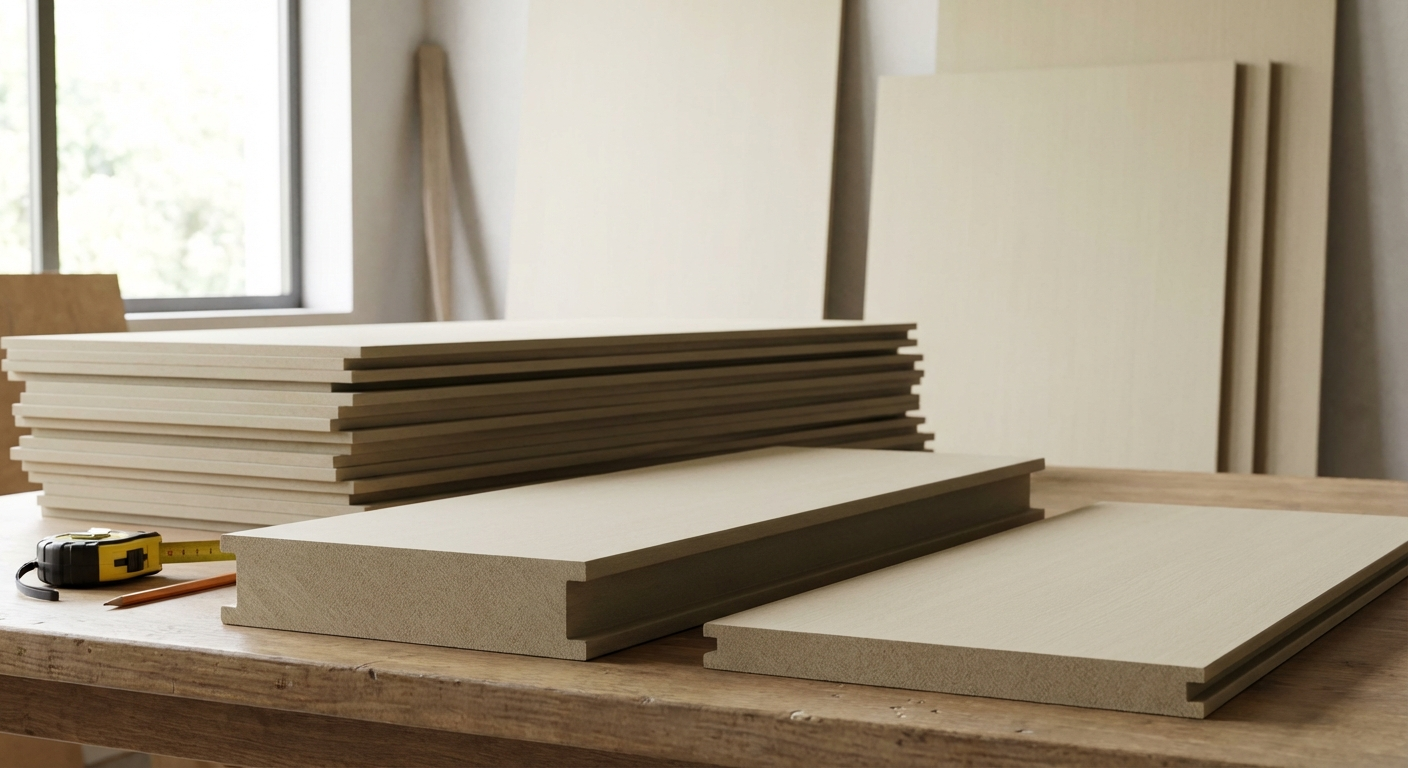
- You need uniform thickness for laminate/veneer application (HDHMR is factory-calibrated)
- CNC routing or intricate design work is planned
- Surface smoothness matters (HDHMR's homogeneous core finishes cleaner)
- You're building modular furniture with machine-made components
Choose Plywood When:
- Screw-holding strength is critical (plywood's layered structure grips screws better)
- Impact resistance matters (plywood handles physical stress better than MDF-based boards)
- You're working in areas with termite risk (plywood treatments penetrate better)
- Traditional carpentry methods are being used
Price Comparison: HDHMR vs. BWR Plywood (18mm, 8×4 sheet)
| Material | Price Range | Key Advantage | Key Limitation |
|---|---|---|---|
| BWR Plywood (18mm) | ₹4,200 – ₹5,800 | Superior screw-holding, impact resistance | Surface consistency varies |
| HDHMR (18mm) | ₹3,800 – ₹5,200 | Uniform density, excellent machinability | Edge screws less secure than plywood |
For kitchen shutters and modular furniture, HDHMR often provides better value. For structural carcasses where hardware mounting is critical, plywood remains the safer choice.
How to Verify Plywood Quality Before Buying
Price alone doesn't guarantee quality. Before committing to a large order, perform these checks:
Visual Inspection
- Edge examination: Look for gaps, voids, or inconsistent layering at cut edges. Quality plywood shows tight, uniform layers.
- Surface flatness: Sight along the sheet surface. Warping or undulation indicates moisture problems or poor storage.
- Core visibility: Ask to see a cut cross-section. Dense, uniform cores indicate better quality.
Physical Tests
- Weight check: Heavier sheets (same size/thickness) generally indicate denser cores and better quality.
- Flexibility test: Slightly flex a sheet corner. Excessive flexibility suggests low-density core material.
- Tap test: Knock on the surface. Hollow sounds indicate internal voids; solid sounds suggest dense, well-bonded construction.
Documentation Verification
- ISI marking: Look for IS 303 (MR grade), IS 303 with BWR marking (BWR grade), or IS 710 (BWP/Marine grade) stamped on sheets.
- Brand authenticity: Verify brand holograms or security features—counterfeit branded plywood is common.
- Warranty documentation: Branded plywood should come with warranty cards. Request these before purchase.
Buying Strategy: Optimizing Cost Without Sacrificing Quality
For a typical 2-3 BHK home interior project requiring 80–120 sheets of plywood, smart sourcing can save ₹40,000–80,000 without compromising quality:
Grade Optimization
Don't use BWR or BWP where MR suffices. A typical home interior breakdown:
- Bedrooms, living room, study: MR grade (approximately 50% of total sheets)
- Kitchen carcasses and shutters: BWR grade (approximately 35% of total sheets)
- Bathroom furniture, sink cabinets: BWP grade (approximately 15% of total sheets)
Using appropriate grades instead of defaulting to BWR throughout saves ₹15,000–25,000 on a typical project.
Thickness Optimization
Use 6mm for all back panels and drawer bottoms instead of 9mm or 12mm. On a project requiring 25–30 back panels, this saves ₹8,000–12,000.
Bulk Negotiation
For orders exceeding 50 sheets, negotiate directly with distributors rather than retail dealers. Typical distributor discounts: 8–15% off retail pricing.
Timing Considerations
Plywood prices typically dip 5–10% during monsoon months (June–August) when construction activity slows. If your project timeline is flexible, sourcing during this window reduces costs.
Actionable Buyer Checklist for Ply Board Purchase
Before finalizing your plywood order, work through this verification sequence:
- Calculate actual requirements by room and application—don't rely on contractor estimates alone.
- Specify grade by zone: MR for dry areas, BWR for kitchen/semi-wet, BWP for bathrooms.
- Confirm thickness by application: 6mm backing, 12mm carcasses, 18mm shutters/doors.
- Request ISI certification verification before ordering.
- Ask about core wood species—don't accept "commercial ply" without specifics.
- Inspect sample sheets for edge quality, surface flatness, and weight.
- Negotiate bulk pricing if ordering 40+ sheets.
- Confirm warranty documentation availability for branded products.
- Check delivery condition clauses—reject sheets with visible damage or warping.
- Retain purchase invoices for warranty claims.
Taking these steps transforms plywood buying from a confusing negotiation into a structured procurement process—ensuring you pay appropriate prices for materials that actually perform as specified.
Disclaimer: This content is provided for general informational purposes based on industry practices and publicly available information. Product specifications, standards, prices, and availability may vary by manufacturer, region, and time. Readers should independently verify details with manufacturers, dealers, or qualified professionals before making purchase or construction decisions.