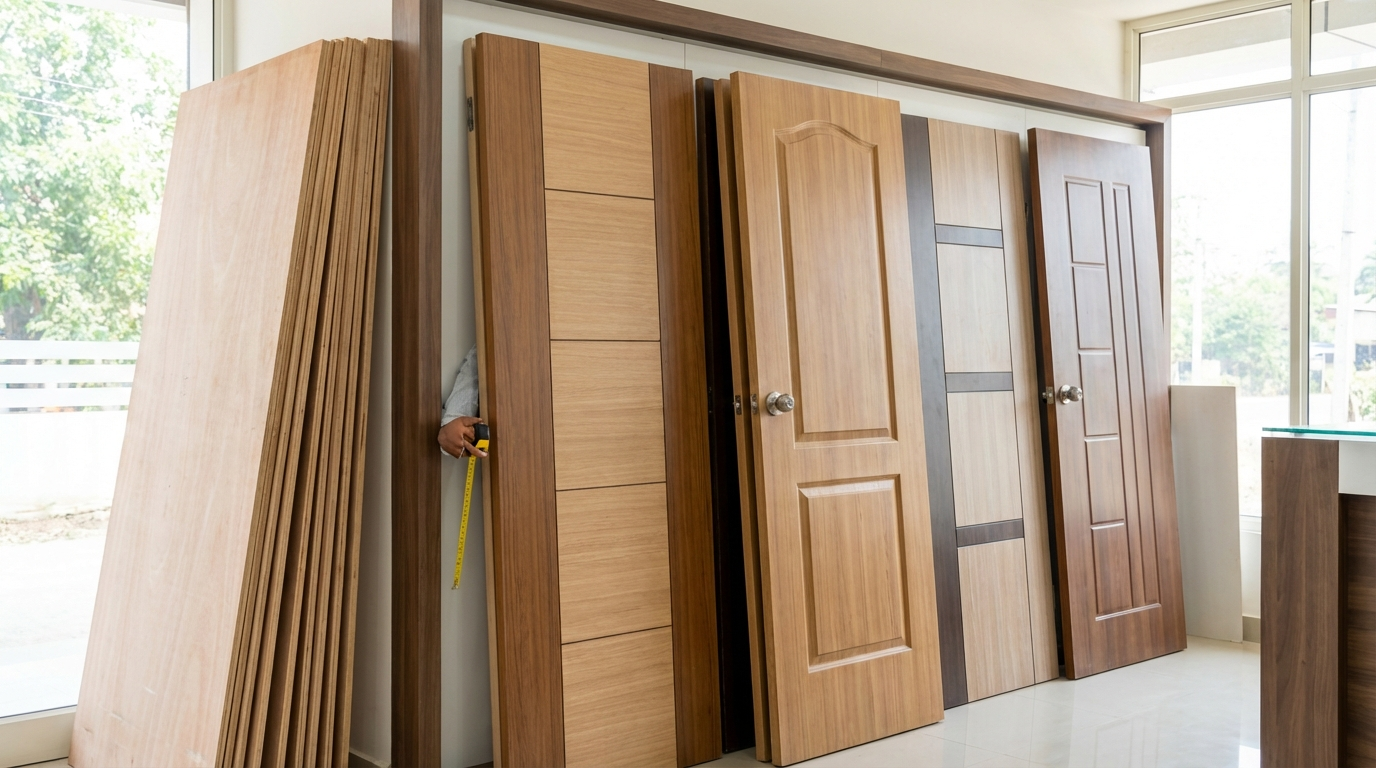
What Does a Plywood Door Actually Cost in 2026?
A standard 7×3 feet flush plywood door in India currently costs between ₹2,800 and ₹8,500 depending on core quality, face veneer, and moisture grade. For a main entrance door at 7×4 feet with BWR-grade plywood and decorative veneer, expect ₹6,500 to ₹15,000 or higher.
These ranges matter because most buyers walk into hardware shops or contact carpenters with either outdated expectations or inflated fears. The reality is nuanced—plywood door pricing in 2026 depends on seven distinct variables, and understanding each one prevents both overpaying and buying inadequate material for your specific installation location.
This pricing guide breaks down every factor that influences what you'll actually pay: door sizes, plywood grades, core construction types, finish options, regional variations, and the hidden costs that catch first-time buyers off guard.
Plywood Door Price List by Size (2026 Market Rates)
Door sizes in India follow established patterns based on room function and regional building conventions. The most common residential door sizes are 7×3 feet for internal rooms and 7×4 feet for main entrances. Here's what each size typically costs across different plywood grades:
| Door Size (feet) | Door Size (mm) | MR Grade Flush Door | BWR Grade Flush Door | BWP/Marine Grade |
|---|---|---|---|---|
| 6×2.5 | 1800 × 750 | ₹2,200 – ₹3,500 | ₹3,200 – ₹4,800 | ₹4,500 – ₹6,500 |
| 7×2.5 | 2100 × 750 | ₹2,500 – ₹4,000 | ₹3,800 – ₹5,500 | ₹5,200 – ₹7,500 |
| 7×3 | 2100 × 900 | ₹2,800 – ₹4,500 | ₹4,200 – ₹6,500 | ₹6,000 – ₹9,000 |
| 7×3.5 | 2100 × 1050 | ₹3,500 – ₹5,500 | ₹5,200 – ₹7,800 | ₹7,200 – ₹10,500 |
| 7×4 | 2100 × 1200 | ₹4,200 – ₹6,500 | ₹6,200 – ₹9,500 | ₹8,500 – ₹13,000 |
| 8×3 | 2400 × 900 | ₹3,800 – ₹5,800 | ₹5,500 – ₹8,200 | ₹7,500 – ₹11,000 |
| 8×4 | 2400 × 1200 | ₹5,200 – ₹8,000 | ₹7,800 – ₹12,000 | ₹10,500 – ₹16,000 |
Important pricing note: These figures represent shutter-only costs—the door panel itself without frame, hardware, or finishing. A complete door installation typically adds ₹1,500 to ₹4,000 for the frame and ₹800 to ₹2,500 for hardware (hinges, handles, locks).
Understanding Plywood Door Types and Their Price Implications
The term "plywood door" encompasses several distinct construction methods, each carrying different cost structures and performance characteristics. Confusing these types is one of the most common mistakes buyers make.
Flush Doors (Most Common)
A flush door consists of a solid or hollow core sandwiched between two flat face veneers, creating a smooth, unadorned surface. This is what most people mean when they say "plywood door."
Solid core flush doors use a continuous timber or block-board core, providing better sound insulation and screw-holding strength. They typically cost 25-40% more than hollow-core variants but are essential for main entrances and security-conscious installations.
Hollow core flush doors feature a honeycomb or cardboard lattice core with solid timber edges. These work perfectly for internal bedroom and bathroom doors where weight reduction matters and security is secondary.
| Flush Door Type | Weight (7×3 door) | Price Range | Best Application |
|---|---|---|---|
| Hollow Core (MR) | 18-25 kg | ₹2,200 – ₹3,800 | Internal rooms, cupboards |
| Solid Core (MR) | 32-42 kg | ₹3,500 – ₹5,500 | Bedrooms, offices |
| Hollow Core (BWR) | 20-28 kg | ₹3,200 – ₹5,000 | Bathrooms (with proper sealing) |
| Solid Core (BWR) | 35-48 kg | ₹5,000 – ₹8,000 | Kitchen, main entrance |
| Solid Core (BWP/Marine) | 38-52 kg | ₹6,500 – ₹12,000 | External doors, high-moisture areas |
Panel Doors (Traditional Aesthetic)
Panel doors feature raised or recessed sections created by attaching moulded plywood or MDF panels to a plywood frame. These cost significantly more than flush doors—typically ₹6,500 to ₹18,000 for a 7×3 door—because of the additional material and labour involved in panel construction.
The panels themselves can be solid plywood, MDF, or increasingly, HDHMR board for better routing precision and paint finish. A four-panel door in BWR plywood with MDF panel inserts currently runs ₹8,000 to ₹12,000 in most metros.
Designer and 3D Textured Doors
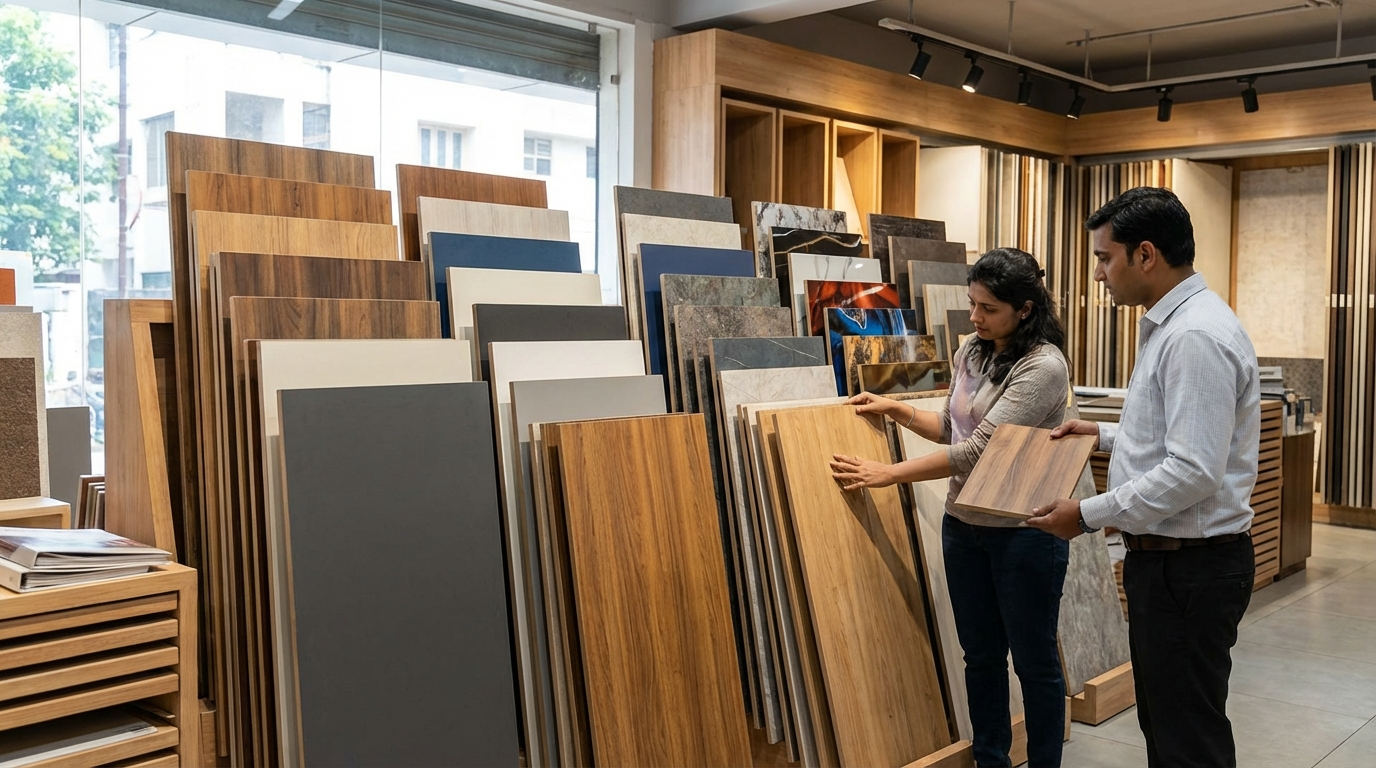
Modern interior trends have driven demand for doors with CNC-routed patterns, grooves, or three-dimensional textures. These are typically created using an MDF or HDHMR face layer bonded to a plywood core, combining the machining precision of engineered boards with plywood's structural stability.
Designer door prices start around ₹9,000 for simple groove patterns and can exceed ₹25,000 for complex CNC designs with premium finishes. The plywood core in these doors usually represents only 30-40% of the total cost, with the balance going toward the decorative face layer and finishing work.
Plywood Grade Selection: MR vs BWR vs BWP
Plywood grading determines moisture resistance, which directly impacts both price and appropriate installation locations. Mismatching grade to location is the fastest path to premature door failure.
MR Grade (Moisture Resistant)
MR-grade plywood uses urea-formaldehyde resin, providing resistance to occasional humidity but not sustained water exposure. This is the most affordable option, making it suitable for bedrooms, living rooms, and other dry interior spaces.
Price impact: MR grade serves as the baseline—all other grades are priced relative to it.
When to avoid MR: Bathrooms, kitchens near sinks, external doors, or any location in coastal cities where ambient humidity consistently exceeds 70%.
BWR Grade (Boiling Water Resistant)
BWR plywood uses phenol-formaldehyde resin, offering substantially better water resistance. It can handle humidity, splashes, and occasional wetting without delamination—though it's not meant for permanent water contact.
Price impact: Typically 35-50% more expensive than equivalent MR-grade doors.
Ideal for: Bathroom doors, kitchen doors, doors in humid climates (Kerala, coastal Karnataka, Mumbai, Chennai, Kolkata), and any door that might face monsoon exposure through nearby windows.
BWP/Marine Grade (Boiling Water Proof)
Marine-grade plywood uses superior phenolic resins and denser core veneers, designed to withstand prolonged water exposure without structural failure. It's the most expensive option but essential for specific applications.
Price impact: 70-100% more expensive than MR grade, sometimes higher for certified marine-grade products.
When it's worth the cost: External doors exposed to rain, doors in flood-prone ground floors, commercial kitchens, and industrial applications. For typical residential use, BWR often suffices—BWP is frequently over-specified by dealers looking to upsell.
Regional Price Variations Across Indian Cities
Plywood door prices in India vary by 15-30% depending on your location. This isn't arbitrary—it reflects transportation costs from manufacturing hubs, local demand patterns, dealer competition density, and state-level taxation differences.
| City/Region | Price Index (Delhi = 100) | Key Factors |
|---|---|---|
| Delhi NCR | 100 | Major distribution hub, high competition |
| Mumbai | 105-115 | Higher retail costs, premium market segment |
| Bangalore | 100-108 | Growing market, good dealer network |
| Chennai | 98-105 | Proximity to some manufacturers |
| Kolkata | 92-100 | Manufacturing hub for eastern brands |
| Hyderabad | 98-106 | Emerging market, variable dealer margins |
| Pune | 102-110 | Spillover from Mumbai pricing |
| Kerala cities | 108-120 | Higher BWR/BWP demand due to humidity |
| Northeast India | 115-130 | Transportation costs, limited dealer networks |
| Tier-3 cities | 95-115 | Variable—depends on nearest distribution hub |
Practical implication: If you're buying multiple doors for a full home renovation, getting quotes from dealers in neighbouring districts can sometimes yield 10-15% savings, especially if you're near a state border with different tax structures.
Readymade vs Custom-Made Plywood Doors: Cost Analysis
The choice between ready-made factory doors and carpenter-made custom doors involves more than just price—it affects quality consistency, timeline, and long-term performance.
Readymade/Factory Doors
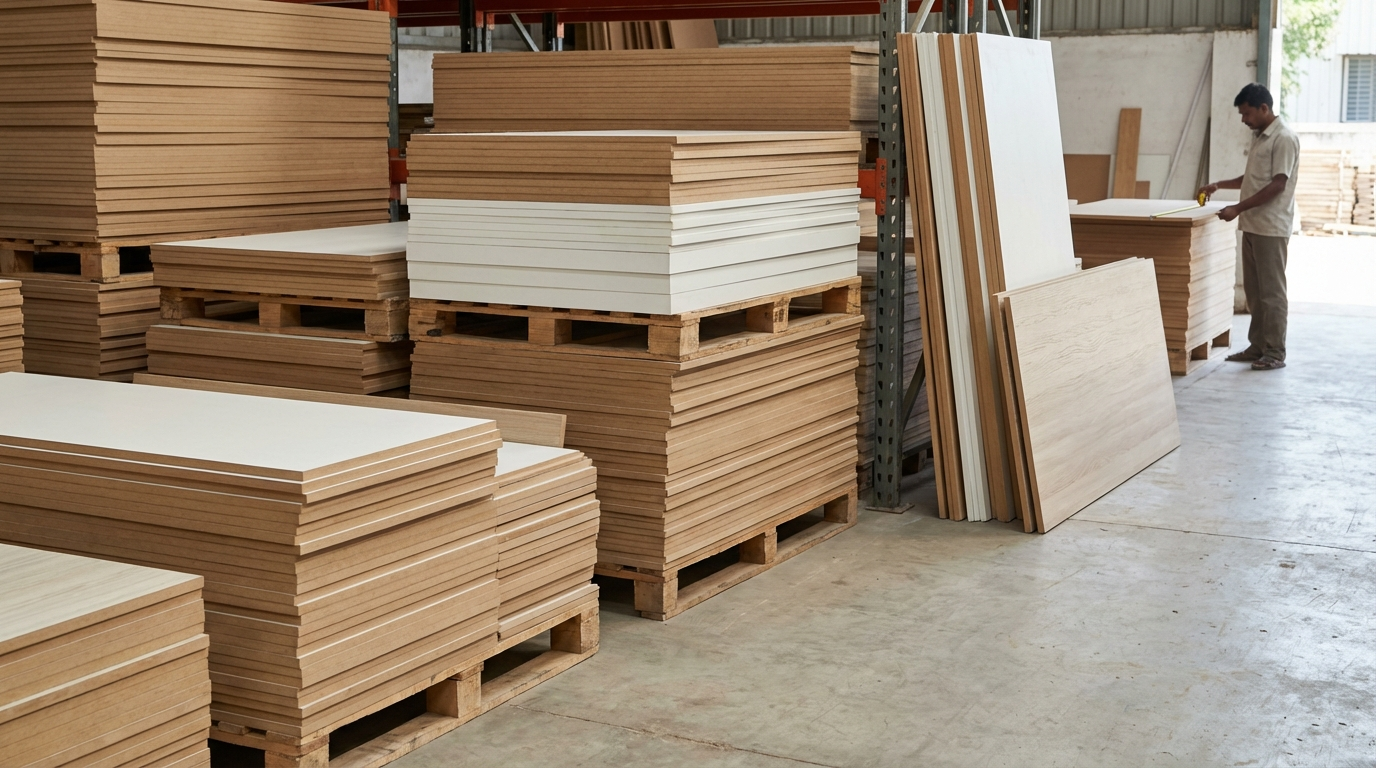
Factory-produced flush doors from established brands like Greenply, Century, Kitply, or Archid offer standardised quality, consistent thickness, and factory-applied finishes. They're available in standard sizes at most plywood dealers.
Advantages:
- Consistent quality with factory QC
- Immediate availability for standard sizes
- Often comes with manufacturer warranty (1-5 years)
- Better dimensional stability from controlled manufacturing
Limitations:
- Limited to standard sizes—non-standard openings require cutting or custom orders
- Premium pricing for branded products
- Limited design customisation
Typical readymade door prices (7×3 feet, BWR grade):
- Economy brands: ₹3,800 – ₹5,200
- Mid-tier brands: ₹5,500 – ₹7,500
- Premium brands: ₹7,800 – ₹10,500
Carpenter-Made Custom Doors
Custom doors built on-site or in a carpenter's workshop using purchased plywood sheets offer complete design flexibility and can accommodate non-standard sizes without upcharges.
Advantages:
- Any size or design possible
- Can match existing doors in older homes
- Potential cost savings on labour in tier-2/3 cities
- Direct control over plywood grade selection
Limitations:
- Quality depends entirely on carpenter skill
- No warranty—defects are your problem
- Longer timeline (3-7 days per door vs immediate)
- Risk of material substitution if not supervised
Typical custom door costs (7×3 feet, BWR grade, including labour):
- Metro cities: ₹5,500 – ₹9,000
- Tier-2 cities: ₹4,200 – ₹7,000
- Tier-3/rural: ₹3,500 – ₹5,500
Door Frame Costs: The Often-Forgotten Budget Item
A door shutter without a frame is useless, yet many buyers focus exclusively on shutter costs and face budget surprises during installation. Frame costs vary dramatically based on material choice:
| Frame Material | Price Range (7×3 door) | Durability | Best For |
|---|---|---|---|
| Sal wood (traditional) | ₹1,800 – ₹3,500 | Excellent (15-25 years) | Main doors, all locations |
| Teak wood | ₹4,500 – ₹8,000 | Outstanding (25-40 years) | Premium homes, main entrance |
| Marandi/Pine | ₹1,200 – ₹2,200 | Moderate (8-15 years) | Interior doors, budget projects |
| Plywood frame (BWR) | ₹1,500 – ₹2,800 | Good (10-18 years) | Interior doors, uniform aesthetics |
| WPC frame | ₹1,800 – ₹3,200 | Very good (15-20 years) | Bathrooms, moisture-prone areas |
| Metal frame (MS/GI) | ₹2,200 – ₹4,000 | Excellent (20-30 years) | External doors, security applications |
Budget planning tip: For a complete door installation, add 40-60% to the shutter cost to cover frame, hardware, finishing, and carpenter labour. A ₹5,000 shutter typically becomes a ₹7,500-8,500 installed door.
Finishing Costs: From Basic Paint to Premium Laminates
Raw plywood doors require finishing for both aesthetics and protection. Finishing costs can equal or exceed the door shutter cost, especially for premium options:
Paint Finish
Cost: ₹600 – ₹1,800 per door (material + labour)
Enamel paint over primer remains the most economical option. PU (polyurethane) paint costs more but provides a harder, more durable surface. Two coats minimum; three coats for exposed doors.
Laminate Finish
Cost: ₹1,200 – ₹3,500 per door
Sunmica or decorative laminate applied over the plywood surface. Offers consistent colour, easy cleaning, and scratch resistance. Higher initial cost but lower maintenance than paint.
Veneer Finish
Cost: ₹2,500 – ₹6,000 per door
Natural wood veneer provides an authentic timber appearance. Requires skilled application and protective topcoat. Popular for main doors and living areas where aesthetics matter.
Membrane/PVC Finish
Cost: ₹1,800 – ₹4,000 per door
Vacuum-pressed membrane finish common on MDF but increasingly used on plywood doors. Works well with panel and 3D designs. Factory application provides better results than on-site work.
Quick Decision Guide: Choosing the Right Plywood Door
Use this framework to match your specific situation to the appropriate door type and budget:
For Internal Bedroom Doors (Low Moisture)
- Recommended: Hollow-core MR-grade flush door
- Size: 7×2.5 or 7×3 feet
- Budget per door (installed): ₹4,500 – ₹7,000
- Why: Lightweight, affordable, adequate for dry conditions
For Bathroom Doors
- Recommended: Solid-core BWR-grade flush door with WPC or treated wooden frame
- Size: 6×2.5 or 7×2.5 feet
- Budget per door (installed): ₹6,500 – ₹10,000
- Why: Handles humidity, edge sealing critical—request factory-sealed edges or ensure carpenter seals all edges with edge-banding tape
For Kitchen Doors
- Recommended: Solid-core BWR-grade door with laminate finish
- Size: 7×3 feet typical
- Budget per door (installed): ₹7,500 – ₹12,000
- Why: Resists cooking moisture, laminate prevents grease absorption
For Main Entrance Doors
- Recommended: Solid-core BWR or BWP-grade door with veneer or premium laminate, hardwood frame
- Size: 7×3.5 or 7×4 feet
- Budget per door (installed): ₹12,000 – ₹22,000
- Why: Security, visual impact, weather exposure—don't economise here
For External/Balcony Doors
- Recommended: BWP/Marine-grade door with weather-resistant finish, metal or teak frame
- Size: 7×3 or 7×4 feet
- Budget per door (installed): ₹14,000 – ₹25,000
- Why: Direct rain exposure requires genuine waterproofing, not just moisture resistance
Hidden Costs and Common Pricing Traps
Several expenses catch unprepared buyers:
GST variation: Some dealers quote ex-GST prices while others include it. Always confirm whether quoted prices include 18% GST to enable accurate comparisons.
Transportation: Delivery charges range from free (large orders from major dealers) to ₹500-1,500 for individual door purchases. Factory-direct orders often have minimum quantity requirements.
Cutting charges: If your door opening differs from standard sizes, expect ₹200-500 per door for cutting and re-edging readymade doors.
Hardware quality: The price difference between economy and quality hinges/locks is ₹400-1,500 per door. Cheap hardware fails within 2-3 years; quality hardware outlasts the door itself.
Frame installation: Mason charges for frame fitting (drilling, fixing, cementing) run ₹400-800 per door in metros, less in smaller cities. This is separate from carpenter charges for shutter hanging.
HDHMR as an Alternative to Plywood Doors
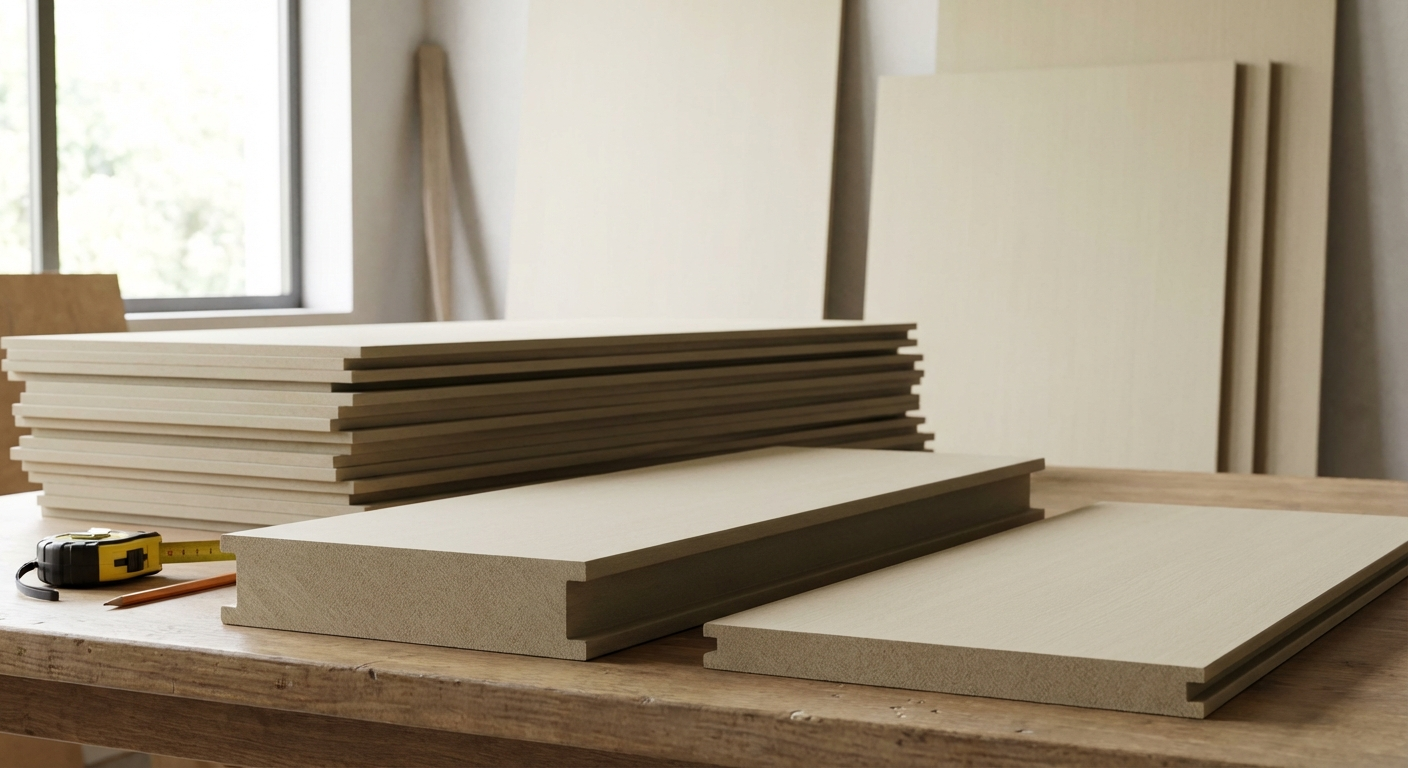
For interior doors—especially bathroom and kitchen shutters—HDHMR board deserves consideration alongside plywood. HDHMR (High Density High Moisture Resistant) board offers superior moisture resistance compared to MR-grade plywood, excellent paint and laminate adhesion, and better dimensional stability.
An HDHMR door shutter in 18mm thickness costs approximately ₹65-95 per square foot for plain board, translating to roughly ₹4,100-6,000 for a 7×3 door shutter before finishing. This positions HDHMR between MR and BWR plywood pricing while offering moisture performance closer to BWR.
However, HDHMR doors are heavier than plywood equivalents and require robust hinges. They also aren't suitable for external doors or applications requiring structural strength against forced entry—plywood's cross-laminated structure provides superior impact resistance.
Practical Buyer Checklist Before Purchasing
Before finalising any plywood door purchase, verify these items:
- Measure twice: Confirm door opening dimensions personally—don't rely on builder specifications or old measurements. Account for frame thickness (typically 3-4 inches) when determining shutter size.
- Check plywood grade marking: Genuine BWR and BWP plywood carries ISI marking with license number. Ask to see the grade stamp on the sheet before cutting.
- Verify core construction: For solid-core doors, ask what the core material is—block-board core is superior to particle-board core. Knock test can reveal hollow-core doors being sold as solid-core.
- Get itemised quotes: Ensure quotes separate shutter cost, frame cost, hardware cost, finishing cost, and installation cost. Bundled quotes often hide inflated individual components.
- Confirm warranty terms: For branded doors, understand what the warranty covers (delamination? warping? termite damage?) and what documentation you need to preserve.
- Request edge sealing: For bathroom and kitchen doors, factory-sealed edges dramatically improve lifespan. If using carpenter-made doors, specify and supervise edge-banding application.
Investing time in these verifications typically saves 15-25% over accepting the first quote and prevents expensive replacements from grade mismatch or quality defects discovered post-installation.
Disclaimer: This content is provided for general informational purposes based on industry practices and publicly available information. Product specifications, standards, prices, and availability may vary by manufacturer, region, and time. Readers should independently verify details with manufacturers, dealers, or qualified professionals before making purchase or construction decisions.