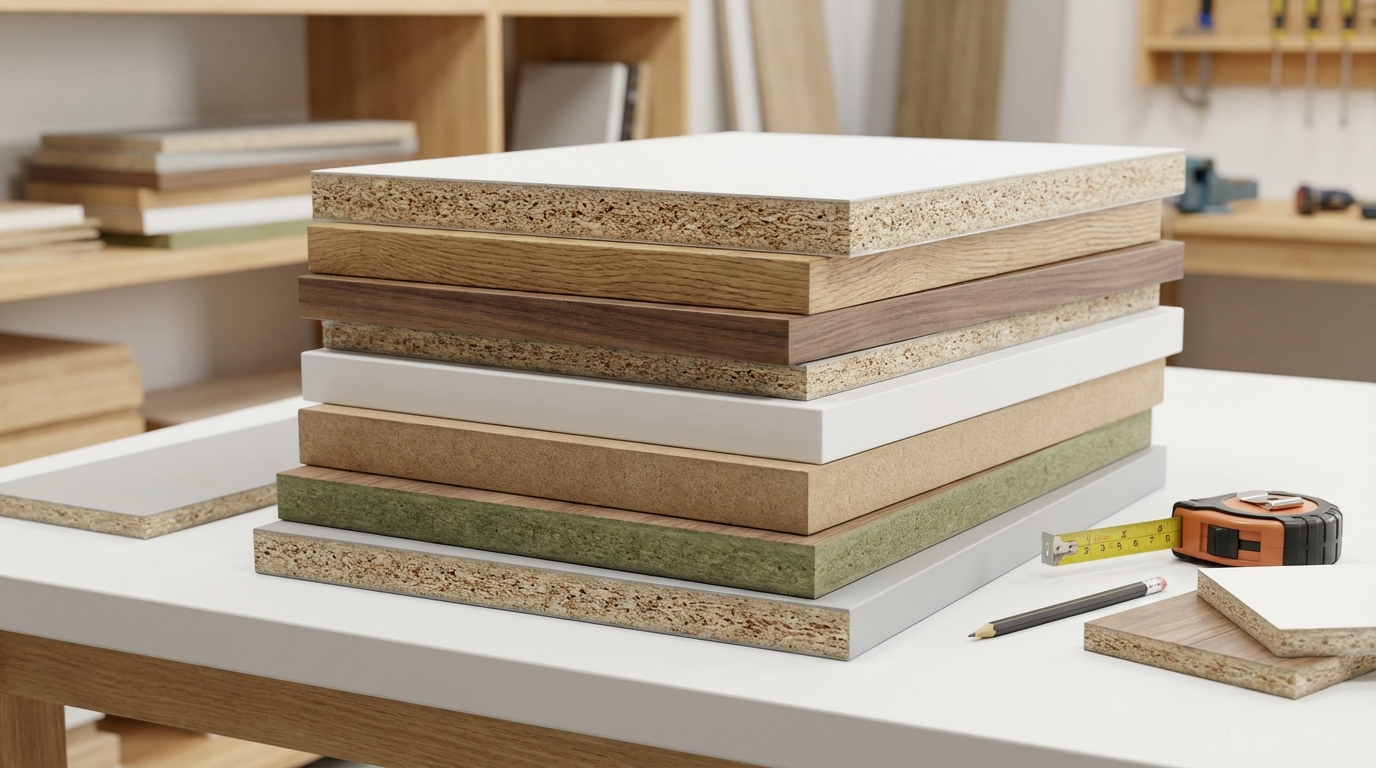
What Is Pre-Laminated Board? A Direct Answer
Pre-laminated board is any engineered wood panel—MDF, particle board, or HDHMR—that comes with a decorative laminate surface already bonded at the factory. Unlike plain boards where you apply sunmica or veneer separately, prelam boards arrive ready to cut and assemble. The laminate is thermally fused under high pressure, creating a permanent bond that won't peel like manually applied sheets often do.
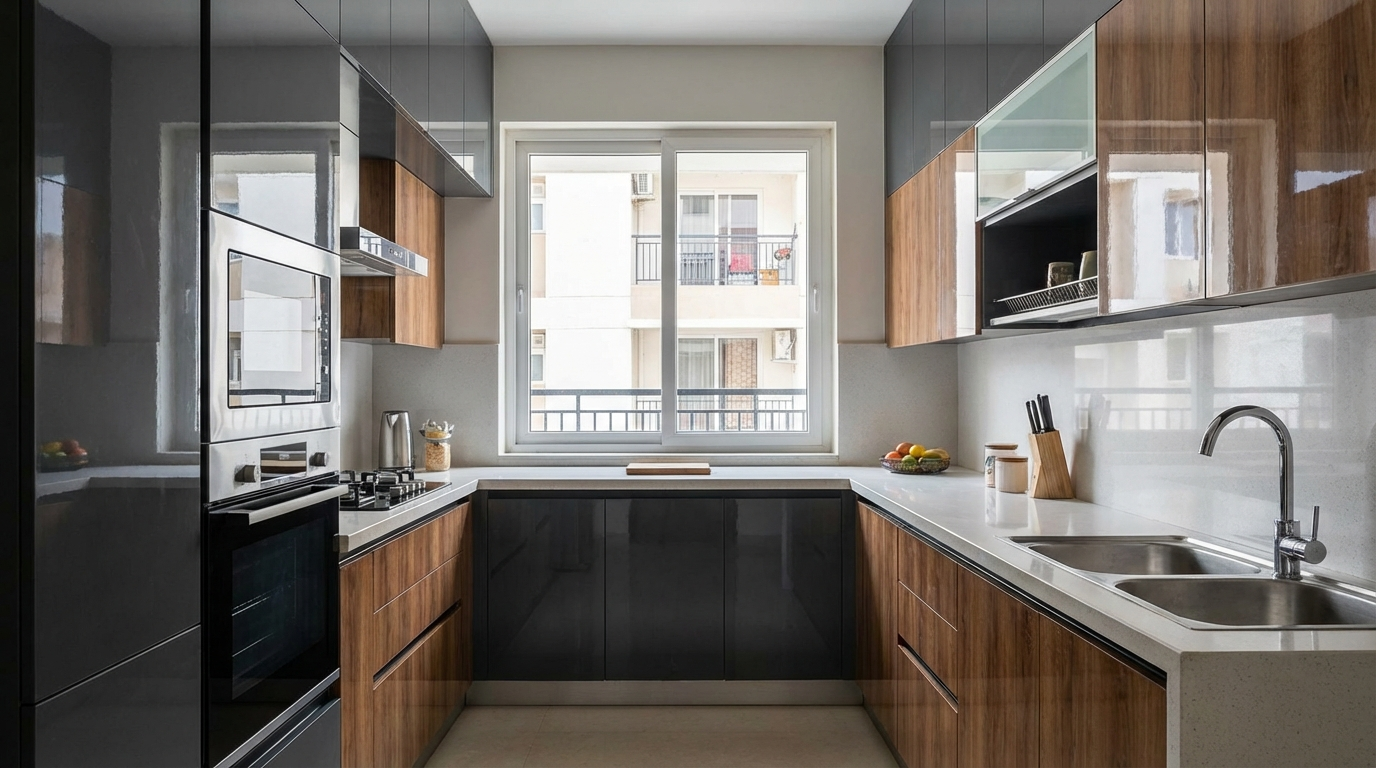
This matters because it eliminates an entire step in furniture making: no adhesive application, no pressing time, no risk of bubbles or misalignment. For modular kitchens, wardrobes, and office furniture across India, pre-laminated boards have become the default choice for anyone prioritising speed and consistency over full customisation.
The three main types you'll encounter in Indian markets are:
- Pre-laminated Particle Board (PLPB): Most affordable, adequate for dry interior use
- Pre-laminated MDF: Smoother surface, better for visible furniture faces
- Pre-laminated HDHMR: Highest moisture resistance, suitable for kitchens and humid climates
Pre-Laminated Board Price Guide 2026: What You'll Actually Pay
Pricing for pre-laminated boards in India depends on three factors: the core material (particle board vs MDF vs HDHMR), thickness, and the laminate finish quality. Here's a realistic breakdown based on current dealer rates across major cities:
Pre-Laminated Particle Board (PLPB) Prices
| Thickness | Price Range (₹/sq ft) | Price Range (₹/sheet 8×4) |
|---|---|---|
| 8mm | ₹22–₹30 | ₹700–₹960 |
| 12mm | ₹28–₹38 | ₹900–₹1,200 |
| 18mm | ₹38–₹52 | ₹1,200–₹1,650 |
| 25mm | ₹48–₹65 | ₹1,550–₹2,100 |
Pre-Laminated MDF Prices
| Thickness | Price Range (₹/sq ft) | Price Range (₹/sheet 8×4) |
|---|---|---|
| 6mm | ₹32–₹42 | ₹1,000–₹1,350 |
| 12mm | ₹45–₹58 | ₹1,450–₹1,850 |
| 18mm | ₹58–₹75 | ₹1,850–₹2,400 |
| 25mm | ₹72–₹90 | ₹2,300–₹2,880 |
Pre-Laminated HDHMR Prices
| Thickness | Price Range (₹/sq ft) | Price Range (₹/sheet 8×4) |
|---|---|---|
| 6mm | ₹55–₹70 | ₹1,750–₹2,240 |
| 12mm | ₹70–₹88 | ₹2,240–₹2,800 |
| 18mm | ₹90–₹115 | ₹2,880–₹3,680 |
| 25mm | ₹110–₹140 | ₹3,500–₹4,480 |
Why such wide ranges? The lower end represents basic solid-colour laminates from regional brands. The higher end covers textured wood-grain finishes from established manufacturers like Action Tesa, Greenpanel, or Century. Metro cities like Mumbai and Delhi typically sit at the higher end; tier-2 cities may find better rates but fewer finish options.
PLPB vs Prelam MDF vs Prelam HDHMR: Complete Comparison
Choosing between these three isn't about finding the "best" board—it's about matching the material to your specific application. Each has distinct strengths that make it ideal for certain uses and unsuitable for others.
| Parameter | Pre-Lam Particle Board | Pre-Lam MDF | Pre-Lam HDHMR |
|---|---|---|---|
| Core Density | 550–650 kg/m³ | 650–750 kg/m³ | 800–900 kg/m³ |
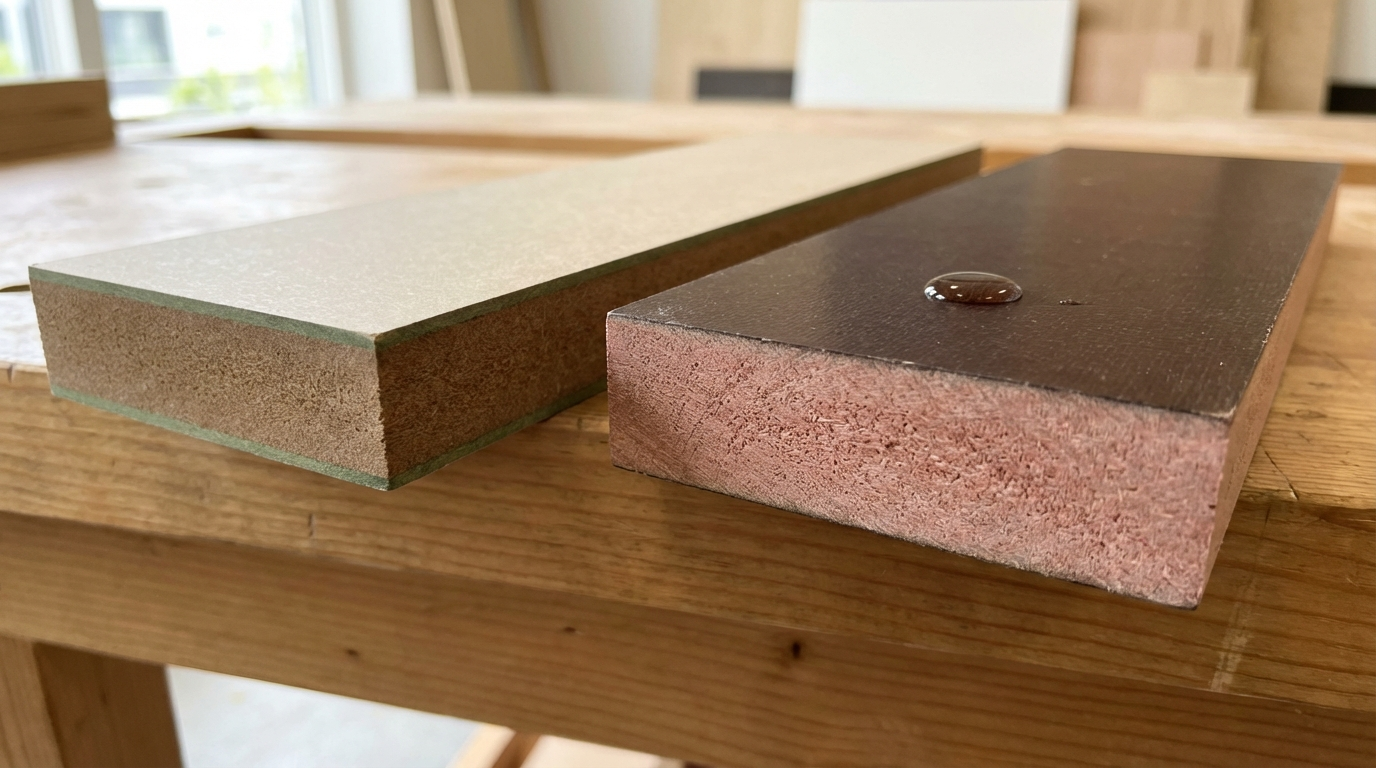
| Moisture Resistance | Poor (swells significantly) | Moderate (better than particle) | Excellent (minimal swelling) |
| Screw Holding | Weak at edges | Good across surface | Excellent throughout |
| Surface Smoothness | Acceptable | Very smooth | Very smooth |
| Edge Quality | Rough, chips easily | Clean, accepts banding well | Dense, minimal chipping |
| Weight (18mm sheet) | ~28–32 kg | ~35–38 kg | ~42–48 kg |
| Termite Resistance | Low (unless treated) | Moderate | High (usually treated) |
| Best Applications | Budget furniture, temporary use | Bedroom furniture, office desks | Kitchens, bathrooms, wardrobes |
| Lifespan (proper use) | 5–8 years | 10–15 years | 15–25 years |
When Particle Board Makes Sense
Pre-laminated particle board gets unfairly dismissed, but it has legitimate uses. For rental properties where you expect to replace furniture within a few years, PLPB delivers acceptable aesthetics at minimal cost. Interior partitions that won't bear load, exhibition stalls, or shop display units benefit from its economy. The key constraint: keep it completely dry. In humidity above 70% or anywhere near water, particle board fails rapidly—edges swell, screws loosen, and the laminate starts lifting.
When MDF Is the Right Choice
Pre-laminated MDF occupies the middle ground thoughtfully. Its smooth, uniform surface makes it superior for furniture where appearance matters—bedroom sets, study tables, TV units in living rooms. The homogeneous core cuts cleanly without the voids you'd find in particle board, which means CNC-routed designs and machined edges look professional. However, standard MDF still absorbs moisture over time. For a bedroom wardrobe in Jaipur's dry climate, prelam MDF works fine. For a kitchen cabinet in Chennai's humidity, it's asking for trouble.
When HDHMR Justifies the Premium
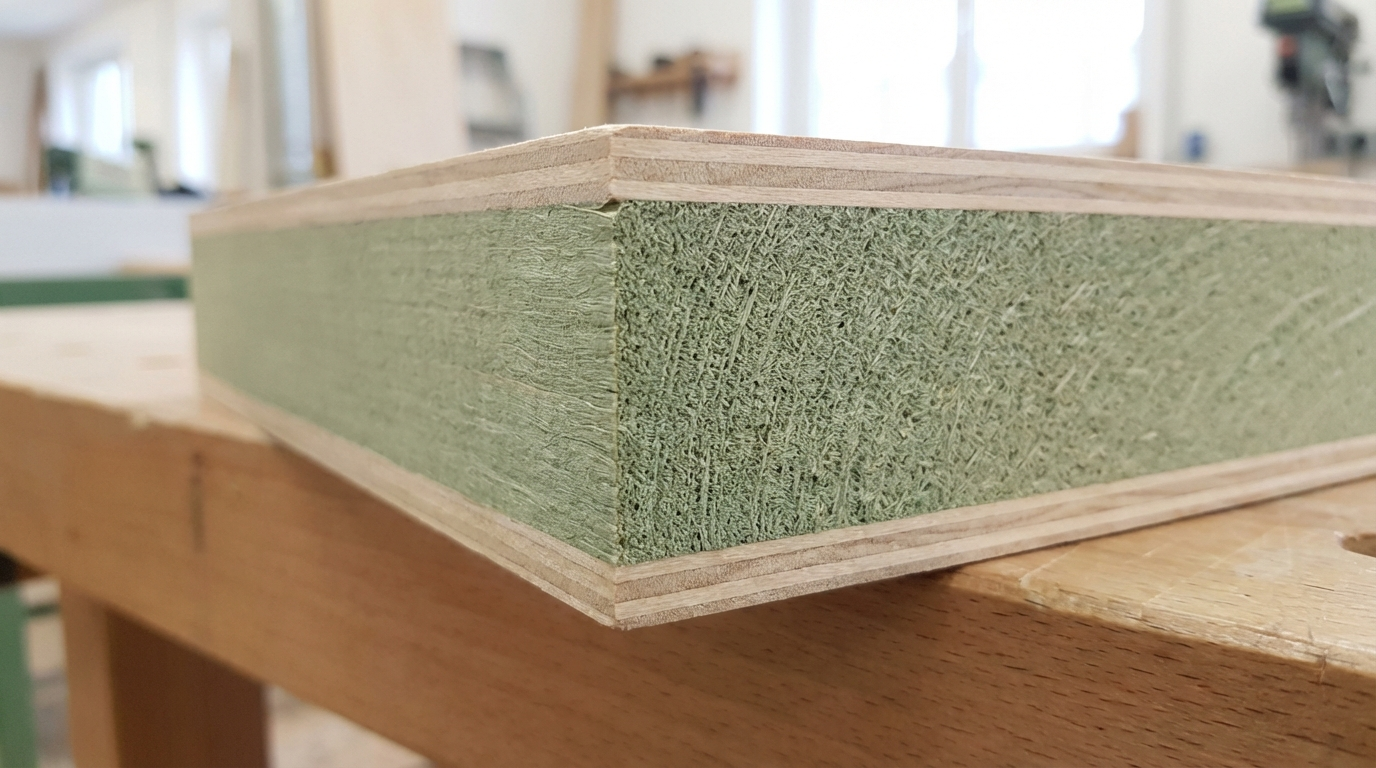
Pre-laminated HDHMR costs roughly twice what particle board does, but the performance gap is even larger. The moisture-resistant resin and higher density mean kitchen cabinets, bathroom vanities, and wardrobes in coastal cities won't swell at the edges or develop that characteristic "bubbled" look that plagues cheaper boards after monsoons. If you're building furniture intended to last a decade or more, HDHMR's upfront cost amortises into better value per year of use.
Laminate Finish Types and Their Impact on Price
The "pre-laminated" label covers a surprising range of surface finishes, each affecting both price and durability:
Melamine Paper Laminates (Economy)
The most basic option—a decorative paper impregnated with melamine resin, pressed onto the board. These are the ₹22–₹40/sq ft options in particle board. They scratch fairly easily and offer limited design variety (mostly solid colours and simple wood prints). Suitable for internal cabinet surfaces, backs of furniture, or anywhere aesthetics aren't critical.
High-Pressure Laminates (HPL) – Factory Applied
Some manufacturers offer boards with HPL (like sunmica) already bonded. This creates a harder, more scratch-resistant surface than melamine paper. Expect to pay 15–25% more than standard prelam. Worth considering for high-traffic surfaces like kitchen countertop edges or children's furniture.
Textured and Synchronised Finishes (Premium)
The realistic wood-grain textures where the surface texture aligns with the printed pattern—so a walnut print actually feels like walnut grain under your fingers. These command the highest prices (the upper ranges in our tables) but create furniture that looks genuinely expensive. Action Tesa's "Embossed in Register" (EIR) and similar offerings from Greenpanel fall into this category.
PVC/Acrylic High-Gloss Finishes
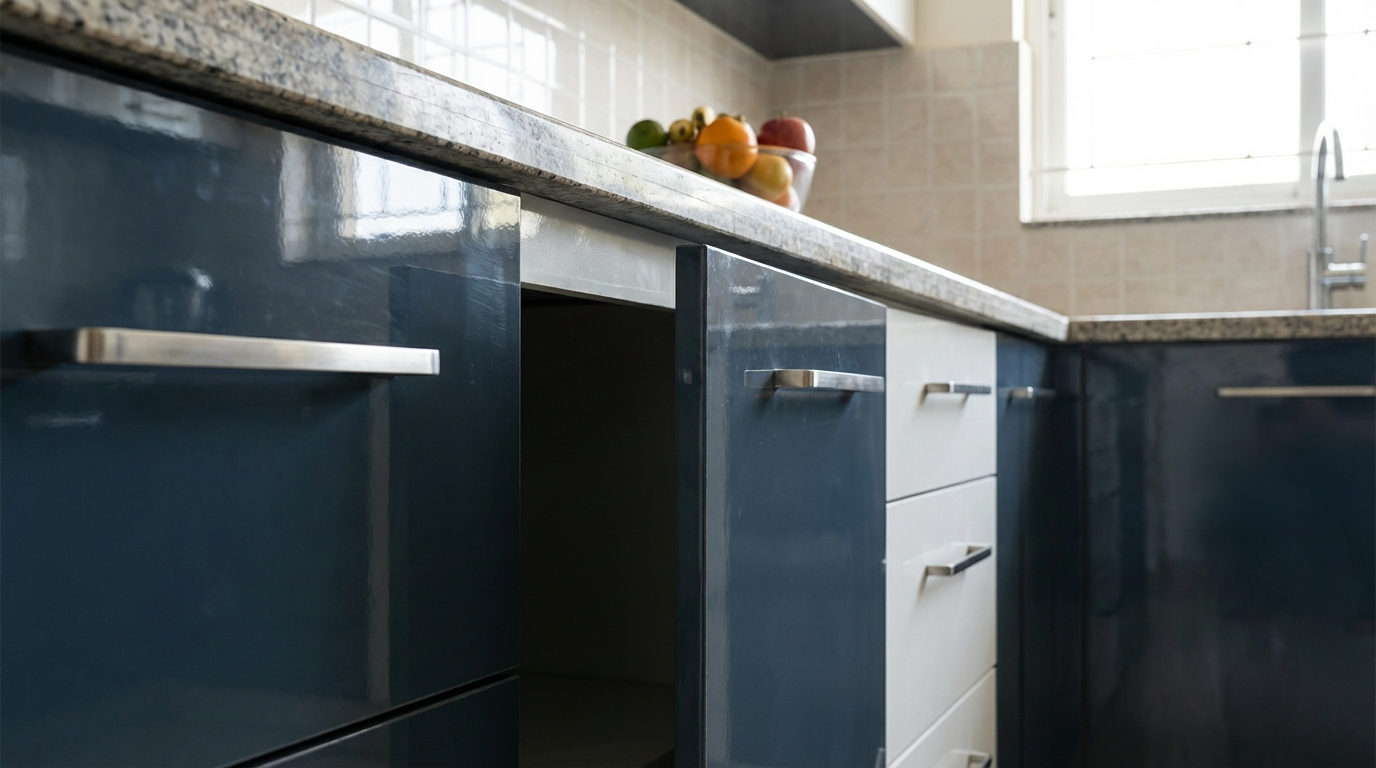
Boards with glossy acrylic or PVC film surfaces are technically pre-laminated but serve a different market—primarily high-gloss modular kitchens. They're significantly more expensive (₹120–₹180/sq ft for 18mm) and require careful handling to avoid scratches. Not something you'd use for general furniture.
Quick Decision Guide: Choosing Your Pre-Laminated Board
Rather than wading through specifications, answer these three questions to narrow your choice immediately:
Question 1: Where Will This Furniture Live?
- Kitchen, bathroom, or laundry area: HDHMR only. The moisture exposure is too high for anything else.
- Bedroom, living room, or office (AC environment): MDF or HDHMR based on budget.
- Temporary setup or rental property: Particle board is acceptable.
- Coastal city or high-humidity region: HDHMR strongly recommended even for bedrooms.
Question 2: What's the Expected Lifespan?
- Under 5 years: Particle board will suffice.
- 5–10 years: MDF provides good value.
- Over 10 years: HDHMR's durability justifies the cost.
Question 3: How Much Handling Will It See?
- Doors opened daily (wardrobes, kitchen cabinets): HDHMR's superior screw holding prevents hinge loosening.
- Occasional use (guest room furniture, storage): MDF handles this well.
- Minimal handling (fixed shelves, partitions): Particle board is adequate.
Pre-Laminated Board for Specific Applications
Modular Kitchen Cabinets
For kitchen carcasses (the box structure), 18mm pre-laminated HDHMR is the current industry standard among quality-conscious fabricators. The base cabinets especially need moisture resistance since they're closest to the floor and sink. Shutters (doors) can be 16–18mm HDHMR or even plain HDHMR with separate high-gloss acrylic if you want that premium look. Using prelam particle board for kitchen cabinets is a false economy—within 2–3 monsoons, you'll see edge swelling near the sink and cooktop areas.
Wardrobe Carcasses and Shelves
Wardrobes present an interesting choice. In air-conditioned bedrooms in dry climates, 18mm pre-laminated MDF performs well for the structure. But if there's any chance of humidity (non-AC rooms, coastal cities, or ground-floor flats), HDHMR is safer. For internal shelves and partitions, 12mm prelam boards work fine since they're not load-bearing beyond folded clothes. Back panels can be 6mm prelam of any type—they're protected and don't bear stress.
Office Furniture and Workstations
Pre-laminated particle board dominates the budget office furniture segment for a reason: cost efficiency at scale. For large corporate orders where furniture depreciates over 5–7 years anyway, PLPB with basic melamine finish delivers acceptable functionality. However, executive desks and client-facing furniture warrant MDF or HDHMR for a more premium feel and better durability when handling files, equipment, and daily wear.
TV Units and Entertainment Centers
These pieces see moderate stress (weight of TV and equipment but no moisture). Pre-laminated MDF in 18mm thickness handles this well, and its smooth surface takes textured laminates beautifully. Since TV units are visible focal points, investing in a synchronised wood-grain finish on MDF can make inexpensive furniture look surprisingly upmarket.
Edge Banding: The Weak Point of All Pre-Laminated Boards
Here's something competitors won't tell you: the factory lamination on pre-laminated boards only covers the faces, not the edges. When you cut a prelam sheet, you expose raw core material. This creates two problems:
- Aesthetic: Raw particle board or MDF edges look unfinished and cheap.
- Functional: Exposed edges absorb moisture, especially in particle board and standard MDF, leading to swelling.
The solution is edge banding—applying PVC tape, ABS strips, or matching laminate strips to cover cut edges. Most modular furniture manufacturers include this automatically, but if you're buying prelam sheets for a local carpenter, explicitly discuss edge treatment. Hot-air edge banding machines create the cleanest finish; manual iron-on banding is acceptable but less durable. For kitchen cabinets, even HDHMR benefits from proper edge sealing to prevent any moisture ingress at cuts.
Where Pre-Laminated Boards Fall Short
Pre-laminated boards aren't universally superior. Understanding their limitations prevents costly mistakes:
Limited Customisation
You're restricted to whatever finishes the manufacturer offers. If a client wants a specific Italian marble pattern that Action Tesa doesn't stock, you'll need plain boards with separate laminate application. Custom colour matching is impossible with prelam—what you see in the catalogue is what you get.
Matching Across Batches
Laminate colours can vary slightly between production batches. For large projects, order all sheets together to ensure consistency. Mixing sheets bought months apart sometimes reveals visible shade differences when installed side by side.
Repair Challenges
If the laminate surface gets deeply scratched or chipped, repair is difficult. Unlike painted surfaces that can be touched up, damaged prelam surfaces usually require panel replacement. Applying matching laminate over prelam rarely looks seamless.
Load Limitations
Pre-laminated boards (except HDHMR) aren't suited for heavy structural use. Long unsupported spans—like a 4-foot wide shelf holding books—will sag over time, especially with particle board. Either reduce spans with intermediate supports or use thicker boards.
Calculating Material Requirements: Practical Example
For a standard 8×7 feet wardrobe with 2 doors:
- Carcass (sides, top, bottom, shelves): Approximately 3.5 sheets of 18mm board
- Doors (2 nos.): Approximately 1 sheet of 18mm board
- Back panel: Approximately 1 sheet of 6mm board
- Drawers (if any): 0.5–1 sheet of 12mm board
Total estimate: 5–6 sheets of 18mm (for carcass and doors) plus 1 sheet each of 6mm and 12mm.
Using pre-laminated HDHMR at current prices:
- 5 sheets × 18mm HDHMR @ ₹3,200/sheet = ₹16,000
- 1 sheet × 6mm HDHMR @ ₹2,000/sheet = ₹2,000
- 1 sheet × 12mm HDHMR @ ₹2,500/sheet = ₹2,500
- Total material cost: ₹20,500 (approximately)
Compare this to pre-laminated particle board for the same wardrobe:
- 5 sheets × 18mm PLPB @ ₹1,400/sheet = ₹7,000
- 1 sheet × 6mm PLPB @ ₹700/sheet = ₹700
- 1 sheet × 12mm PLPB @ ₹1,000/sheet = ₹1,000
- Total material cost: ₹8,700 (approximately)
The ₹11,800 difference represents HDHMR's durability premium. Over a 15-year wardrobe lifespan, that's roughly ₹790 per year for significantly better moisture resistance and longevity.
Buying Pre-Laminated Boards: Actionable Advice
Verify Brand Authenticity
Counterfeit and mislabelled boards circulate in unorganised markets. Branded pre-laminated boards have printed markings on the back or edge indicating manufacturer, type, and sometimes batch number. Ask your dealer to show these marks. If buying Action Tesa, Greenpanel, or Century products, prices significantly below market rate should raise suspicion.
Inspect Before Cutting
Once sheets are cut, returns become difficult. Check each sheet for laminate defects (bubbles, scratches, inconsistent colour), warping (sight along the edge—it should be straight), and edge damage from handling. Reject sheets with visible problems rather than hoping they won't matter.
Order 10–15% Extra
Cutting waste, defects discovered during fabrication, and minor design changes inevitably consume material. For larger projects, having spare sheets of the same batch prevents delays from colour mismatches when reordering.
Discuss Edge Banding Upfront
If your carpenter quotes just "prelam board," clarify whether edge banding is included and what type. Factory-finished modular units include this; site-fabricated furniture sometimes doesn't, leaving you with exposed edges that compromise both appearance and durability.
Consider Transport and Handling
Pre-laminated boards scratch more visibly than plain boards during transport. Ensure proper packing with cardboard separators between sheets. HDHMR sheets weighing 40+ kg each require two people to handle safely—factor labour into delivery logistics.
Match Hardware to Board Type
Using standard wood screws in particle board invites hinge failures. Particle board requires confirmat screws or proper furniture bolts. MDF and HDHMR hold standard screws better but still benefit from pilot holes to prevent edge splitting. Your board investment only pays off with appropriate hardware and installation technique.
Disclaimer: This content is provided for general informational purposes based on industry practices and publicly available information. Product specifications, standards, prices, and availability may vary by manufacturer, region, and time. Readers should independently verify details with manufacturers, dealers, or qualified professionals before making purchase or construction decisions.