Why Your Door Manufacturer Choice Matters More Than You Think
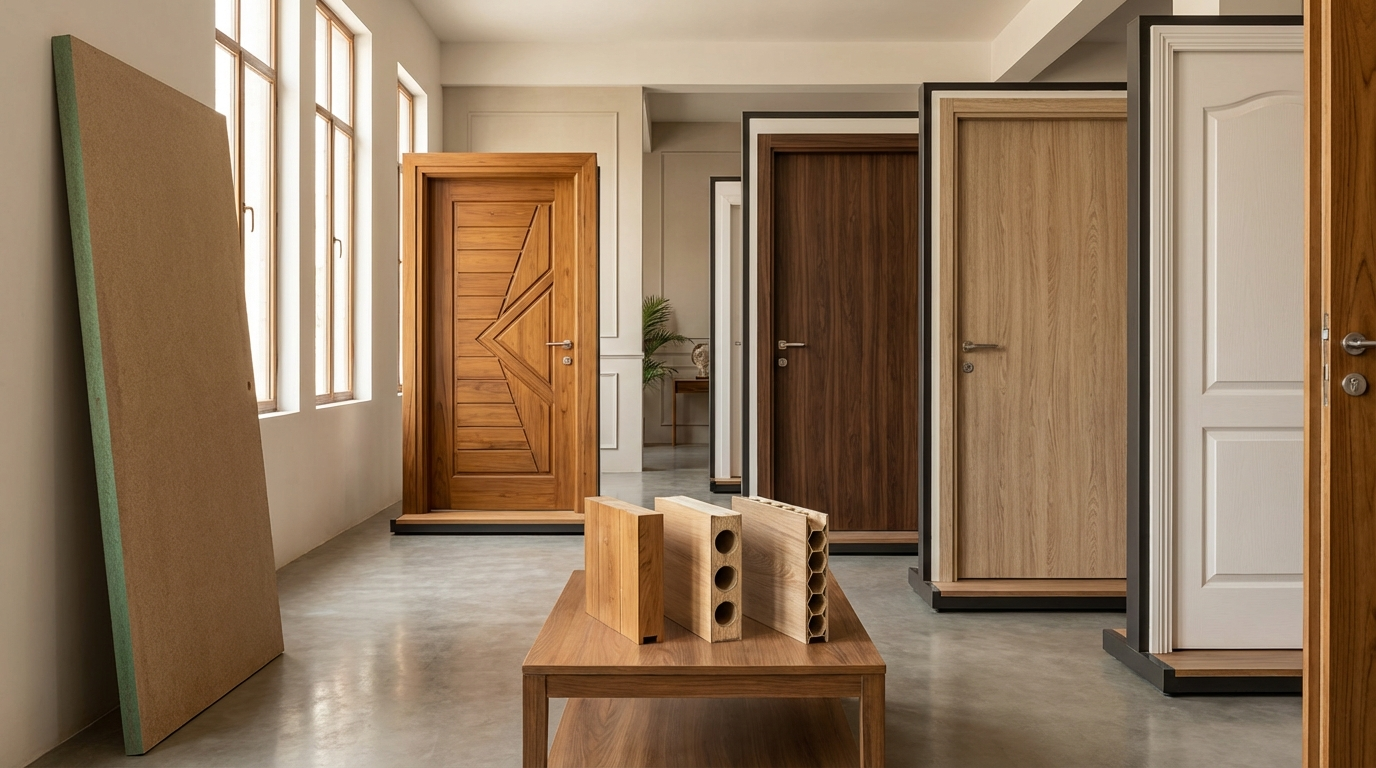
The door you install today will open and close approximately 20,000 times over its lifespan. Choose a substandard manufacturer, and you'll notice warping within two monsoons, hardware failures within three years, and complete replacement within a decade. Select a reputable manufacturer, and that same door becomes a 25-year asset requiring nothing more than occasional polish.
India's door manufacturing industry has transformed dramatically since 2020. What was once dominated by local carpenters and small-scale plywood shops now features organised players with automated production lines, quality certifications, and pan-India distribution networks. This shift means better quality control, more consistent products, and actual accountability when things go wrong.
This guide examines the leading door manufacturers operating in India in 2026, comparing their product ranges, manufacturing capabilities, price positioning, and after-sales reliability. Whether you're sourcing doors for a single home renovation or a 500-unit housing project, the information here will help you identify which manufacturers deserve your attention—and which claims deserve scrutiny.
How Door Manufacturers Are Classified in India
Understanding manufacturer categories prevents costly mismatches between your requirements and a company's actual capabilities. Indian door manufacturers fall into distinct segments based on their production focus, scale, and market positioning.
Organised Panel Board Manufacturers with Door Divisions
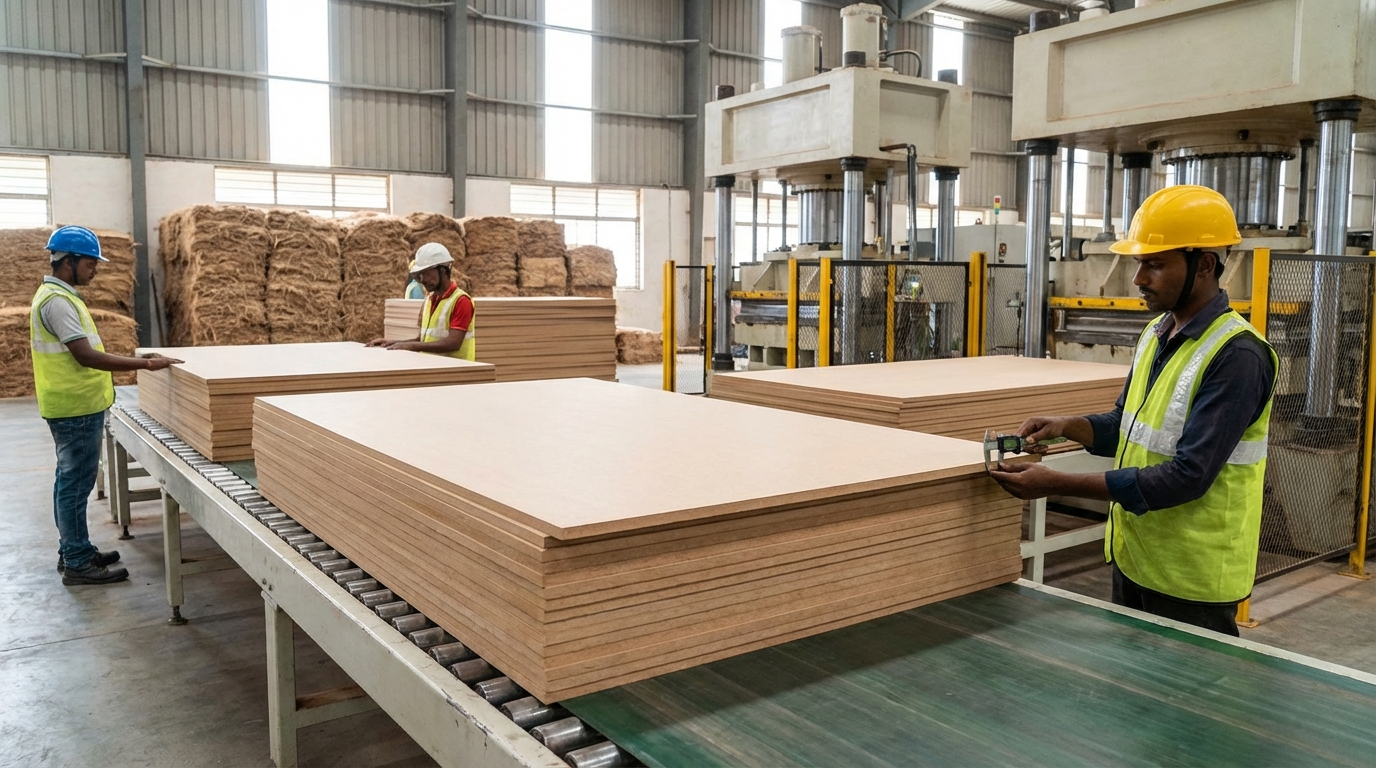
These are large-scale companies whose primary business involves manufacturing MDF, particle board, plywood, or HDHMR sheets. They've expanded into ready-made doors as a value-added product line. Examples include Century Ply, Greenply, and Action Tesa. Their strength lies in raw material control—they manufacture the core substrate themselves, ensuring consistency. However, their door divisions sometimes receive less innovation focus than their core panel board business.
Dedicated Door Manufacturers
Companies that exclusively manufacture doors bring specialised expertise in door construction, hardware integration, and finish quality. Mikasa Doors, Dormak Interio, and Sakarni Doors fall into this category. These manufacturers often offer more door variants, customisation options, and dedicated R&D for door-specific challenges like acoustic performance and fire resistance.
Regional Door Specialists
Every major Indian city has established regional players who've built reputations over decades. They may lack national distribution but often provide superior local service, faster delivery, and competitive pricing. Chennai has its teak door specialists, Kerala its traditional wooden door craftsmen, and Punjab its flush door clusters. These regional players frequently supply to local builders and architects who value relationships and quick resolution of issues.
Importers and Distributors
Some companies focus on importing premium doors from Malaysia, Indonesia, or Europe rather than manufacturing locally. They target the luxury segment where customers prioritise exotic veneers and international certifications over local availability. Their products command premium prices but may present challenges for warranty claims and spare part availability.
Top Door Manufacturers in India: Detailed Analysis
Century Ply – The Market Leader's Door Division
Century Plyboards operates as India's largest plywood manufacturer, with their door division benefiting from this scale and distribution muscle. Their product range spans flush doors, veneer doors, moulded panel doors, and their increasingly popular CENTURYDOORS range featuring decorative membrane finishes.
Manufacturing infrastructure: Century operates multiple manufacturing facilities across India, with door production concentrated in their Kolkata and Guwahati plants. Their vertical integration—from plantation forestry to finished doors—provides quality control advantages that smaller manufacturers cannot match.
Product range strength: The company excels in flush doors for institutional and residential projects. Their Century Architect Flush Doors target contractors and builders with competitive bulk pricing. The Century Bond range offers different adhesive grades (MR, BWR, BWP) to suit various moisture exposure levels.
Where Century falls short: Premium aesthetic finishes aren't Century's strength. Customers seeking hand-carved teak doors or European-style panel doors should look elsewhere. Their focus on volume also means customisation requests often get declined or delayed significantly.
Price positioning: Mid-market for standard flush doors (₹3,500–₹8,000 for 7×3 feet depending on grade), stretching to ₹15,000–₹25,000 for their premium veneer ranges.
Greenply Industries – Innovation in Engineered Doors
Greenply has positioned itself as the technology-forward alternative to Century, investing heavily in engineered wood solutions and eco-friendly manufacturing processes. Their door range emphasises HDHMR and MDF-based products rather than traditional plywood construction.
Manufacturing approach: Greenply's Tizit (Nagaland) and Bamanbore (Gujarat) facilities use European machinery for panel production. Their doors undergo density testing, moisture content verification, and surface quality checks before dispatch—quality control measures that smaller manufacturers often skip.
Product differentiation: The Green Club range offers low-emission doors meeting E1 formaldehyde standards, appealing to customers concerned about indoor air quality. Their Green Premium Plus doors feature HDHMR cores with better screw-holding and moisture resistance than standard MDF doors.
Limitations: Greenply's distribution network remains weaker than Century's in South India. Customers in Kerala, Tamil Nadu, and Karnataka often face longer delivery times and limited dealer support. Their premium positioning also prices them out of budget-conscious projects.
Price positioning: Upper mid-market, with engineered doors ranging from ₹6,000–₹20,000 for standard sizes. Their premium fire-rated and acoustic doors command ₹25,000–₹45,000.
Action Tesa – The HDHMR Specialist
Action Tesa carved its niche as India's HDHMR pioneer, and their door division leverages this specialisation. For customers specifically seeking HDHMR-based doors, Action Tesa represents the most focused option among organised manufacturers.
Core competency: Their HDHMR boards serve as the foundation for doors that resist moisture better than MDF alternatives while accepting screws more reliably than particle board. This material advantage translates into doors better suited for Indian conditions—particularly in coastal areas and regions with extended monsoons.
Product range: Action Tesa offers pre-laminated door skins, ready-to-install flush doors, and customisable options for modular kitchen integrations. Their focus on interior doors (bedroom, bathroom, kitchen) rather than main entry doors reflects their HDHMR material's strengths and limitations.
Considerations: Action Tesa's primary business remains board manufacturing, with doors as a secondary offering. This means their door-specific customer support and warranty processes sometimes lack the refinement of dedicated door manufacturers. Their dealer network also varies significantly by region—strong in North India, patchy in the South and East.
Price positioning: Competitive in the HDHMR door segment, with standard doors priced between ₹5,500–₹12,000. Pre-laminated options with designer finishes reach ₹15,000–₹22,000.
Mikasa Doors – Premium Solid Wood Focus
For customers seeking solid wood doors rather than engineered alternatives, Mikasa Doors represents the most organised option with national presence. Their focus on teak, mahogany, and oak doors positions them in a different segment than panel board manufacturers.
Specialisation advantage: Mikasa's entire operation revolves around doors—not plywood, not laminates, just doors. This focus shows in their understanding of door hardware, frame integration, and installation requirements. They maintain relationships with hardware suppliers and can provide coordinated solutions that panel board manufacturers typically cannot.
Product excellence: Their solid teak doors, sourced from plantation timber, represent the benchmark for durability in Indian conditions. The company also offers engineered teak doors (veneer on stable core) for customers wanting the aesthetic without the premium pricing of solid construction.
Limitations: Mikasa's premium positioning makes them uncompetitive for basic flush door requirements. Their network of company-owned showrooms provides excellent pre-sales service but limits reach compared to the dealer networks of larger panel board companies. Lead times for custom doors can extend to 8-12 weeks.
Price positioning: Premium segment, with solid teak doors starting at ₹35,000 and reaching ₹1,50,000+ for carved or custom designs. Engineered options begin around ₹18,000.
Dormak Interio – Builder-Focused Efficiency
Dormak has built its reputation on serving builders and contractors rather than retail customers. Their strength lies in consistent quality at competitive prices for bulk orders—exactly what construction projects require.
Builder orientation: Dormak's product range, pricing structure, and service model all orient toward B2B transactions. They offer dedicated project managers for large orders, staged deliveries matching construction schedules, and bulk pricing that makes them attractive for residential towers and commercial projects.
Product focus: Their emphasis on flush doors and moulded panel doors reflects builder preferences for cost-effective, low-maintenance options. They're not the choice for premium custom work, but for standardised doors across 200 apartment units, Dormak delivers reliability.
Retail customer experience: Individual homeowners may find Dormak's sales process less accommodating. Their systems optimise for bulk orders, and small purchases sometimes receive lower priority in production schedules and customer support queues.
Price positioning: Competitive bulk pricing with flush doors from ₹2,800–₹6,500 at project volumes. Retail pricing runs approximately 15-20% higher.
Regional Leaders Worth Considering
Sakarni Doors (Rajasthan): Strong reputation for wooden doors in North and West India, with competitive pricing on both solid and engineered options.
Sri Venkateswara Timber Depot (Andhra Pradesh/Telangana): Decades of presence in South India's timber trade, offering both imported and domestic wood doors with reliable quality grading.
Kutch Art Wood (Gujarat): Specialised in carved wooden doors featuring traditional Kutchi craftsmanship, ideal for customers seeking heritage aesthetics.
Kerala State Bamboo Corporation: Offers bamboo-based door alternatives for eco-conscious customers, with pricing advantages over equivalent wood options.
Door Material Comparison: What Manufacturers Actually Offer
| Door Material | Best Manufacturers | Typical Price Range (7×3 ft) | Best Suited For | Key Limitation |
|---|---|---|---|---|
| Solid Teak | Mikasa, Sakarni, Regional timber specialists | ₹35,000–₹1,50,000 | Main entrances, heritage homes | High cost, requires skilled installation |
| HDHMR Core | Action Tesa, Greenply, Century | ₹5,500–₹22,000 | Bathrooms, kitchens, humid areas | Heavier than MDF, limited carved designs |
| MDF Moulded Panel | Dormak, Century, Regional flush door units | ₹3,500–₹12,000 | Bedrooms, interior passages | Poor moisture resistance, edge swelling risk |
| Plywood Flush | Century, Greenply, Kitply | ₹3,000–₹10,000 | Commercial interiors, budget residential | Veneer delamination in humid conditions |
| WPC (Wood Plastic Composite) | Greenply, Hardy Smith, Regional WPC specialists | ₹8,000–₹18,000 | Bathrooms, outdoor-adjacent areas | Limited aesthetic options, plastic appearance |
| Engineered Veneer | Mikasa, Greenply Green Premium | ₹12,000–₹30,000 | Living rooms, formal spaces | Veneer requires careful handling during installation |
How to Evaluate Door Manufacturers: The Practical Framework
Manufacturing Transparency Questions
Reputable manufacturers answer these questions directly; evasive responses signal potential problems:
- What core material does your flush door use—blockboard, particle board, or HDHMR? (Many manufacturers use ambiguous terms like "engineered wood" to obscure cheaper core materials)
- What adhesive grade do your doors use—MR, BWR, or BWP? (This directly affects moisture performance)
- What is the actual density of your HDHMR or MDF products? (Density varies significantly between manufacturers; higher density generally means better performance)
- Do you manufacture your own substrates or source them externally? (In-house substrate production indicates better quality control)
Warranty Reality Check
A warranty only matters if the manufacturer honours it. Investigate:
- What does the warranty actually cover? (Many warranties exclude "normal wear," "improper installation," and "environmental damage"—categories broad enough to deny most claims)
- What's the claim process? (Some manufacturers require original purchase invoices, which customers lose; others demand factory inspection, creating practical barriers)
- How long has the manufacturer operated? (A 10-year warranty from a 3-year-old company carries obvious risk)
Local Support Infrastructure
Before selecting a manufacturer, verify:
- Do they have a dealer or service centre within 50 km of your location?
- Can they provide references from completed projects in your city?
- What's the typical lead time for your specific door requirement?
- Do they offer installation services, or must you arrange your own carpenter?
Price vs. Value: What You're Actually Paying For
Door pricing in India varies by approximately 400% between budget and premium options. Understanding what drives this variation helps you allocate budget intelligently.
What Budget Doors (₹2,500–₹5,000) Actually Deliver
Doors in this range typically feature particle board or low-density MDF cores with thin veneers or paper finishes. They'll function adequately in dry, low-traffic interior applications—think storage room doors or servant quarter entrances. Expect useful life of 5-8 years with careful handling. Major manufacturers serving this segment include Dormak (for bulk orders) and various regional flush door manufacturers.
What Mid-Range Doors (₹5,000–₹15,000) Offer
This segment provides the best value for most residential applications. You'll find HDHMR or high-density MDF cores, better hardware provisions, and more durable finishes. Doors from Century, Greenply, and Action Tesa in this range suit bedrooms, bathrooms (with proper edge sealing), and living areas. Useful life extends to 12-18 years with normal maintenance.
What Premium Doors (₹15,000–₹50,000+) Justify
Premium pricing reflects genuinely superior materials and construction. Solid hardwood frames, high-grade veneers, better hardware integration, and enhanced performance features (acoustic insulation, fire resistance) distinguish this segment. Mikasa and premium ranges from Greenply serve customers where door quality visibly impacts space perception—main entrances, living room separators, and executive offices.
Application-Specific Manufacturer Recommendations
For Main Entrance Doors
Best choice: Mikasa for solid wood; regional teak specialists for budget-conscious buyers seeking real wood
Why: Main entrances demand durability, security, and aesthetic impact. Solid teak handles weather exposure, deters forced entry better than hollow-core alternatives, and creates the crucial first impression of your home.
Avoid: MDF or particle board doors for exterior use—regardless of manufacturer claims, these materials cannot sustain direct weather exposure.
For Bathroom Doors
Best choice: Action Tesa HDHMR doors; Greenply WPC options; or local UPVC door suppliers
Why: Bathrooms present the harshest conditions—humidity cycling, direct water splashes, and poor ventilation. HDHMR's moisture resistance significantly outperforms MDF. WPC eliminates moisture concerns entirely.
Critical requirement: Regardless of manufacturer, ensure all edges receive proper sealing. Even HDHMR will absorb moisture through unsealed edges.
For Kitchen Shutters and Cabinet Doors
Best choice: Action Tesa pre-laminated HDHMR; Century Sainik MR grade; Greenply Green Club for low-emission requirements
Why: Kitchens combine moisture, heat, and frequent cleaning—conditions favouring engineered boards over solid wood. Pre-laminated options eliminate finishing hassles and resist staining better than painted surfaces.
For Bedroom Doors
Best choice: Century or Greenply flush doors in mid-range; Dormak for bulk residential projects
Why: Bedrooms present relatively benign conditions. Mid-range flush doors from established manufacturers provide adequate durability without premium pricing. Sound insulation becomes a consideration—look for solid-core options if noise transfer concerns you.
For Commercial Projects (Offices, Hotels, Retail)
Best choice: Dormak for volume requirements; Greenply for fire-rated and acoustic specifications; Mikasa for lobby and reception areas
Why: Commercial applications demand consistency across large quantities, compliance with fire and safety codes, and professional support for project coordination. Builder-focused manufacturers excel here.
Red Flags When Dealing with Door Manufacturers
Years of industry observation reveal consistent warning signs that predict customer disappointment:
- Reluctance to specify materials: If a manufacturer describes products only as "engineered wood" or "composite" without specifying MDF, HDHMR, or particle board, they're likely obscuring inferior materials.
- Unrealistic pricing: A "teak door" priced at ₃0,000 is not solid teak—it's teak-finish laminate at best. Solid teak doors cost ₹35,000 minimum from any legitimate manufacturer.
- No physical presence: Manufacturers operating exclusively online, without showrooms or dealer networks, present warranty enforcement challenges. Verify physical presence before ordering.
- Excessive customisation promises: Manufacturers promising any design, any size, any finish within days are likely subcontracting to uncontrolled workshops. Legitimate manufacturers have standard ranges and defined customisation parameters.
- Warranty terms buried in fine print: If warranty terms aren't prominently displayed and clearly explained, assume they're designed to avoid claims rather than honour them.
The Procurement Process: From Selection to Installation
Step 1: Define Your Requirements Precisely
Before approaching manufacturers, document:
- Exact door dimensions (measure frames, don't assume standard sizes)
- Opening direction (left-hand or right-hand swing)
- Application environment (humidity exposure, traffic level, aesthetic priority)
- Hardware requirements (lock type, hinge specifications, closer requirements)
- Finish preferences with reference images
Step 2: Request Detailed Quotations
Obtain written quotations from at least three manufacturers. Ensure quotations specify:
- Core material and density
- Adhesive grade
- Finish type and grade
- Hardware inclusions/exclusions
- Delivery timeline and charges
- Installation services and costs
- Warranty terms and duration
Step 3: Verify Through Site Visits
For significant orders, visit manufacturer showrooms or completed project sites. Physical inspection reveals quality differences that photographs and specifications cannot convey. Pay attention to edge finishing quality, hardware alignment, and surface uniformity.
Step 4: Negotiate Terms Carefully
Standard negotiation points include:
- Payment staging (avoid 100% advance; standard is 50% advance, 50% on delivery)
- Delivery guarantees with penalty clauses for delays
- Inspection rights before final acceptance
- Replacement terms for manufacturing defects discovered during installation
Step 5: Installation Quality Control
Even premium doors fail with poor installation. Ensure:
- Frame preparation meets manufacturer specifications
- Hinges and hardware are manufacturer-approved grades
- Gaps and clearances comply with standards (3-5mm at bottom, 2-3mm at top and sides)
- All cut edges receive proper sealing before installation
Making Your Final Decision: The Practical Checklist
Before confirming your door manufacturer, verify these fundamentals:
For budget projects (under ₹50,000 total door budget): Prioritise established regional manufacturers with proven local track records. Accept standard designs and sizes to maximise value. Ensure basic warranty coverage for manufacturing defects. Focus on MR or BWR grade for all moisture-exposed areas.
For mid-range projects (₹50,000–₹2,00,000 total): National manufacturers like Century, Greenply, or Action Tesa provide the optimal combination of quality assurance and competitive pricing. Invest in HDHMR or premium MDF cores. Consider Mikasa for main entrance doors where impression matters. Demand detailed material specifications in writing.
For premium projects (above ₹2,00,000): Mikasa for solid wood requirements; Greenply Green Premium or Century's upper ranges for engineered options. Invest in professional installation. Consider integrated hardware solutions. Ensure comprehensive warranty documentation with clear claim procedures.
The door manufacturer you select becomes your partner for the useful life of your doors—potentially 15-25 years. Choose based on verified capabilities rather than promises, and remember that the cheapest option rarely represents the best value when calculated over the door's entire lifespan.
Disclaimer: This content is provided for general informational purposes based on industry practices and publicly available information. Product specifications, standards, prices, and availability may vary by manufacturer, region, and time. Readers should independently verify details with manufacturers, dealers, or qualified professionals before making purchase or construction decisions.