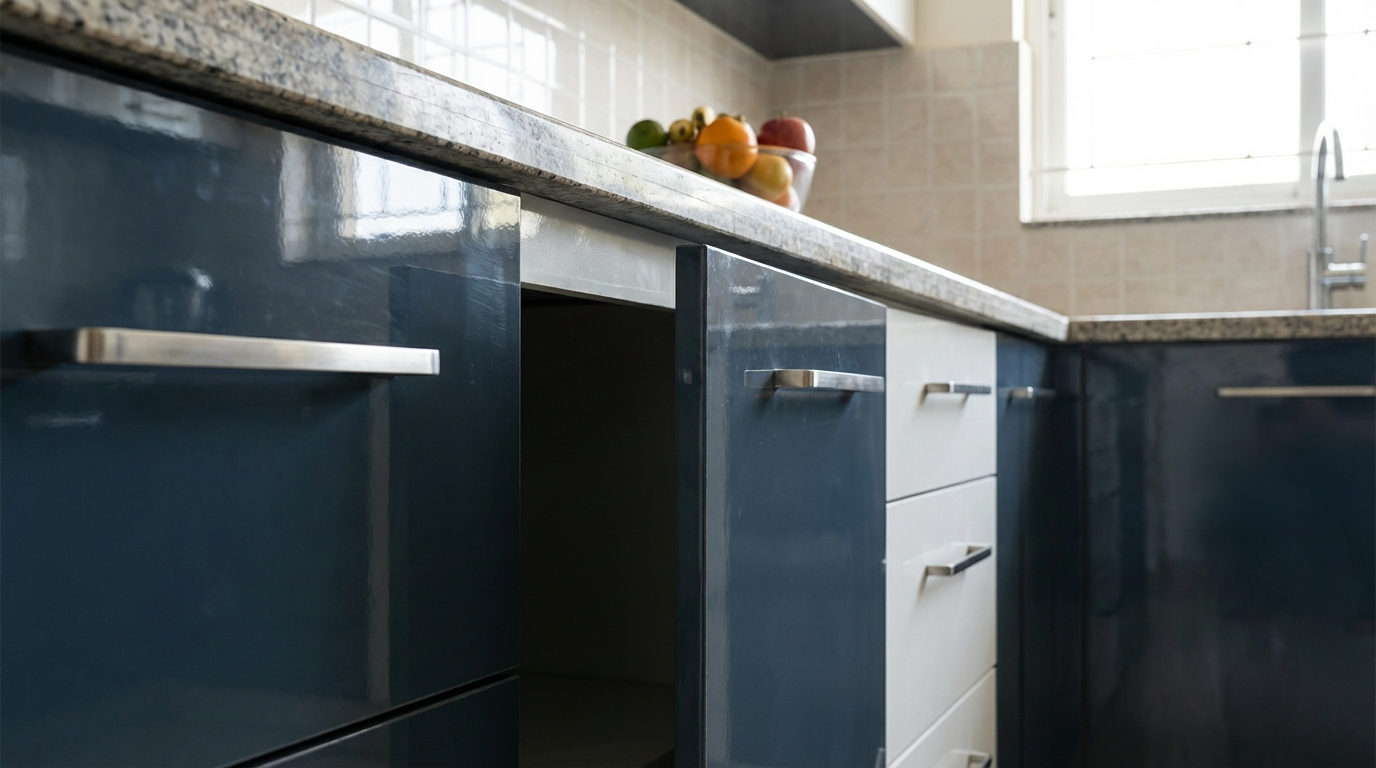
What Makes UV Board a Favourite for Modern Indian Kitchens?
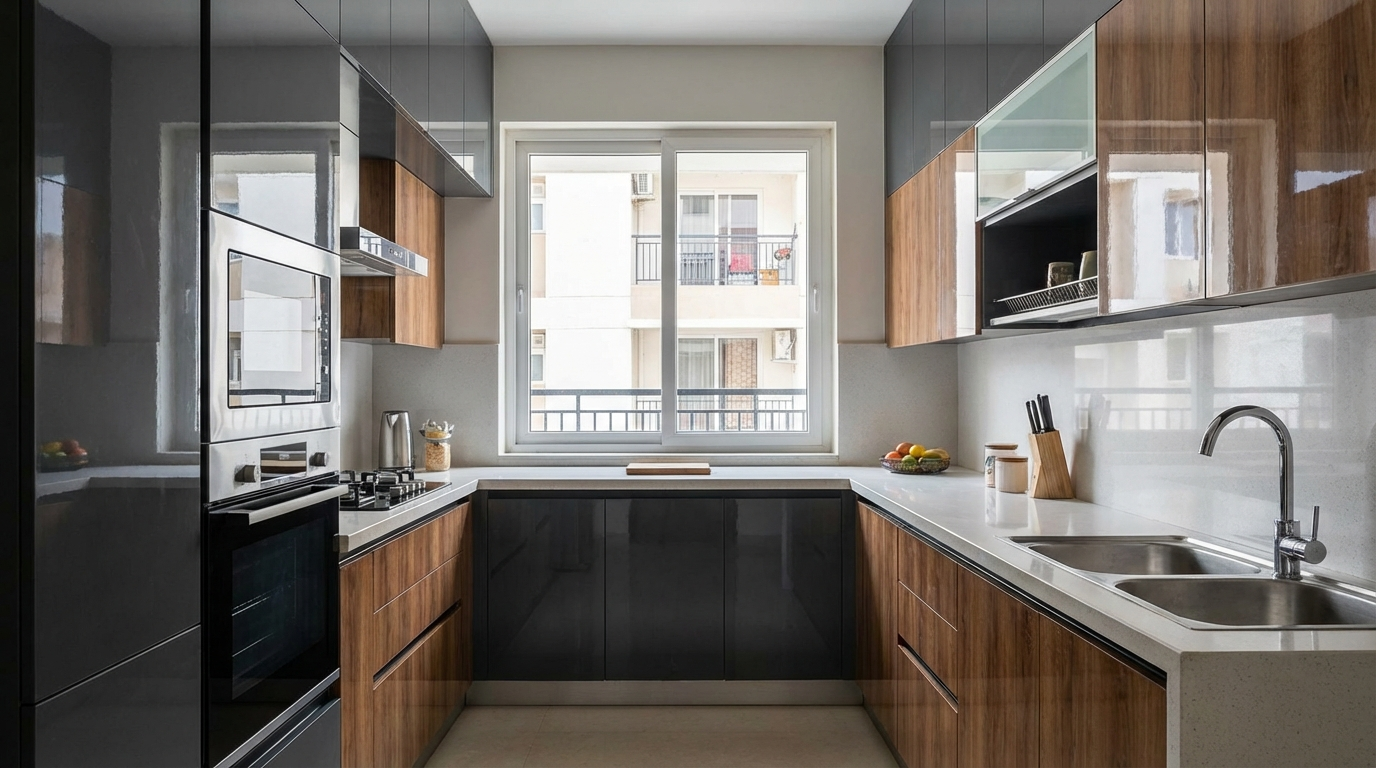
Walk into any premium modular kitchen showroom in Delhi, Mumbai, or Bangalore, and you'll notice one finish dominating the display units: high-gloss UV boards. That mirror-like sheen catching the light isn't acrylic or lacquer—it's ultraviolet-cured coating that's quietly become the preferred choice for Indian homeowners who want that luxury kitchen look without the luxury price tag.
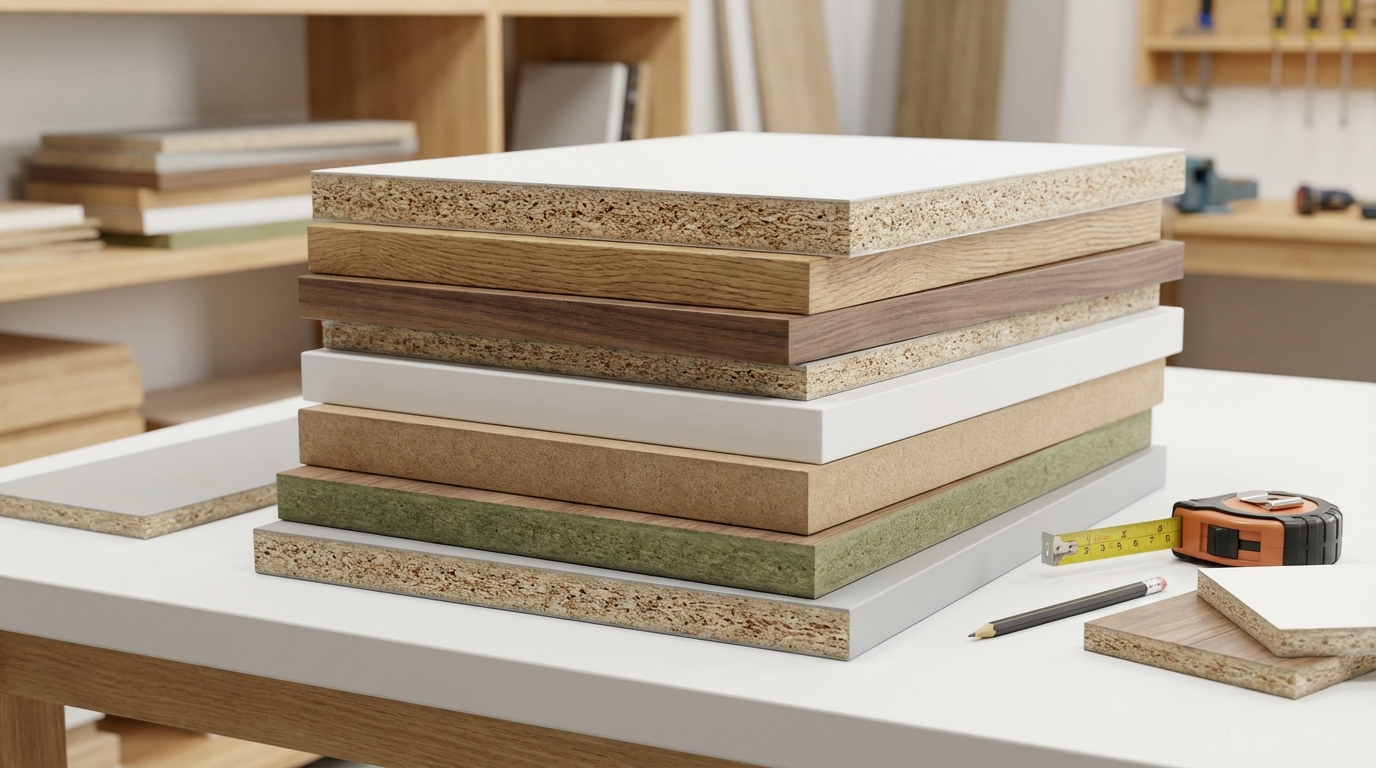
UV board is an engineered panel where a liquid coating is applied to a substrate (typically MDF, HDF, or plywood) and instantly hardened using ultraviolet light. This curing process creates an exceptionally hard, scratch-resistant surface with reflectivity that rivals glass. Unlike traditional paint finishes that take hours to dry and remain soft for days, UV coating achieves full hardness in seconds—resulting in a denser, more durable surface layer.
For Indian kitchens specifically, this matters because of three realities: we cook with oil and spices that splatter, we deal with humidity ranging from coastal dampness to desert dryness, and we expect our kitchen cabinets to look pristine for at least 8-10 years without major refurbishment.
UV Board Price in India 2026: Thickness-Wise Breakdown
Pricing for UV boards depends heavily on the base substrate, UV coating quality, and whether you're buying plain boards or pre-sized panels. Here's what you'll encounter across major Indian cities in 2026:
| Base Material | Thickness | Price Range (₹/sq ft) | 8×4 ft Sheet Cost | Best Application |
|---|---|---|---|---|
| MDF + UV Coating | 8 mm | ₹45–60 | ₹1,440–1,920 | Back panels, decorative wall cladding |
| MDF + UV Coating | 12 mm | ₹65–85 | ₹2,080–2,720 | Cabinet shutters, wardrobe doors |
| MDF + UV Coating | 18 mm | ₹85–110 | ₹2,720–3,520 | Heavy-duty shutters, partition panels |
| HDF + UV Coating | 12 mm | ₹80–100 | ₹2,560–3,200 | Premium kitchen shutters |
| Plywood + UV Coating | 18 mm | ₹120–150 | ₹3,840–4,800 | High-moisture areas, near-sink installations |
| HDHMR + UV Coating | 18 mm | ₹130–160 | ₹4,160–5,120 | Entire kitchen, humidity-prone zones |
Regional price variations: Metro cities like Mumbai and Delhi typically sit at the higher end of these ranges due to logistics and demand. Tier-2 cities may see 5-10% lower rates, but availability of premium grades can be limited. Always factor in 18% GST, which dealers may quote separately.
What Drives UV Board Pricing?
The price difference between a ₹50/sq ft board and a ₹150/sq ft board comes down to four factors:
- Substrate quality: Plain MDF costs less than moisture-resistant MDF, which costs less than HDHMR. The substrate determines long-term performance more than the UV coating itself.
- UV coating thickness: Budget boards receive one thin UV layer; premium boards get multiple coats with intermediate sanding, creating deeper gloss and better scratch resistance.
- Surface preparation: Higher-end manufacturers apply primer coats and filler layers before UV coating, eliminating surface imperfections visible at eye level.
- Brand consistency: Established brands maintain uniform density and coating adhesion across batches—critical when you're ordering multiple boards for a kitchen and expect colour matching.
High-Gloss UV Board Designs: What's Available in 2026
The design landscape for UV boards has expanded significantly beyond basic solid colours. Here's what Indian dealers currently stock:
Solid Colour High-Gloss Options
Classic white remains the bestseller, followed by off-white, ivory, and various grey tones from charcoal to dove. These work particularly well in north and east-facing kitchens where maximizing light reflection helps brighten the space. For contemporary designs, matte black and navy UV boards create striking contrast when paired with metallic hardware.
Woodgrain and Texture Reproductions
Modern UV technology now reproduces oak, walnut, teak, and wenge grain patterns with impressive fidelity. The manufacturing process uses heat-transfer films before UV coating, creating depth that earlier woodgrain laminates couldn't achieve. These suit transitional kitchens where homeowners want warmth without maintaining actual wood.
Marble and Stone Effects
Italian marble reproductions—Statuario, Calacatta, and Carrara patterns—have surged in popularity for kitchen islands and tall unit shutters. UV coating over printed marble designs creates a convincing depth effect, especially when paired with handleless push-to-open mechanisms that eliminate hardware distractions.
Metallic and Special Effect Finishes
Champagne gold, rose gold, and brushed silver UV finishes target the premium segment. These require specialized coating processes and typically cost 30-40% more than standard high-gloss options. They work best as accent panels rather than entire kitchen installations.
UV Board vs Acrylic vs Laminate: The Kitchen Finish Showdown
This comparison addresses the decision most Indian homeowners face when choosing modular kitchen shutters. Each material has legitimate advantages depending on your priorities:
| Parameter | UV Board | Acrylic Finish | High-Pressure Laminate |
|---|---|---|---|
| Gloss Level | 85-90% reflectivity | 90-95% reflectivity | 30-60% reflectivity |
| Scratch Resistance | Very Good | Excellent | Good |
| Heat Resistance | Moderate (avoid above 60°C) | Good (up to 80°C) | Good (up to 100°C) |
| Moisture Resistance | Depends on substrate | Excellent at surface | Good if edges sealed |
| Repairability | Difficult—needs panel replacement | Can be polished for minor scratches | Cannot repair—must replace |
| Cost (per sq ft) | ₹65–160 | ₹180–350 | ₹40–90 |
| Edge Finishing | Requires matching edge band | Same—edge band needed | Same—edge band needed |
| Colour Depth | Good depth, mirror finish | Superior depth, glass-like | Flat colour, no depth |
| Fingerprint Visibility | High on dark colours | Very high | Low on matte finishes |
When UV Board Wins
Choose UV board when you want the high-gloss aesthetic at 40-50% of acrylic's cost. It's the sweet spot for budget-conscious homeowners who refuse to compromise on the mirror finish but can't justify acrylic pricing for an entire kitchen. UV boards also offer more design variety—woodgrains and marble effects aren't easily available in acrylic.
When Acrylic Wins
If budget isn't the primary constraint and you prioritize maximum gloss depth plus better scratch recovery, acrylic justifies its premium. It's particularly suitable for high-visibility areas like kitchen islands where the panels will be touched frequently and viewed at close range.
When Laminate Wins
For households with young children or heavy daily cooking, matte laminates hide fingerprints, minor scratches, and oil splatters far better than glossy surfaces. They're also more heat-resistant near stove installations where UV coatings might discolour over time.
Choosing the Right Substrate: Why Base Material Matters More Than UV Coating
The UV coating is only as good as what it's bonded to. This is where many buyers go wrong—focusing on surface aesthetics while ignoring the structural foundation.
MDF-Based UV Boards
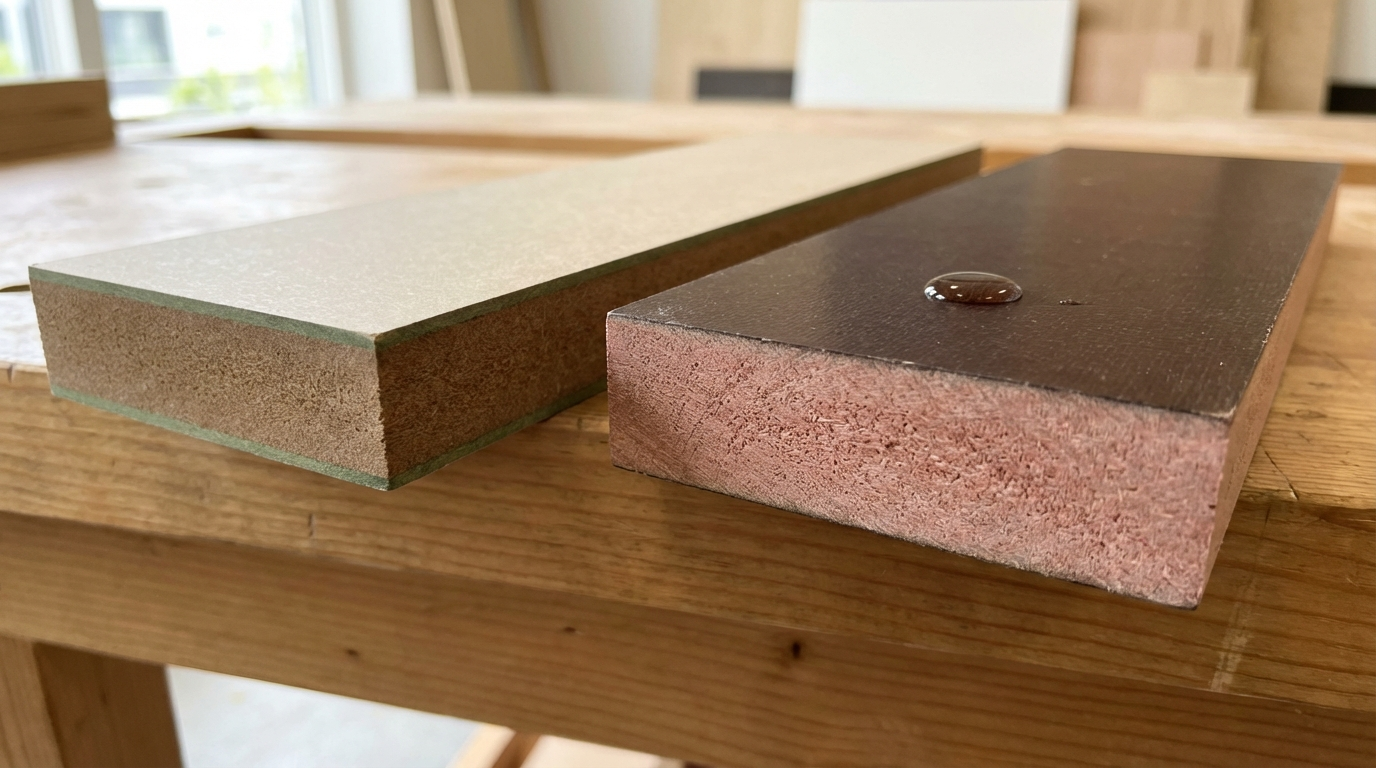
Standard MDF works for dry areas but swells when exposed to moisture. If you're using MDF-based UV boards near the sink or in a humid coastal kitchen, expect edge swelling within 2-3 years even with proper edge banding. Reserve plain MDF UV boards for tall units, overhead cabinets far from water sources, and bedroom wardrobes.
HDF-Based UV Boards
Higher density means better moisture resistance and screw-holding capacity. HDF UV boards suit mid-budget kitchens where you want improved performance without jumping to premium substrates. The denser core also produces a slightly superior UV finish since there are fewer surface imperfections to mask.
HDHMR-Based UV Boards
For serious moisture resistance combined with high-gloss aesthetics, HDHMR with UV coating offers the best engineered wood solution. The moisture-resistant resins in HDHMR prevent the swelling that plagues MDF, while the high density provides excellent UV coating adhesion. This combination works for base cabinets, under-sink units, and kitchens in humid climates.
Plywood-Based UV Boards
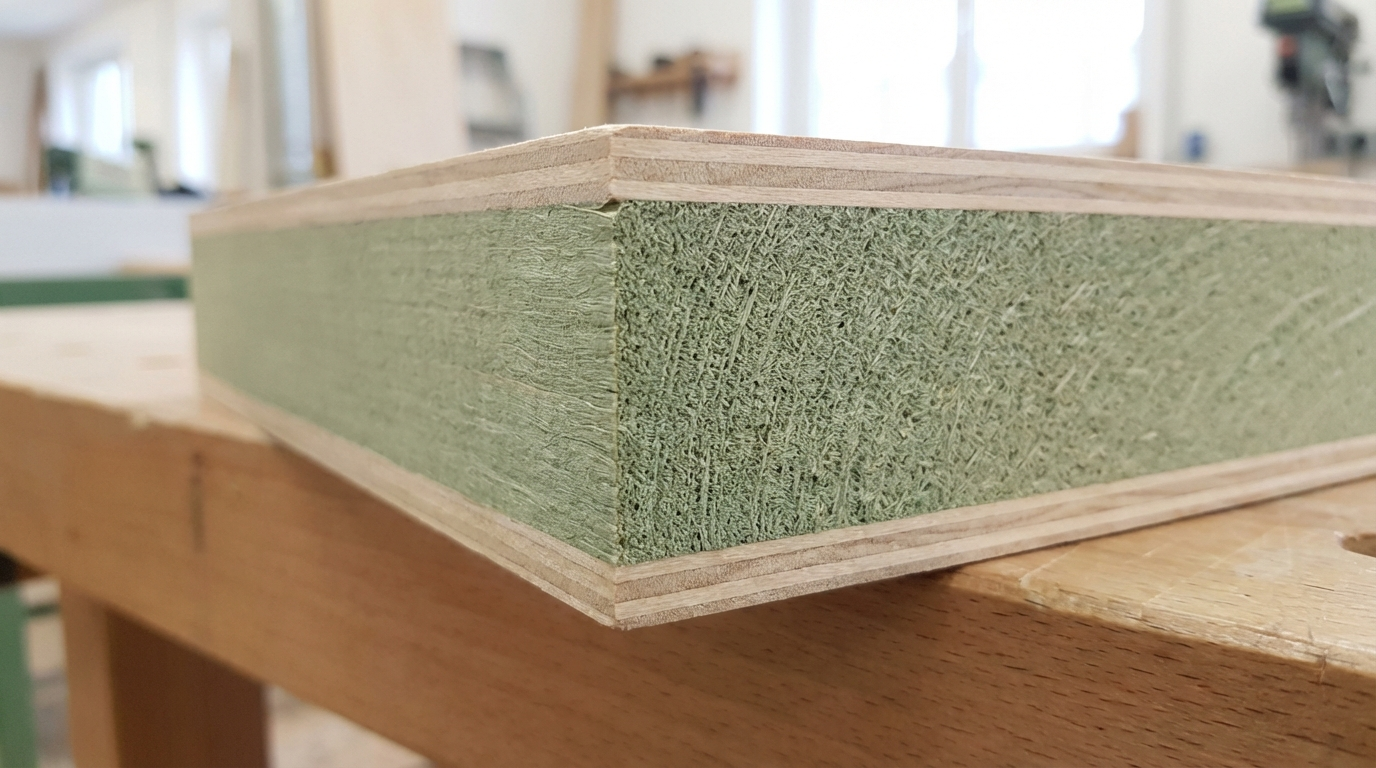
Marine plywood or BWR plywood with UV coating provides maximum structural strength and moisture resistance. The cross-grain construction handles weight better than any fibreboard, making it ideal for heavy storage cabinets. However, plywood's natural grain variations can telegraph through UV coatings unless multiple primer coats are applied—adding to cost.
Installation Essentials: What Your Carpenter Needs to Know
UV board installations require different handling than standard laminate or painted boards. Ensure your installer understands these specifics:
Cutting and Edge Treatment
UV coatings can chip during cutting if improper blades are used. Require your carpenter to use carbide-tipped blades specifically designed for laminated surfaces, cutting from the back side to minimize chipping on visible edges. All cut edges must receive colour-matched PVC or ABS edge banding—unsealed edges absorb moisture regardless of substrate quality.
Hardware Mounting
Pre-drill all screw holes to prevent the UV surface from cracking during hardware installation. For hinges, use cup-style Euro hinges that distribute load across the board rather than traditional butt hinges that concentrate stress. Add reinforcement blocks at hinge locations for shutters exceeding 600mm height.
Handling and Storage
UV surfaces scratch easily when boards slide against each other. Insist that your dealer stores boards vertically with protective film intact until installation. Any scratches visible during unboxing should be photographed and rejected—UV scratches cannot be buffed out like acrylic.
Cleaning After Installation
Initial cleaning should use only microfibre cloths with plain water. Avoid chemical cleaners for the first week while the UV coating fully stabilizes. After that, mild dish soap solutions work safely. Never use abrasive pads or cream cleansers—they create micro-scratches that dull the gloss over time.
Brand Options for UV Boards in India
Several manufacturers offer UV-finished boards, but quality varies considerably:
Action Tesa UV Range
One of the earliest organized players in UV boards, Action Tesa offers consistent quality across their standard colour range. Their HDHMR-based UV boards are particularly well-regarded. Expect pricing at the mid-to-upper range with good dealer availability in metros.
Century UV Boards
Century's UV offerings include both MDF and plywood substrates. Their Premium Plus range targets the high-end segment with superior coating thickness. Availability is strong across India, and warranty support is reasonably accessible.
Greenpanel UV Options
Known for eco-friendly manufacturing, Greenpanel's UV boards appeal to environmentally conscious buyers. Their E0-grade substrates with low formaldehyde emissions suit homes with health concerns. Pricing is competitive with Action Tesa.
Regional and Unbranded Options
Smaller manufacturers offer UV boards at 20-30% lower prices, but quality control varies significantly. If considering these, physically inspect samples for coating uniformity, check edge bonding quality, and confirm substrate density by weight comparison. Avoid any supplier unwilling to provide test reports or warranty documentation.
Quick Decision Guide: Is UV Board Right for Your Kitchen?
Choose UV board if:
- You want high-gloss aesthetics without acrylic's premium pricing
- Your budget is ₹1,200–1,800 per square foot for complete shutters (including fabrication)
- You're comfortable with fingerprint visibility on dark colours
- Your kitchen has moderate humidity and you'll pair UV with appropriate substrates
- You prefer design variety including woodgrains and marble effects unavailable in acrylic
Reconsider UV board if:
- Your kitchen faces extreme humidity or direct water exposure near the sink
- You have young children who will frequently touch cabinet surfaces
- You prioritize repairability—UV scratches are permanent
- Your cooking style involves heavy frying near base cabinets where heat exposure is constant
- You expect the glossy look to remain perfect for 15+ years without maintenance
Cost Calculation: Full Kitchen in UV Board
For practical budgeting, here's what a typical L-shaped modular kitchen (approximately 120 sq ft of shutter area) costs in UV board finish:
| Component | Material Specification | Estimated Cost |
|---|---|---|
| Shutter Material | 18mm HDHMR + UV coating @ ₹140/sq ft | ₹16,800 |
| Carcass Material | 18mm HDHMR plain @ ₹100/sq ft (150 sq ft) | ₹15,000 |
| Edge Banding | 2mm PVC matching colour | ₹3,500 |
| Hardware | Hettich/Hafele soft-close hinges, channels | ₹18,000 |
| Fabrication Labour | Cutting, assembly, installation | ₹22,000 |
| Total (Materials + Labour) | ₹75,300 |
This excludes countertop, backsplash, and appliances. The same kitchen in acrylic finish would cost ₹95,000–1,10,000; in laminate finish, ₹55,000–65,000. UV board sits precisely in the middle, offering substantially better aesthetics than laminate at roughly 70% of acrylic's cost.
Maintenance Protocol for Long-Lasting UV Kitchens
UV boards maintain their gloss for 8-12 years with proper care:
Daily maintenance: Wipe spills immediately with a dry cloth. For oil splatters, use a microfibre cloth dampened with warm water and mild dish soap. Dry thoroughly—standing water eventually penetrates edge bands.
Weekly cleaning: Use a dedicated glass cleaner or diluted white vinegar solution (1:4 ratio with water) for streak-free shine. Spray onto cloth, not directly onto the board surface.
Avoid always: Abrasive scrubbers, cream cleansers, acetone-based products, and direct heat exposure. Don't place hot vessels directly on UV surfaces—use trivets or heat pads.
Annual check: Inspect edge banding for peeling, particularly near the sink and dishwasher. Re-glue loose sections immediately to prevent moisture ingress. Check hinges for alignment and tighten if shutters have dropped.
Final Recommendation: Matching UV Board to Your Specific Situation
The ideal UV board configuration depends on where in your kitchen it's being installed:
Overhead wall cabinets: Standard MDF-based UV boards work fine—these areas rarely encounter moisture, and the weight savings reduce stress on wall mounting hardware.
Base cabinets away from sink: HDF or HDHMR-based UV boards provide the safety margin against occasional spills without premium pricing.
Under-sink and near-dishwasher cabinets: HDHMR-based UV boards are the minimum recommendation. For maximum protection, consider marine plywood with UV coating despite the 25-30% cost increase.
Kitchen island shutters: Since these face maximum touch exposure and close scrutiny, consider HDHMR UV boards in lighter colours that hide fingerprints better, or accept the maintenance needs of dramatic dark tones.
When ordering, request samples of your chosen colour on the actual substrate you'll be using—UV coatings can appear slightly different on MDF versus HDHMR due to surface porosity variations. Verify colour matching across all boards before fabrication begins, as batch variations do occur even with reputable brands.
Disclaimer: This content is provided for general informational purposes based on industry practices and publicly available information. Product specifications, standards, prices, and availability may vary by manufacturer, region, and time. Readers should independently verify details with manufacturers, dealers, or qualified professionals before making purchase or construction decisions.