Why Most Indian Homeowners Get Wooden Flooring Wrong
Wooden flooring decisions in India fail for one predictable reason: buyers choose based on showroom appearance rather than how the material performs under actual Indian conditions. A gorgeous European oak that looks stunning in Mumbai's January exhibition will warp beyond recognition by August's monsoon peak.
This guide approaches wooden flooring differently. Instead of starting with "types and benefits," we'll work backwards from your specific scenario — climate zone, room function, budget constraints, and maintenance reality — to identify which flooring category actually makes sense for your situation.
The Indian wooden flooring market has matured significantly since 2020. What was once a binary choice between expensive solid hardwood and cheap laminates now includes engineered options specifically formulated for tropical humidity, SPC (Stone Polymer Composite) alternatives that blur the line between wood and vinyl, and laminate grades that outperform solid wood in durability testing.
Understanding Wooden Flooring Categories: Beyond Marketing Names
Wooden flooring in India encompasses four distinct product categories, each with fundamentally different construction, performance characteristics, and price points. The confusion begins when dealers use these terms interchangeably or invent marketing names that obscure the actual product composition.
Solid Hardwood Flooring
Solid hardwood flooring is machined from single pieces of timber, typically 18-22mm thick, with tongue-and-groove edges for interlocking installation. In India, commonly available species include teak, sheesham (Indian rosewood), merbau, and imported oak or walnut.
The defining characteristic of solid hardwood is its ability to be sanded and refinished multiple times — typically 3-5 times over its lifespan — which theoretically extends usable life to 50+ years. However, this advantage comes with a critical limitation: solid wood expands and contracts significantly with humidity changes, making it problematic in most Indian climate zones without sophisticated climate control.
Honest assessment: Solid hardwood performs well only in consistently air-conditioned spaces or naturally dry climates like Rajasthan. In coastal cities, monsoon-prone regions, or homes without 24/7 climate control, expect seasonal gaps between planks, cupping, and potential structural issues.
Engineered Wood Flooring
Engineered wood flooring consists of a real wood veneer (typically 0.6mm to 6mm thick) bonded to a stable core of plywood, HDF, or cross-laminated wood layers. This construction dramatically reduces expansion and contraction compared to solid wood while retaining the authentic look and feel of natural timber.
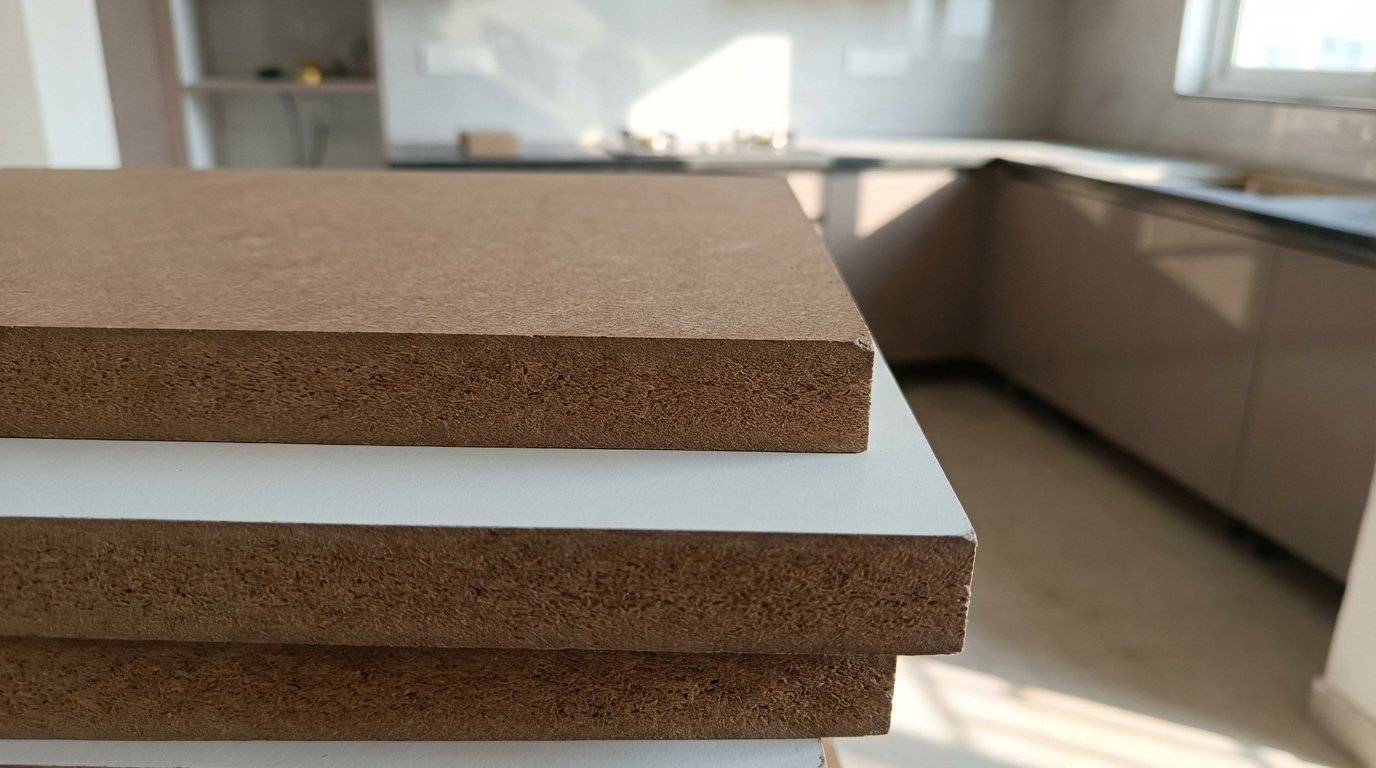
The quality spectrum in engineered flooring is enormous. Budget options use thin veneers (under 1mm) that cannot be refinished, while premium products feature 3-4mm wear layers that allow 1-2 sandings. The core material matters equally — cheaper products use standard MDF that fails in humid conditions, while quality engineered flooring uses moisture-resistant HDF or marine-grade plywood cores.
Critical distinction: Engineered flooring with veneer thickness below 2mm should be considered a visual upgrade only, not a long-term flooring investment. For genuine durability benefits, specify minimum 3mm veneer thickness and MR/BWR-rated cores.
Laminate Flooring
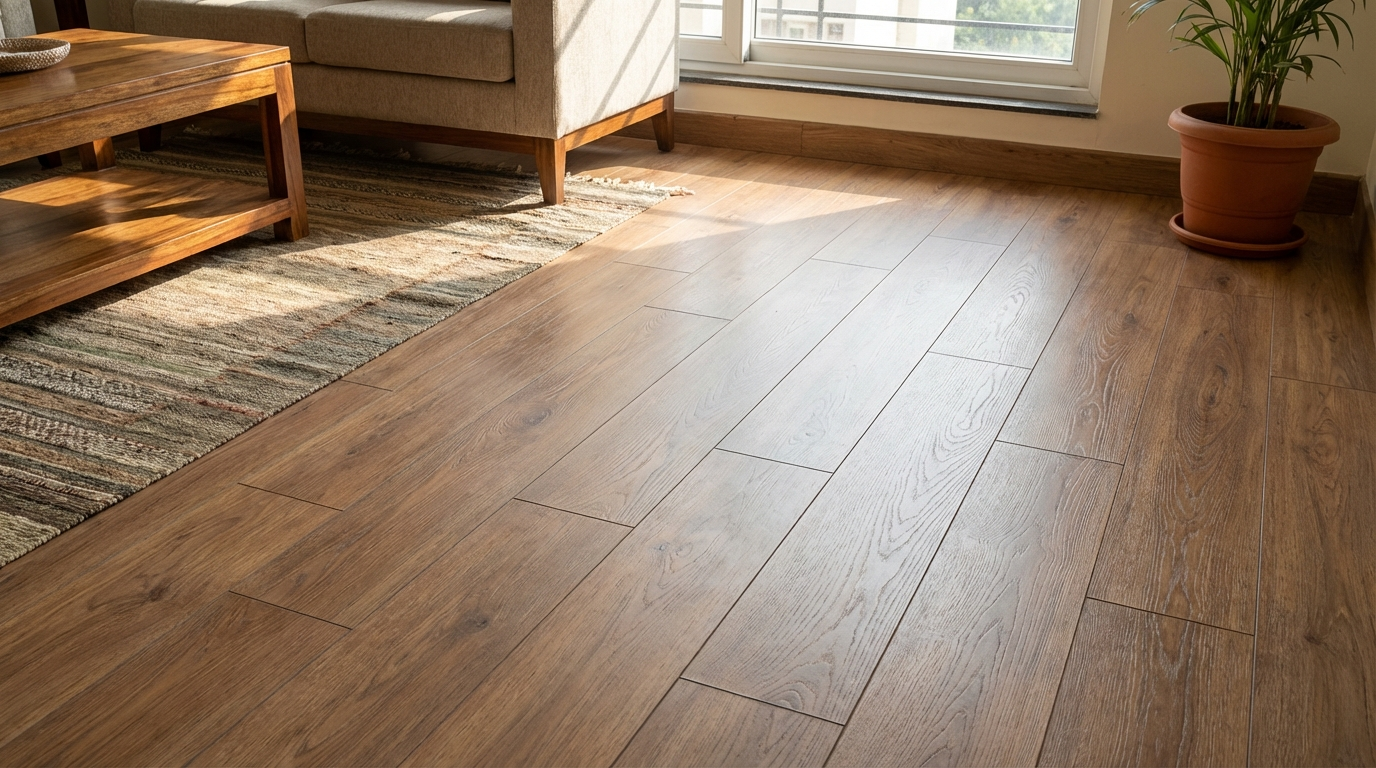
Laminate flooring contains no actual wood. It consists of a photographic image layer (depicting wood, stone, or other patterns) protected by a melamine wear layer, bonded to an HDF core with a backing layer for stability. Despite lacking real wood, quality laminate often outperforms solid hardwood in scratch resistance, stain resistance, and dimensional stability.
The AC rating system (Abrasion Class) indicates laminate durability: AC3 suits residential bedrooms, AC4 handles living rooms and moderate commercial use, while AC5 withstands heavy commercial traffic. Most Indian dealers stock AC3-AC4 products, with AC5 available through specialty suppliers.
Reality check: Laminate flooring cannot be refinished. Once the wear layer degrades (typically 10-20 years depending on traffic and AC rating), replacement is the only option. However, the significantly lower cost means full replacement may still prove more economical than maintaining solid hardwood over equivalent periods.
SPC and WPC Flooring
Stone Polymer Composite (SPC) and Wood Polymer Composite (WPC) flooring represent newer categories that combine realistic wood visuals with waterproof performance. SPC uses a rigid stone-plastic core, while WPC incorporates foamed wood-plastic for softer underfoot feel.
These products have gained significant traction in Indian kitchens, bathrooms, and commercial spaces where traditional wood or laminate would fail. The 100% waterproof claim holds true — these products can withstand standing water indefinitely without damage, making them viable for areas previously unsuitable for wood-look flooring.
Price Comparison: What Wooden Flooring Actually Costs in India (2026)
Flooring prices vary dramatically based on brand, thickness, finish, and distribution channel. The following ranges represent typical retail prices including GST, excluding installation costs.
| Flooring Type | Entry Level (₹/sq ft) | Mid-Range (₹/sq ft) | Premium (₹/sq ft) | Installation Cost (₹/sq ft) |
|---|---|---|---|---|
| Laminate (AC3-AC4) | 55–90 | 100–180 | 200–350 | 25–45 |
| Engineered Wood | 180–300 | 350–550 | 600–900 | 40–70 |
| Solid Hardwood (Indian species) | 350–500 | 550–800 | 900–1,400 | 60–100 |
| Solid Hardwood (Imported species) | 600–900 | 950–1,400 | 1,500–2,500+ | 80–120 |
| SPC Flooring | 90–150 | 160–250 | 280–400 | 30–50 |
| Bamboo Flooring | 200–350 | 380–550 | 600–800 | 45–70 |
Hidden Costs Most Quotes Exclude
The per-square-foot rate represents only part of total project cost. Budget for these additional expenses:
- Subfloor preparation: Leveling compounds and moisture barriers add ₹15-40/sq ft depending on existing floor condition
- Underlayment: Quality foam or cork underlayment costs ₹10-35/sq ft and significantly affects comfort and sound insulation
- Transitions and trims: Door thresholds, wall skirting, and expansion joint covers typically add 8-12% to material costs
- Wastage allowance: Order 8-10% extra material for cuts, damage, and future repairs
- Acclimatization: Solid and engineered wood requires 48-72 hours of on-site acclimatization before installation — factor in scheduling delays
Climate Zone Decision Framework
India's climate diversity demands region-specific flooring recommendations. A product that performs excellently in Bangalore may fail catastrophically in Chennai or Kolkata.
High Humidity Zones (Coastal Cities, Eastern India)
Cities including Mumbai, Chennai, Kolkata, Kochi, and Goa experience average relative humidity above 70% for significant portions of the year, with monsoon peaks exceeding 85-90%.
Recommended options:
- SPC flooring (first choice for moisture-prone areas)
- Engineered wood with marine-grade plywood core and factory-applied moisture sealant
- High-quality laminate (AC4 minimum) with wax-sealed edges
Avoid: Solid hardwood (except in fully climate-controlled spaces), budget engineered flooring with standard MDF cores, laminate without edge sealing
Moderate Climate Zones (Bangalore, Pune, Interior Maharashtra)
These regions enjoy relatively stable humidity (50-70% range) and moderate temperature variations, making them suitable for most flooring types with proper installation.
Recommended options:
- Engineered wood (optimal balance of aesthetics and performance)
- Quality laminate (AC4-AC5) for budget-conscious projects
- Solid hardwood in living areas with reasonable climate control
Dry Climate Zones (Rajasthan, Gujarat, Parts of Northern India)
Low humidity regions present the opposite challenge: wood can dry excessively and crack. However, these zones are often most suitable for traditional solid hardwood when properly humidified.
Recommended options:
- Solid hardwood (performs best here among Indian climate zones)
- Engineered wood with thicker veneer layers
- Laminate (excellent durability in dry conditions)
Note: Even in dry zones, use humidifiers during peak summer to prevent excessive drying and cracking of solid wood floors.
Extreme Temperature Zones (North India Plains)
Delhi-NCR, Uttar Pradesh, and Bihar experience both extreme summer heat and winter cold, creating significant thermal expansion challenges. Air conditioning in summer followed by heating in winter compounds dimensional stress.
Recommended options:
- Engineered wood with cross-laminated construction
- SPC flooring (dimensionally stable across temperature ranges)
- Laminate with proper expansion gaps (minimum 10mm at walls)
Room-by-Room Suitability Analysis
Living Rooms and Bedrooms
These spaces offer maximum flexibility since they avoid direct water exposure. Selection depends primarily on budget, aesthetic preference, and foot traffic intensity.
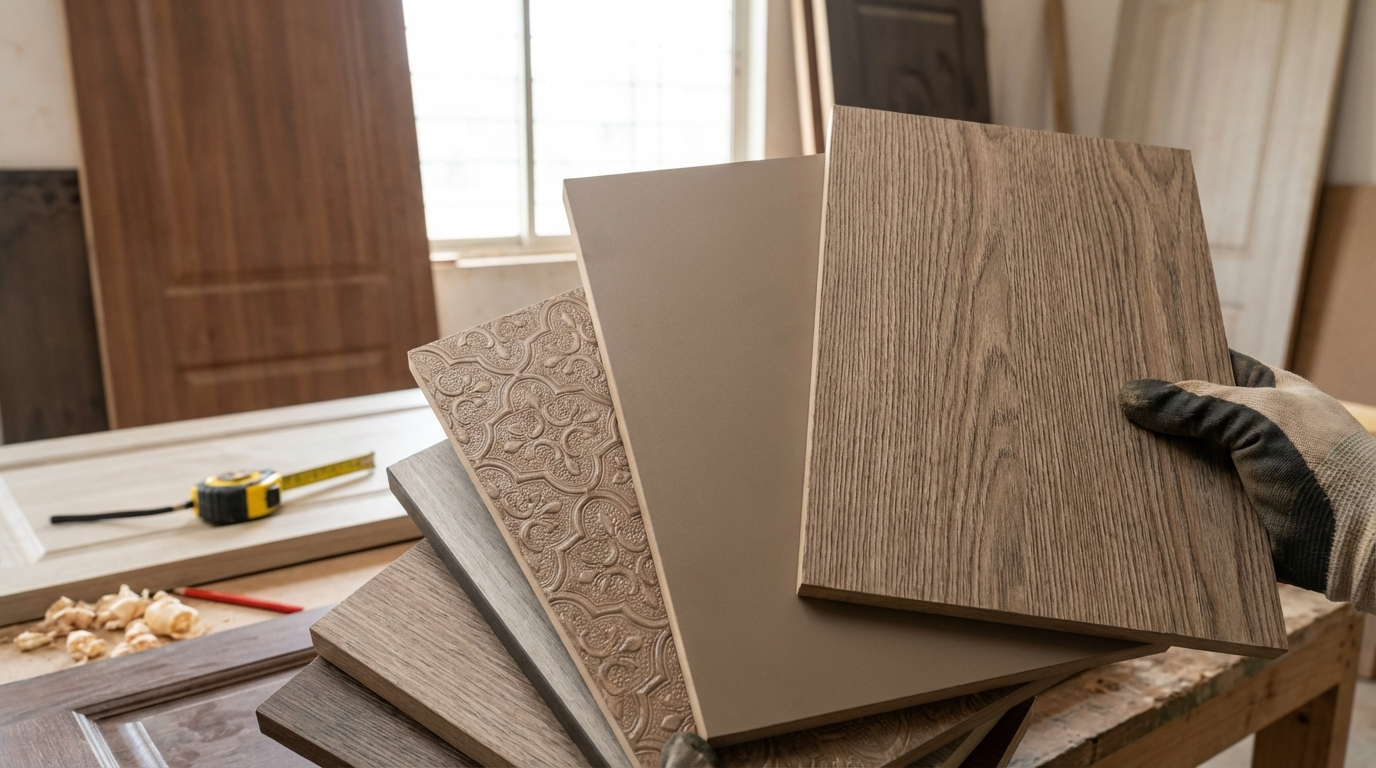
For premium aesthetics with authentic feel, engineered wood with 3mm+ veneer provides the best value. Budget projects can achieve impressive results with AC4 laminate in realistic wood-grain finishes — modern embossed-in-register (EIR) technology creates texture that matches the printed grain pattern, dramatically improving realism.
Kitchens
Kitchen flooring requires water resistance, stain resistance, and durability against dropped objects. Traditional wooden flooring recommendations cautioned against wood in kitchens entirely, but modern options have changed the equation.
Best options: SPC flooring (waterproof, easy maintenance), high-quality laminate with sealed edges (water-resistant but not waterproof — wipe spills promptly)
Avoid: Solid hardwood, budget laminate, engineered wood without waterproof cores
Bathrooms
Only SPC and WPC flooring can genuinely withstand bathroom conditions. All other wooden flooring categories — including "water-resistant" engineered products — will eventually fail with repeated water exposure. If authentic wood aesthetics matter in bathrooms, consider wood-look porcelain tiles instead of actual wood products.
High-Traffic Commercial Spaces
Office lobbies, retail showrooms, and restaurant floors demand AC5 laminate, commercial-grade SPC, or properly maintained solid hardwood. Engineered wood with thin veneers will show wear patterns within 2-3 years under heavy commercial use.
Brand Landscape in India: What Each Tier Offers
The Indian wooden flooring market segments into three distinct brand tiers, each serving different buyer priorities.
Premium International Brands
Brands including Pergo (Sweden), Quick-Step (Belgium), and Kronotex (Germany) offer superior manufacturing precision, realistic textures, longer warranties (15-25 years), and consistent quality. Premium pricing (typically 40-80% above mid-range) reflects European manufacturing standards and import costs.
Choose premium brands when: Budget permits, project demands exceptional finish quality, long-term warranty matters, or specifying for high-end residential/commercial projects.
Established Mid-Range Brands
Greenply, Century Ply, Action TESA, and Merino offer competent products manufactured in India or sourced from Asian facilities. Quality has improved significantly, with many products now meeting European performance standards at 30-50% lower prices than imports.
Choose mid-range brands when: Balancing quality with budget, product availability and service network matter, or project scale makes premium pricing impractical.
Budget and Unbranded Options
Local manufacturers and unbranded imports dominate the entry-level segment. Quality varies enormously — some provide genuine value, others fail prematurely. Without brand accountability, warranty claims become problematic.
Choose budget options only when: Project is temporary or rental property, appearance matters more than longevity, or budget constraints are absolute. Always inspect samples physically before ordering.
Installation Methods: Why Technique Matters More Than Material
Improper installation causes more flooring failures than product defects. Understanding installation methods helps you evaluate contractor competence and avoid costly mistakes.
Floating Installation
Planks click together without adhesive attachment to the subfloor, "floating" over an underlayment layer. This method suits laminate, SPC, and most engineered wood products. Advantages include faster installation, easier repairs (damaged planks can be replaced), and accommodation of subfloor imperfections.
Critical requirement: adequate expansion gaps (8-12mm) at all walls and fixed objects. Insufficient gaps cause buckling when flooring expands during monsoon humidity increases.
Glue-Down Installation
Planks are adhesive-bonded directly to the subfloor, providing maximum stability and eliminating the hollow sound sometimes associated with floating installations. This method suits solid hardwood and premium engineered products.
Critical requirement: moisture testing of concrete subfloors. Relative humidity above 75% in the subfloor will cause adhesive failure and wood damage regardless of product quality.
Nail-Down Installation
Traditional method for solid hardwood, using pneumatic nailers to fasten planks to wooden subfloors. Rarely used in Indian residential projects since most homes have concrete subfloors.
Maintenance Realities: What Dealers Don't Emphasize
Every wooden flooring product requires ongoing maintenance, but requirements vary significantly across categories.
Daily and Weekly Care
- All wooden flooring types: Dust with dry microfiber mop, avoid wet mopping (damp mop maximum), place doormats at entrances, use felt pads under furniture legs
- Solid and engineered wood: Maintain indoor humidity between 45-65% using humidifiers/dehumidifiers as needed
- Laminate: Never use steam mops — the heat and moisture combination destroys laminate cores
Periodic Maintenance
- Solid hardwood: Screen and recoat every 3-5 years, full sand and refinish every 10-15 years (₹80-150/sq ft for refinishing)
- Engineered wood (thick veneer): Light sanding and recoating possible 1-2 times over lifespan
- Laminate and SPC: No refinishing possible — maintain wear layer condition through careful use
Damage Response
Scratches in solid hardwood can be spot-repaired with wood filler and finish touch-up. Laminate scratches cannot be truly repaired — only concealed with wax pencils or replaced entirely. Water damage requires immediate response regardless of flooring type: dry thoroughly within 24-48 hours or expect permanent damage.
Quick Decision Guide: Choosing Your Wooden Flooring
Use this framework to narrow options based on your specific priorities:
Choose Solid Hardwood if:
- Budget exceeds ₹800/sq ft (including installation)
- You have climate control or live in dry regions
- Long-term value (20+ years) outweighs upfront cost
- Authentic wood feel is non-negotiable
Choose Engineered Wood if:
- Budget ranges ₹400-700/sq ft
- You want real wood appearance with better stability
- Your climate zone has moderate humidity
- Living rooms and bedrooms are the primary application
Choose Laminate if:
- Budget is below ₹250/sq ft
- Durability matters more than authenticity
- High traffic areas need covering
- You're comfortable with 10-15 year replacement cycles
Choose SPC Flooring if:
- Moisture exposure is likely (kitchens, humid climates)
- Budget ranges ₹150-300/sq ft
- Waterproof performance is essential
- Commercial applications require maximum durability
Buyer Checklist: Before You Commit
Before finalizing any wooden flooring purchase, verify the following:
- Request physical samples — never order from photographs alone. Examine texture, finish quality, and edge precision
- Verify exact specifications — get written confirmation of thickness, wear layer depth, AC rating (for laminate), and core material composition
- Confirm warranty terms — understand what's actually covered. Most warranties exclude moisture damage, installation errors, and "normal wear"
- Inspect installation credentials — request references from contractor's previous projects. Poor installation voids most warranties
- Calculate total project cost — include underlayment, transitions, subfloor preparation, and 10% material contingency
- Plan for acclimatization — solid and engineered wood needs 2-3 days on-site before installation. Schedule accordingly
- Document subfloor condition — photograph existing floor before installation. Moisture readings should be recorded and shared with installer
The right wooden flooring transforms living spaces, adds genuine property value, and delivers decades of satisfaction when chosen correctly for your specific conditions. The wrong choice — often the result of prioritizing appearance over suitability — leads to premature failure, costly repairs, and eventual replacement. Take the time to match product capabilities to your actual requirements, and your flooring investment will reward that diligence for years to come.
Disclaimer: This content is provided for general informational purposes based on industry practices and publicly available information. Product specifications, standards, prices, and availability may vary by manufacturer, region, and time. Readers should independently verify details with manufacturers, dealers, or qualified professionals before making purchase or construction decisions.