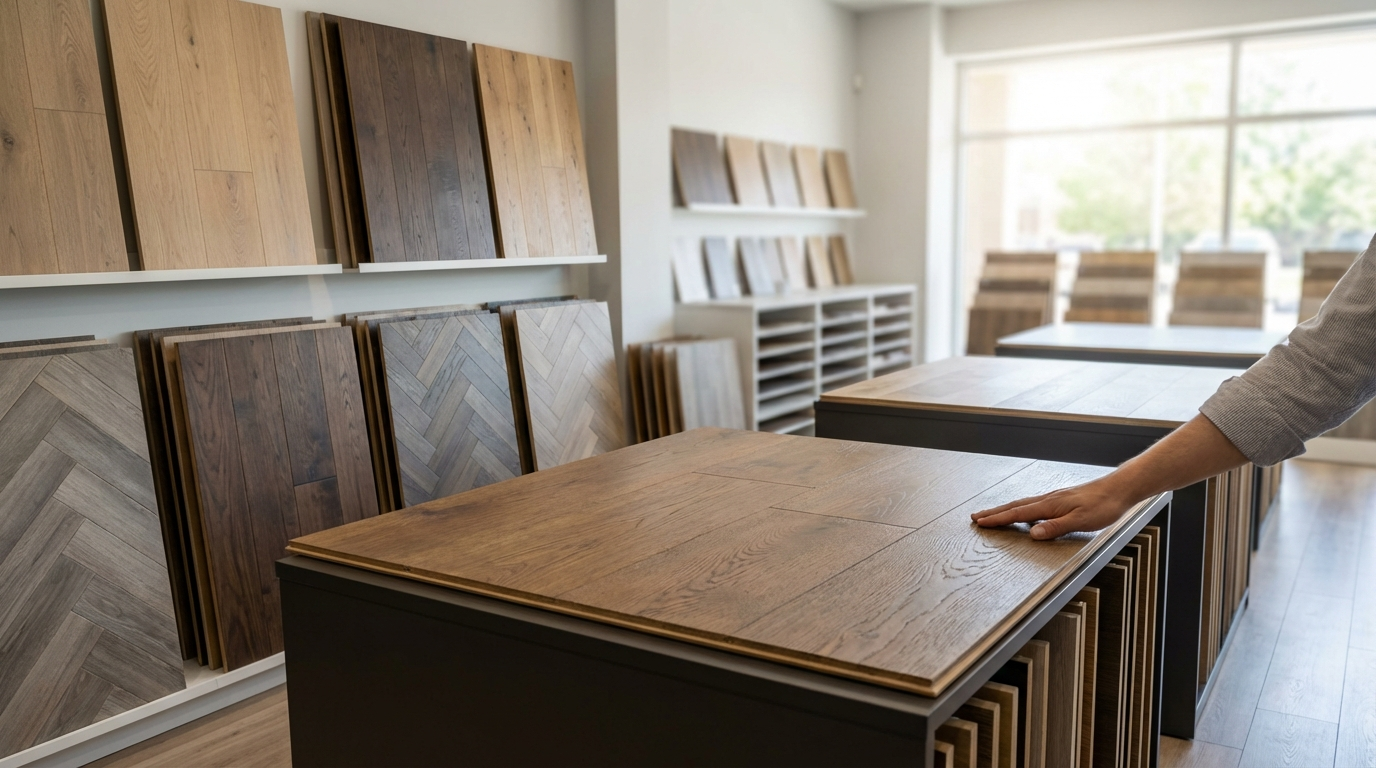
Why Finding Wooden Flooring Dealers Locally Matters More Than You Think
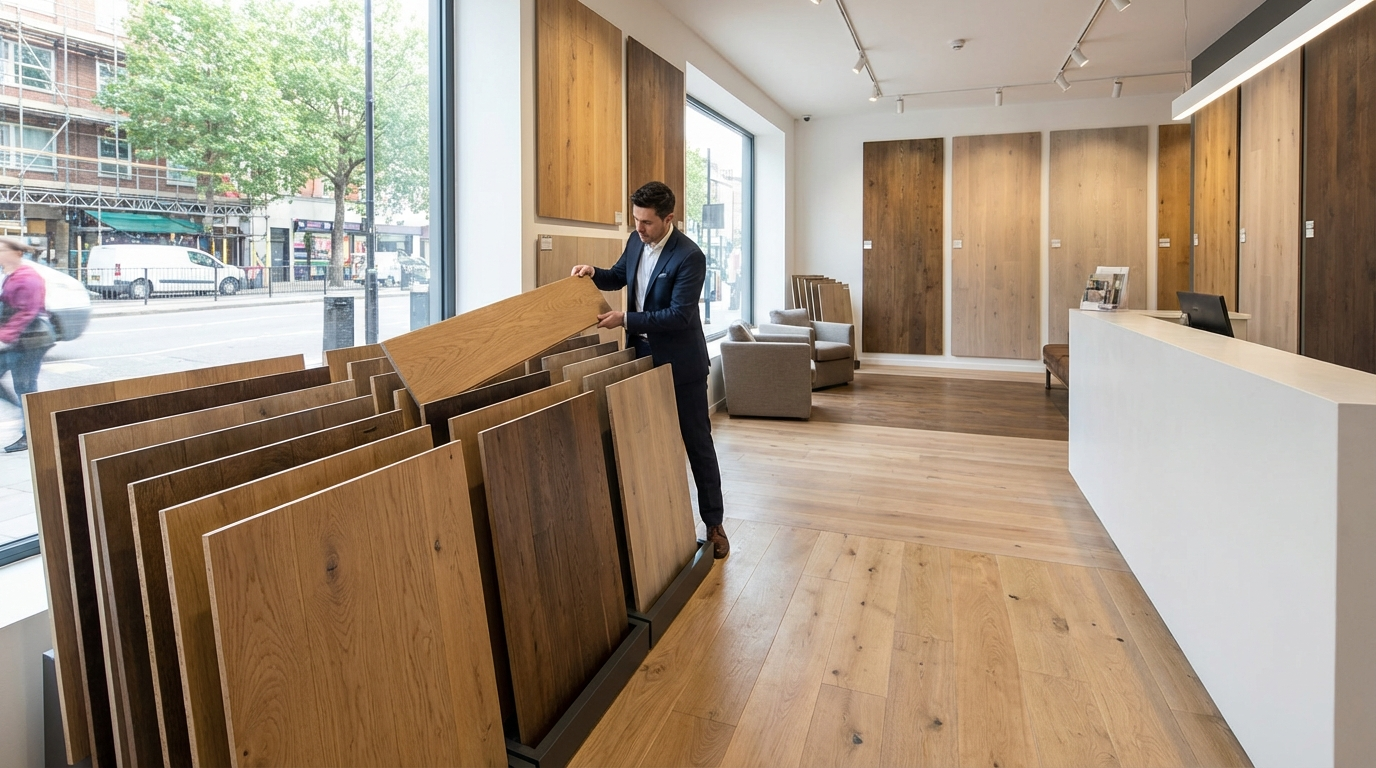
Searching for wooden flooring near you isn't just about convenience—it's about getting the right product for your specific climate, seeing actual samples before committing, and having recourse if something goes wrong post-installation. Unlike tiles or vitrified options, wooden flooring behaves differently across India's diverse humidity zones. A laminate that performs beautifully in Jaipur's dry climate might warp within months in Chennai's coastal humidity.
The dealer you choose directly impacts three critical factors: product authenticity, installation quality, and warranty support. Online purchases might save 10-15% upfront, but without proper installation and local warranty backing, you risk expensive failures that far exceed those initial savings.
Types of Wooden Flooring Available at Indian Showrooms
Before visiting dealers, understand what's actually available. The term "wooden flooring" covers several distinct product categories, each suited to different budgets, climates, and use-cases.
Solid Hardwood Flooring
Solid hardwood flooring is known for its impressive lifespan—when maintained well, it can last for decades, even up to 50 years or more. Each plank is milled from a single piece of timber, typically 18-20mm thick. One significant advantage of solid wood floors is that you can sand and refinish them multiple times, allowing you to refresh their look repeatedly.
Best for: Ground-floor installations in dry climates (Delhi, Jaipur, Ahmedabad), premium residences where longevity justifies higher costs.
Avoid if: Installing in coastal cities, basements, or over concrete slabs without elaborate moisture barriers.
Engineered Wood Flooring
Engineered wood flooring is constructed using a real hardwood top layer bonded to multiple layers of engineered plywood or engineered wood sheets. This layered construction improves strength, minimizes expansion and contraction, and ensures better performance compared to solid wood flooring.
One of the biggest advantages of engineered wooden flooring is its resistance to moisture and temperature changes. In coastal cities like Mumbai or Chennai, or during the heavy monsoon season, solid wood can expand and contract, leading to warping. Engineered flooring remains stable, making it an excellent choice for kitchens, basements, and homes with underfloor heating.
Engineered wooden flooring offers a good 20–30 years of use, especially when you choose a high-quality product with a thick top veneer.
Laminate Flooring
Laminate flooring is another popular choice, known for its versatility and aesthetic appeal. It is composed of multiple layers, primarily consisting of a high-density fibreboard (HDF) core, topped with a photographic image layer and a protective overlay.
However, laminate can warp or swell when exposed to moisture, limiting its use in damp areas. This makes it unsuitable for bathrooms, kitchens, or any space prone to water spillage.
SPC (Stone Plastic Composite) Flooring
SPC flooring is engineered by combining natural stone powder with polymer resins to create a dense, durable core. Its waterproof nature makes it an ideal choice for areas prone to moisture like kitchens, bathrooms, and basements.
SPC flooring is durable and much more reliable, with some SPC Flooring even coming with longer warranty periods of ten or more years.
PVC/Vinyl Flooring
Typically, PVC vinyl flooring prices can range from INR 50 to INR 200 per square foot, with basic vinyl sheets approximately INR 50 to INR 100 per sq ft and Luxury Vinyl Tiles (LVT) usually costing between INR 100 to INR 200 per sq ft.
High-quality PVC flooring can last anywhere from 10 to 20 years with proper care and maintenance.
Wooden Flooring Type Comparison for Indian Homes
| Flooring Type | Price Range (₹/sq ft) | Lifespan | Water Resistance | Best Climate Zones | Refinishing Possible |
|---|---|---|---|---|---|
| Solid Hardwood | 400–1,200+ | 50–100 years | Poor | Dry inland areas | 4–6 times |
| Engineered Wood | 150–500 | 20–30 years | Moderate | All India (best for humid) | 1–2 times |
| Laminate | 70–200 | 10–20 years | Poor | Dry areas only | Not possible |
| SPC Flooring | 120–350 | 15–25 years | Excellent (100%) | All India including coastal | Not possible |
| PVC/Vinyl | 50–200 | 10–20 years | Good to Excellent | All India | Not possible |
How to Find Reliable Wooden Flooring Dealers in Your City
Finding the right dealer requires more than a Google search. Here's a systematic approach that protects your investment.
Step 1: Identify Brand-Authorized Dealers
Major brands like Lamiwood have products available PAN India through 5,000+ authorized dealers, with branch offices in Delhi, Mumbai, Bangalore, Hyderabad. Contact brand headquarters directly for authorized dealer lists in your city—this ensures genuine products and valid warranties.
Step 2: Visit Multiple Showrooms
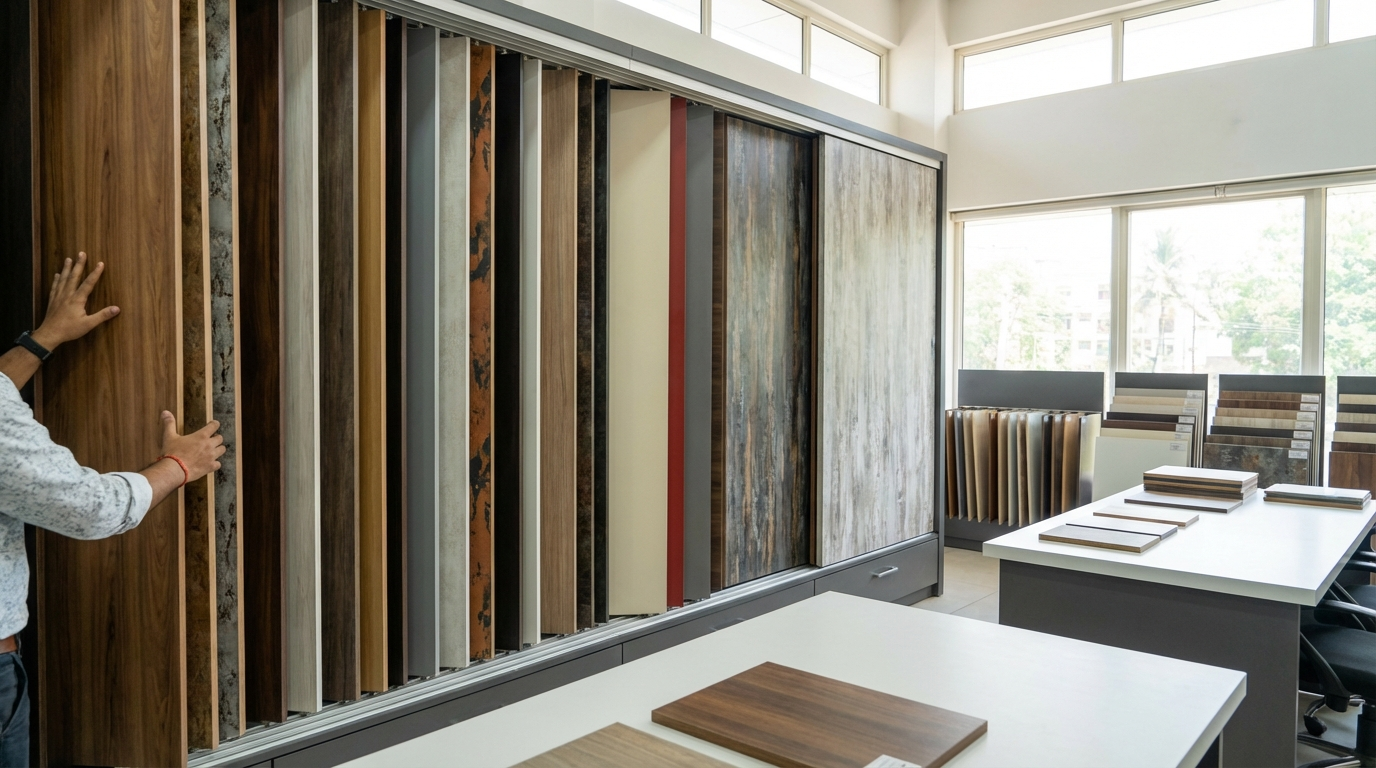
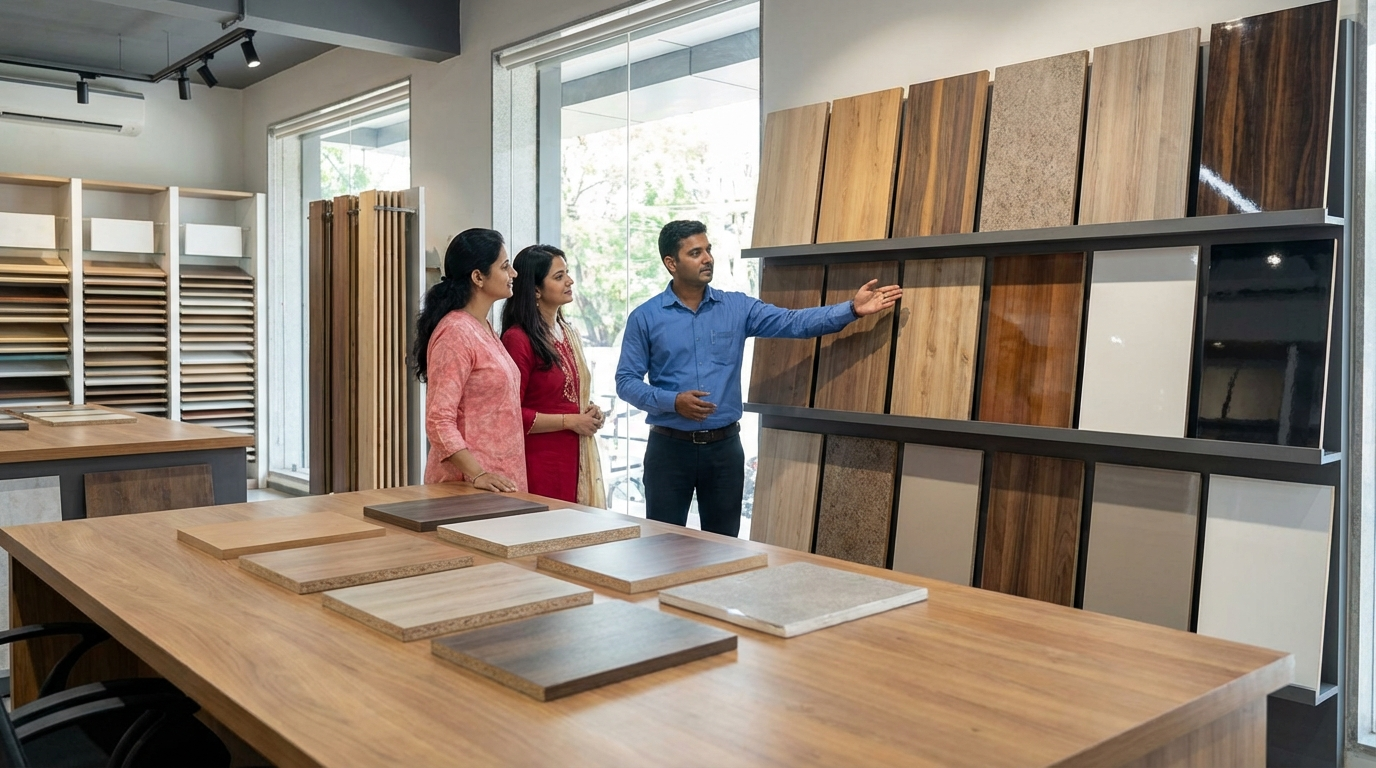
Never finalize from the first showroom you visit. Compare at least 3-4 dealers for:
- Product range and brand variety
- Sample availability (request take-home samples)
- Installation team credentials
- Warranty terms and after-sales support
- Price transparency (material + installation + underlayment)
Step 3: Verify Installation Capabilities
Many dealers outsource installation to third-party contractors, creating accountability gaps. Ask specifically:
- Does the dealer employ in-house installation teams?
- What training/certification do installers hold?
- Who handles warranty claims—dealer or manufacturer?
- Can you see completed projects or speak with past clients?
Step 4: Request Itemized Quotations
Insist on quotations that separately list:
- Material cost per square foot
- Underlayment/moisture barrier cost
- Installation charges
- Scotia/beading/transition strips
- Subfloor preparation (if needed)
- GST
Installation charges can add an additional Rs 50 to Rs 150 per square foot, depending on the method and complexity of the project.
City-Wise Guide: Finding Wooden Flooring Showrooms Across India
Delhi-NCR Region
The National Capital Region offers the highest concentration of wooden flooring dealers in India, with major showrooms clustered in:
- Kirti Nagar: Asia's largest timber market—excellent for solid hardwood and engineered options
- Rajouri Garden & Punjabi Bagh: Mid-range laminate and SPC dealers
- Gurgaon (Udyog Vihar & Sector 18): Premium showrooms with international brands
- Noida (Sector 63 & 83): Mix of wholesale and retail options
Span Floors has established itself as a trusted authority in premium wooden flooring across India for more than two decades, known for its commitment to quality, precision, and long-term performance.
Mumbai Metropolitan Region
Mumbai's humid climate demands careful product selection. Focus on:
- Lower Parel & Worli: High-end showrooms with climate-appropriate options
- Andheri (MIDC): Wholesale dealers with competitive pricing
- Thane & Navi Mumbai: Growing retail presence with installation services
Given Mumbai's coastal humidity, prioritize engineered wood or SPC over solid hardwood and laminate.
Bangalore
Bangalore's moderate climate suits most flooring types. Key areas include:
- Whitefield & Electronic City: Premium residential project suppliers
- Jayanagar & Koramangala: Retail showrooms for homeowners
- Peenya Industrial Area: Wholesale and bulk options
Other Major Cities
Hyderabad: Explore Banjara Hills, Jubilee Hills, and HITEC City for quality showrooms.
Chennai: High humidity mandates SPC or engineered wood—avoid laminate. Check T. Nagar and Anna Nagar areas.
Kolkata: Park Street and Salt Lake areas have established dealers. Monsoon humidity is a factor.
Pune: Growing market with showrooms in Koregaon Park, Baner, and Hinjewadi.
What to Ask Dealers Before Purchasing
Product-Related Questions
- What is the wear layer thickness? (For engineered wood, 2mm+ is refinishable; for SPC, 0.3mm+ is commercial grade)
- What AC rating does this laminate carry? (AC3 minimum for residential, AC4-AC5 for commercial)
- Is the product E0/E1 certified for formaldehyde emissions?
- What's the actual origin of the product? (Imported vs. domestically manufactured)
Installation-Related Questions
- What installation method do you recommend for my subfloor type?
- Will you conduct a moisture test before installation?
- What expansion gap will you maintain?
- How long should the material acclimatize before installation?
Warranty-Related Questions
- What exactly does the warranty cover? (Manufacturing defects only, or installation issues too?)
- What voids the warranty?
- Who do I contact for claims—you or the manufacturer?
- Is the warranty transferable if I sell the property?
Laminate vs SPC vs Engineered Wood: Which Should You Choose?
This decision depends primarily on three factors: your location's climate, the room's moisture exposure, and your budget horizon (short-term vs. lifetime cost).
Choose Laminate Flooring If:
- Budget is your primary constraint (₹70–200/sq ft range)
- You're installing in dry regions (Rajasthan, Punjab, Delhi in winter)
- The space is a bedroom, study, or living room with no direct water exposure
- You're comfortable replacing the floor in 10-15 years
The use of compressed wood fiber as core material makes laminate flooring prone to have similar existing problems of wood flooring. So don't be surprised if you found your laminate flooring affected by mould, mildew and even termite sometimes.
Choose SPC Flooring If:
- Installing in bathrooms, kitchens, balconies, or basements
- You live in high-humidity coastal or monsoon-prone regions
- Durability against heavy foot traffic matters
- You want a low-maintenance, waterproof solution
SPC flooring is known for its strength and ability to withstand heavy furniture and high traffic without denting or warping.
Choose Engineered Wood If:
- You want the authentic wood look and feel
- Your climate has temperature/humidity fluctuations
- You're willing to invest in quality for 20-30 year performance
- The ability to refinish (at least once) matters to you
Unlike solid hardwood flooring, engineered wood floors are designed to offer superior stability, moisture resistance, and long-term durability - making them ideal for Indian homes, offices, and commercial spaces.
Understanding Wooden Flooring Costs in India
Material Costs by Type
Hardwood flooring, made from solid timber planks, typically costs between Rs 400 to 500 per sq ft. The hardwood flooring prices depend on factors like the type of wood, thickness and finish.
Engineered wood flooring, which has a top layer of real wood over a plywood base, is more affordable at Rs 80 to 300 per square foot, depending on the brand and supplier.
Laminate wooden flooring, which has a printed wood design layer over a fiberboard core, costs Rs 70 to 150 per square foot.
Installation Cost Factors
The installation cost of wood flooring varies based on the type of wood, the complexity of installation, experience, and the number of installers employed. Factors like subfloor preparation, removal of existing flooring, and the need for underlayment can influence the overall installation cost.
On average, the wooden flooring charges for installation range from ₹60 depending on the type of flooring and installation method.
Hidden Costs to Budget For
From experience, there are hidden factors: underlayments, delivery, labor, finishing, and even GST. For a 600 sq ft living area, the quoted floor price can shoot up by 30% after accounting for proper subfloor preparation, moisture barrier, and waste due to odd-shaped rooms.
Total Cost Estimation Table
| Cost Component | Laminate | Engineered Wood | SPC Flooring | Solid Hardwood |
|---|---|---|---|---|
| Material (₹/sq ft) | 70–200 | 150–500 | 120–350 | 400–1,200 |
| Underlayment (₹/sq ft) | 15–30 | 20–40 | Often integrated | 25–50 |
| Installation (₹/sq ft) | 40–80 | 50–120 | 40–80 | 80–150 |
| Accessories & Trims | 10–20 | 15–30 | 10–25 | 20–40 |
| Total Range (₹/sq ft) | 135–330 | 235–690 | 170–455 | 525–1,440 |
Note: Prices are indicative ranges and vary by brand, city, and project specifics. Always obtain itemized quotes.
Installation Services: What to Expect
Pre-Installation Requirements
- Moisture testing: Subfloor moisture should be below 12% for wood products
- Subfloor leveling: Variations exceeding 3mm over 3 meters need correction
- Acclimatization: Wood products need 48-72 hours in the installation space
- Room preparation: Clear furniture, remove existing flooring if required
Installation Methods
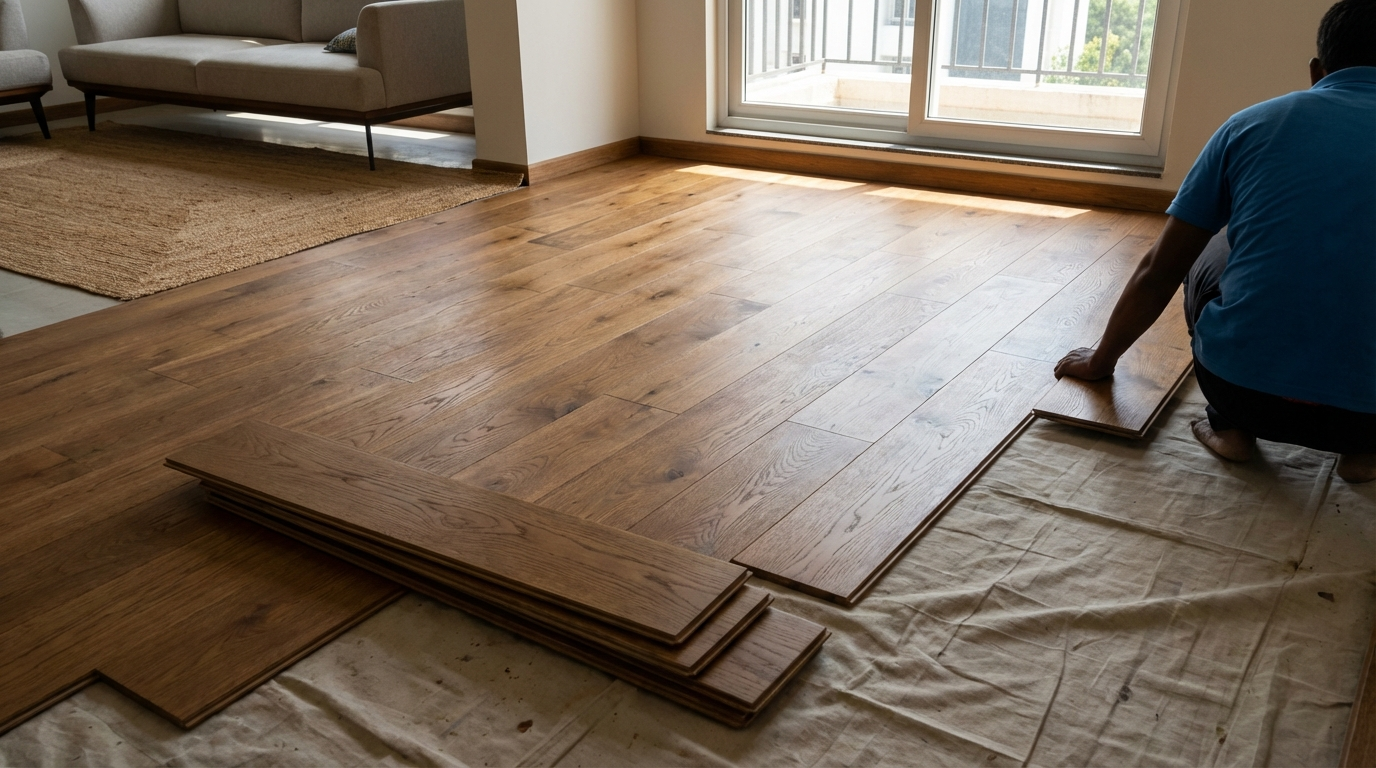
Floating Installation: Planks click together without adhesive; fastest and most common for laminate and SPC. Floating floor installations are typically more cost-effective than glue-down or nail-down methods.
Glue-Down: Each plank adhered to subfloor; more stable, reduces hollow sound, preferred for engineered wood.
Nail-Down: Traditional method for solid hardwood over wooden subfloors; not suitable for concrete.
Post-Installation Care
- Avoid heavy furniture placement for 24-48 hours
- No wet mopping for the first week
- Maintain room humidity between 35-55%
- Use felt pads under furniture legs
- Keep direct sunlight exposure minimal (use curtains/blinds)
Red Flags When Dealing with Flooring Vendors
Protect yourself by watching for these warning signs:
- No physical showroom: Online-only sellers with no local presence limit your recourse
- Vague warranty terms: "Lifetime warranty" without written documentation is meaningless
- Pressure to buy immediately: "This price is only valid today" tactics indicate desperation
- Unwillingness to provide samples: You need to see the actual product in your lighting
- Installation by "any contractor": Quality dealers have trained, accountable teams
- No GST invoice: Informal billing suggests grey-market products
- Significantly below-market pricing: Often indicates seconds, rejects, or counterfeit products
Climate Considerations for Indian Buyers
High Humidity Zones (Mumbai, Chennai, Kolkata, Coastal Karnataka/Kerala)
In coastal cities like Mumbai or Chennai, or during the heavy monsoon season, solid wood can expand and contract, leading to warping.
Recommended: SPC flooring (best), engineered wood with moisture-resistant core, PVC vinyl
Avoid: Solid hardwood, standard laminate
Extreme Temperature Zones (Delhi, Rajasthan, Punjab in Summer)
Recommended: Engineered wood, quality laminate (AC4+), SPC
Caution: Ensure proper expansion gaps; use underlayment with thermal properties
Moderate Climate Zones (Bangalore, Pune, Hyderabad)
Recommended: All types work well; choose based on budget and aesthetics
Opportunity: These climates allow solid hardwood without excessive risk
Buyer's Checklist Before Finalizing a Wooden Flooring Purchase
- ☐ Visited minimum 3 dealers for comparison
- ☐ Obtained itemized written quotations with GST
- ☐ Verified dealer is brand-authorized
- ☐ Collected physical samples for home evaluation
- ☐ Confirmed installation team is dealer-employed or certified
- ☐ Reviewed warranty document thoroughly (not just verbal promises)
- ☐ Checked dealer's Google reviews and asked for past client references
- ☐ Understood the return/refund policy for unused material
- ☐ Confirmed lead time for material delivery and installation scheduling
- ☐ Clarified who bears responsibility for subfloor preparation
- ☐ Understood what's included vs. extra (underlayment, transitions, scotias)
- ☐ Obtained mobile numbers of both sales person and installation supervisor
Frequently Asked Questions
Which wooden flooring is best for Indian climate?
Solid hardwood is made from a single piece of wood, while engineered wood uses layered construction, making it more stable and suitable for Indian climates. For most Indian conditions, engineered wood offers the best balance of authentic wood aesthetics and climate resistance. In high-humidity coastal areas, SPC flooring is the safest choice.
How long does wooden flooring last in India?
Lifespan varies dramatically by type and maintenance. With proper care, solid hardwood floors can last up to 100 years. Premium engineered hardwood flooring can last 20–30 years with proper care. Cheaper options like laminate may require replacement after 10-20 years.
Can wooden flooring be installed in bathrooms?
Traditional wood flooring (solid or laminate) should not be installed in bathrooms. SPC is great for wet spots. Kitchens, bathrooms, and cellars — where laminate falls short — are great for SPC.
What thickness of wooden flooring is best?
For most homes, planks of 10–12 mm thick are adequate. For engineered wood, focus more on wear layer thickness (2mm+ for refinishing potential) than total plank thickness.
Is wooden flooring slippery?
Most modern wooden flooring has textured finishes that provide adequate grip. However, high-gloss finishes can be slippery when wet. If you have elderly family members or young children, choose matte or hand-scraped textures.
Can I install wooden flooring myself?
Both SPC and laminate flooring come with easy installation, they can be even installed using a DIY kit, where all you have to do is follow the manufacturer guidelines. However, DIY installation typically voids warranty, and improper installation causes most flooring failures. Professional installation is strongly recommended for long-term performance.
Making Your Final Decision
The "best" wooden flooring doesn't exist in absolute terms—only the best choice for your specific situation. Consider these final factors:
If budget is tight but you want wood aesthetics: Quality laminate (₹100-150/sq ft) in bedrooms and living areas, with PVC/vinyl in wet zones.
If you're building your forever home: Engineered wood with 3mm+ wear layer (₹300-500/sq ft) offers the best long-term value proposition for Indian conditions.
If you live in a coastal/humid city: Don't compromise—SPC flooring eliminates moisture anxiety entirely.
If heritage aesthetics matter above all: Solid hardwood with proper installation and maintenance protocols, accepting the higher investment and care requirements.
Whatever you choose, investing time in dealer selection pays dividends. A mediocre product properly installed outperforms premium flooring with poor installation. Focus on finding dealers who demonstrate genuine expertise, maintain trained installation teams, and stand behind their work with documented warranties.
Disclaimer: This content is provided for general informational purposes based on industry practices and publicly available information. Product specifications, standards, prices, and availability may vary by manufacturer, region, and time. Readers should independently verify details with manufacturers, dealers, or qualified professionals before making purchase or construction decisions.