Particle Board: Meaning, Types, Uses & Price Guide
Particle board is another common engineered wood product often mentioned alongside MDF and plywood, particularly in the context of affordable furniture. In this guide, we’ll explain what particle board is, the types of particle board available, where it’s best used (and where not to use it), its advantages and disadvantages, and how it compares price-wise. We’ll also touch on its behavior with moisture and some alternatives if you’re considering using particle board in your projects.
What is Particle Board?
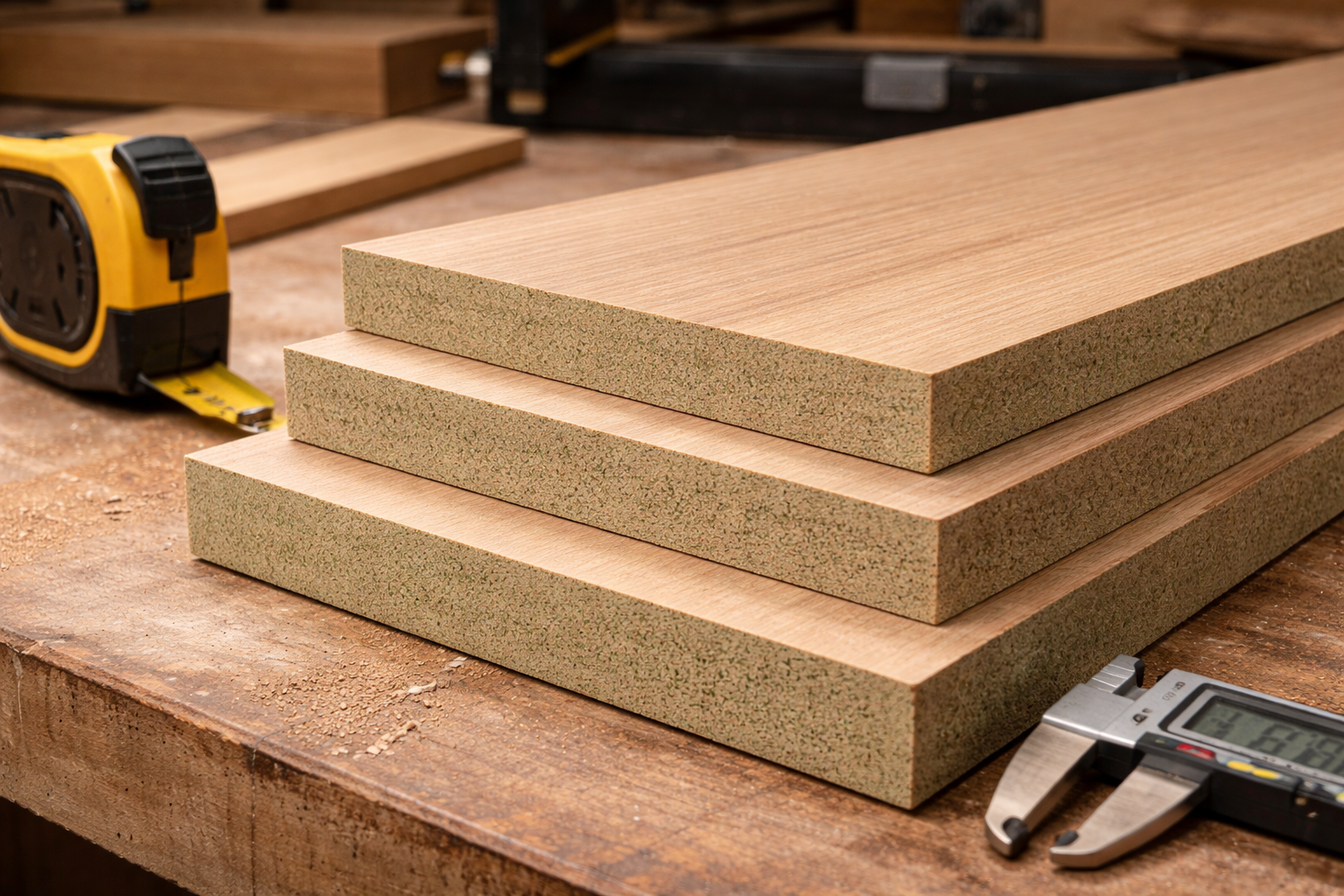
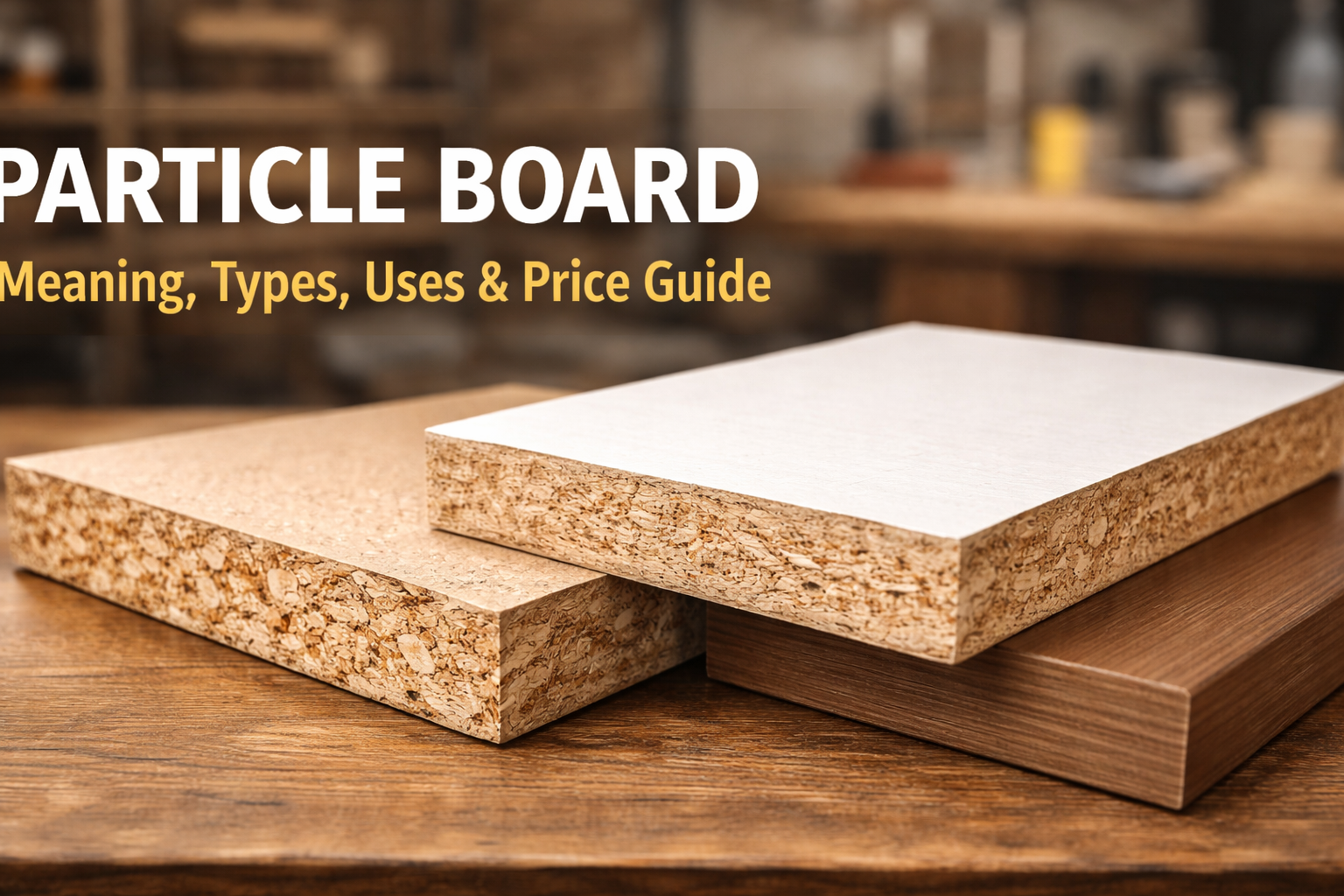
Particle board is a man-made wood panel composed of wood chips, sawdust, or other small wood particles that are mixed with a resin binder and pressed into sheets. It falls under the category of low-density fiberboards. Essentially, it’s made from the waste by-products of woodworking (shavings, chips, sawdust), making it a very resource-efficient product. These particles are glued together (commonly with urea-formaldehyde resin) and hot-pressed to form a flat board. The result is a lightweight, cost-effective panel with a relatively smooth surface that can be used in a variety of ways.
To visualize it: imagine taking a bunch of wood shavings and tiny chips, mixing them with glue into a thick mush, then compressing that into a sheet. The surface is often made smoother by using finer particles on the outer layers and coarser in the middle. This gives a smoother face for finishing, though raw particle board is still not as smooth as MDF (you might see tiny specks of wood on the surface).
Particle Board vs MDF vs Plywood (basics): Particle board is less dense and weaker than MDF. MDF uses wood fibers (which are smaller), whereas particle board uses larger wood bits and chips, which create more voids and less strength. Compared to plywood, particle board is also weaker and more prone to bending. The upside is it’s usually significantly cheaper than both MDF and plywood. It’s often seen as the entry-level engineered wood – used in low-cost furniture where budget is more important than longevity.
Types of Particle Board: There are a few variations of particle board designed for different needs:
- Standard Particle Board (Raw): This is the basic, no-frills particle board – just compressed wood particles and resin, no special coatings. It’s usually a light tan/brown color and has a somewhat rough surface. This is typically used as a core material which will later be laminated or veneered, because it’s not pretty or durable enough on its own for visible surfaces. Common uses of raw particle board are in furniture pieces that will be laminated, in flooring underlayment (under carpet or vinyl floors to provide a flat base), or in packaging (like crates, where it’s a disposable use).
- Pre-laminated Particle Board: This refers to particle board that comes already laminated with a decorative layer on one or both faces. The laminate could be a woodgrain pattern, a solid color, etc., similar to the kind of laminate used on countertops but thinner. Pre-lam boards are ready to use for making furniture without needing to stick laminate manually. Common types include:
· Melamine Faced Particle Board: A particle board with a melamine resin impregnated paper on the surface (melamine laminate), which gives it a colored or patterned, somewhat scratch-resistant surface. These are widely used in prefab furniture (like office desks, ready-to-assemble bookshelves). Melamine facing adds some moisture resistance as well because it’s basically a plastic layer.
· Veneered Particle Board: Particle board with a thin real wood veneer on top. This gives the appearance of real wood if polished. It’s cheaper than using real wood or plywood with veneer core. These need finishing (polish/varnish) and are used in some cabinetry and low-cost paneling.
- Laminated Particle Board: Sometimes just another term for melamine faced, or could mean it has a high-pressure laminate (HPL) sheet glued on. But typically, pre-lam means melamine these days.
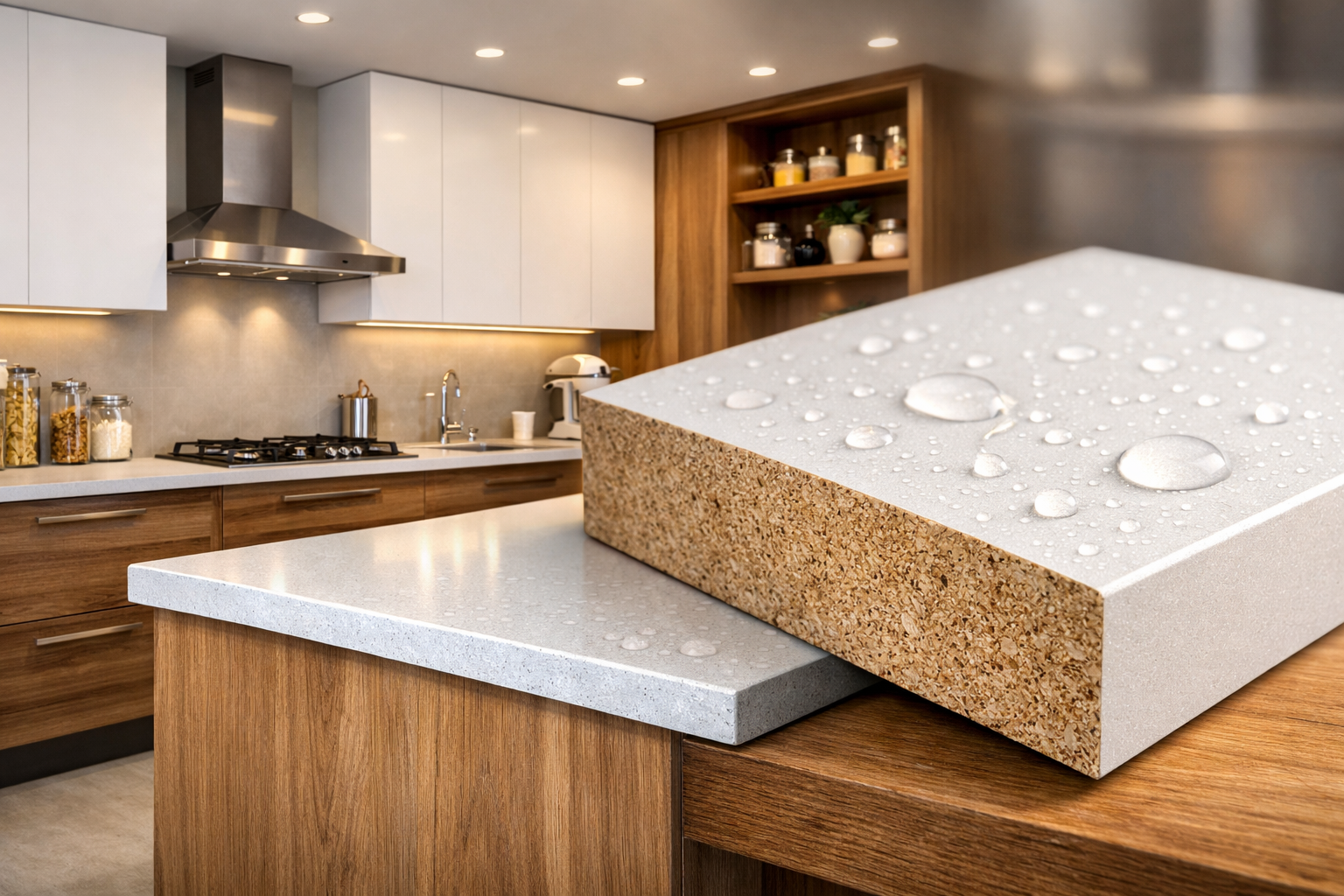
- Moisture Resistant (MR) Particle Board: Also called Interior grade in some contexts. This is particle board made with a moisture-resistant resin (sometimes melamine urea formaldehyde) and additives to resist swelling. Often it has a green tint (some brands color-core it green similar to how MR MDF is green) to indicate moisture resistance. It’s not waterproof, but it’s a bit better than standard particle board if there’s humidity. This would be used for furniture that might face occasional moisture but not water drenching – e.g., bathroom vanity in a half-bath (not near a shower), or kitchen cabinets in dry areas. Still, even MR particle board is risky in truly wet areas.
- Exterior Grade Particle Board / Cement-Bonded Particle Board: This is a different beast – cement-bonded particle board mixes wood particles with Portland cement as the binder instead of resin. The result is a much heavier but more moisture-proof and fire-resistant board. Cement-bonded boards can be used outdoors, for siding, cladding, etc., and are quite durable against rot, insects, and fire. They are used in construction for things like acoustic panels, exterior wall panels, etc. Because cement is the binder, these boards weigh a lot and are harder to work with (require carbide tools). They’re not common in furniture, more in construction applications.
- Fire Retardant Particle Board: Standard particle board but made with special fire-retardant chemicals or resin (e.g., adding phosphates or other salts). These are used where building codes require a fire-rated material but where steel or other boards might be too expensive. Not very common in home use, more in commercial/shopfitting contexts.
- Graded Density or Layered Particle Board: Some manufacturers create particle boards with a three-layer structure: fine particles on the top and bottom, coarse in the middle. This isn’t something you’d specifically order as a different type, it’s more of a manufacturing method for higher quality boards. It results in a smoother surface ready for finishing and a stronger core than uniformly random particle distribution.
In summary, when you go to buy, the main differentiators you’ll see are plain vs pre-laminated, and maybe interior MR vs exterior cement-bonded. Most likely, if you’re at a hardware store and ask for particle board, they’ll either give you a raw sheet and suggest laminating it, or they’ll show you pre-laminated boards in various colors (often used for simple furniture like wardrobes, cabinets, etc., by carpenters who don’t want to do separate lamination work).
Where Particle Board Works Best: Particle board’s sweet spot is low-cost, light-duty furniture and decor in dry conditions. Some examples: - Ready-to-assemble furniture: Many inexpensive tables, bookcases, and closets (think budget furniture from big retailers) are made of laminated particle board. It keeps costs down and is sufficient for furniture that isn’t expected to endure heavy weight or rough use. That $50 computer desk or the cheap shoe rack – likely particle board. - Cabinet carcasses in budget interiors: For instance, a wardrobe carcase (the inner body) can be made of pre-lam particle board to save money, with perhaps nicer MDF or plywood shutters. It’s commonly used in office furniture and entry-level kitchen cabinets (though we wouldn’t recommend it near sinks). - Shelving: Light-duty shelves for display, etc. Particle board has a very smooth surface for laminate, so one can make nice-looking shelves. Just don’t load them with a ton of heavy books without reinforcement. - Wall paneling: If you have a wall where you want wood panel look on a tight budget, pre-laminated particle board panels could be used (in a dry area). Also, particle boards (especially cement-bonded ones) can be used for acoustic panels, false ceilings in commercial spaces, etc. - Floor underlayment: In some countries, particle board sheets are used as an underlayment over floor joists to provide a base for carpet or tiles. However, in humid climates, this is risky – plywood or OSB is preferred.
Where Particle Board Should Not Be Used: - Wet areas: Avoid particle board in kitchens (especially near sink or floor), bathrooms, laundries – even the MR grade. One spill that seeps into a joint can cause swelling. It will also disintegrate if subjected to leaks. Example: If particle board gets wet, it tends to swell irreversibly (it’ll bubble up) and the glues can fail, essentially the board crumbles apart. - Heavy load-bearing structures: Don’t use it for long bookshelves with heavy books, or for a bed frame supporting weight (beds made of cheap particle board have been known to break if overloaded or moved improperly). It just doesn’t have the structural strength or screw-holding for critical load points. - Fine finishing or intricate joinery: Particle board edges are rough and don’t hold detail. You can’t carve particle board or route nice profiles (it’ll tear out). For any project that needs intricate work or very smooth painted finish, particle board is not ideal (MDF would be better there). - Longevity required: Particle board furniture is generally considered shorter lifespan. If you want something to last decades, particle board isn’t the material. It’s often used with the mindset that it’s semi-disposable or for a few years of use until one can afford better.
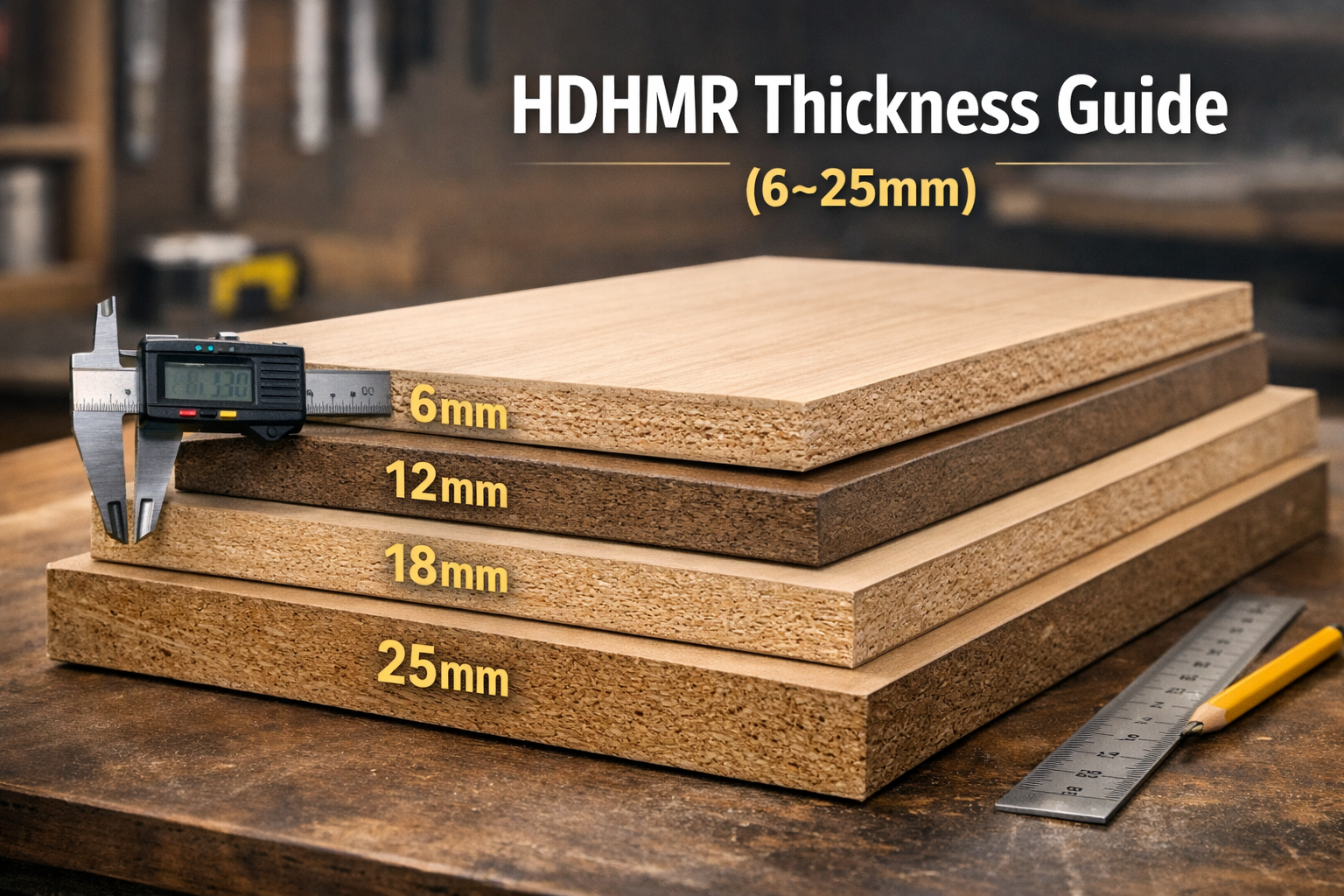
Advantages of Particle Board: - Affordability: The number one reason people use it. Particle board is usually the cheapest wood-based panel available. You can generally expect to pay 30-50% less for particle board furniture or raw material compared to plywood of similar dimensions. This significant price drop is because it uses waste materials and less energy (lower pressing pressure/density) to produce. For tight budgets, it allows making cabinets or furniture that look okay (once laminated) without breaking the bank. - Smooth Surface (when faced): While raw particle board is a bit rough, once it’s laminated or finished, it has a smooth, uniform surface. It’s good for laminates and veneers because unlike solid wood, there’s no grain movement or knots to worry about. A laminate applied to particle board will appear flat and seamless. Many laminated office tables are basically particle board inside – they achieve a nice smooth look due to the board’s flatness. - Light Weight: Particle board is lighter than HDHMR and MDF. It’s fairly easy to handle large panels because the density is low (often ~500-650 kg/m³). For instance, a large wardrobe made of particle board will be easier to move (though still handle carefully) than one made of plywood or MDF. This is beneficial for cheap flat-pack furniture – it keeps shipping weights lower. - Ease of cutting: It doesn’t have grain that can split, and it’s softer than high-density boards, so cutting it is relatively easy on saw blades (though it can chip at the edges). Simple tools can cut particle board for DIY projects (just use masking tape on cut lines to reduce chipping). - Availability & Standardization: Particle board is widely available in standard sizes (usually 8x4 ft sheets, and thickness like 9mm, 12mm, 18mm are common). Pre-laminated boards come in various colors/patterns which can be convenient (no need to separately source laminate). So it’s accessible for quick projects. - Uses recycled material: As a green aspect, particle board uses wood waste that might otherwise be discarded or burned. It’s an efficient way to make use of sawmill leftovers. However, one must also note the binders (urea-formaldehyde) are less eco-friendly in terms of VOCs.
Disadvantages of Particle Board: - Low Strength & Durability: Particle board is the weakest of the wood composites generally. It cannot support heavy loads – it may snap or crack if overstressed. Over time, screws can loosen (screw holding is poor, especially if weight is applied; screws may strip out easily). Furniture made from it is prone to sagging – for example, a particle board shelf will noticeably sag in the middle under weight much sooner than a plywood shelf. It also cannot take too much impact; corners can easily get crushed if banged. - Very Poor Moisture Tolerance: Arguably the biggest con. Particle board swells and discolors when exposed to moisture. It can even grow mold or start disintegrating if it stays damp. Even high humidity can sometimes make it swell a bit over long periods if not laminated. This limits it strictly to dry zone use. - Short Lifespan: Because of the above two points, particle board items often don’t last long. Drawers made of particle board might fall apart after a few years of use (the runner screws loosen, the bottom may sag out). If moved or disassembled and reassembled, particle board furniture often suffers damage (screw holes get worn out). It’s generally seen as a temporary or low-end solution in terms of longevity. - Cannot be easily repaired: When particle board is damaged (like if it swells or breaks), it’s very hard to fix. Unlike solid wood that you could glue back or fill and screw again, particle board crumbles at the break. If a screw rips out, you can’t just screw in at the same spot – you’ll have to either use a bigger screw or wood filler, neither of which gives a strong fix. In many cases, if a critical part breaks, the whole panel might need replacement. - Appearance (raw): Raw particle board is not attractive – it has a coarse look with visible chips. It requires a surface finish (laminate, veneer, paint) for most uses, which adds to process. Painting particle board is possible but you need to prime and sand it a lot, and even then, because of its porous nature, it can soak up paint unevenly. Usually, it’s just laminated. - Environmental/Health Aspects: Standard particle board uses urea-formaldehyde resin which can off-gas formaldehyde, a known irritant and carcinogen, especially when new. There are low-formaldehyde or “E1/E0” boards available which are better, but many cheap boards may have higher emissions. It’s wise to ensure proper sealing of edges and surfaces or airing out new particle board furniture to dissipate the fumes. Also, the manufacturing involves chemicals, which some consider less green (though the use of recycled wood is a plus, the resin is a minus). - Holds hardware poorly: Not just screws, but also things like hinges or nails don’t grip well. Often special knock-down fasteners are used in particle board furniture (cam lock and dowel systems) because you can’t rely on small screws in the board. And if those cam locks are over-tightened, the particle board can crumble around the hole.
Despite these disadvantages, particle board remains popular in certain segments due to cost. Many modern budget furniture pieces try to mitigate the issues by design – for instance, they’ll use thicker particle board (like 18mm instead of 12mm) to add some strength, and they’ll include back panels or support rails to help against sagging.
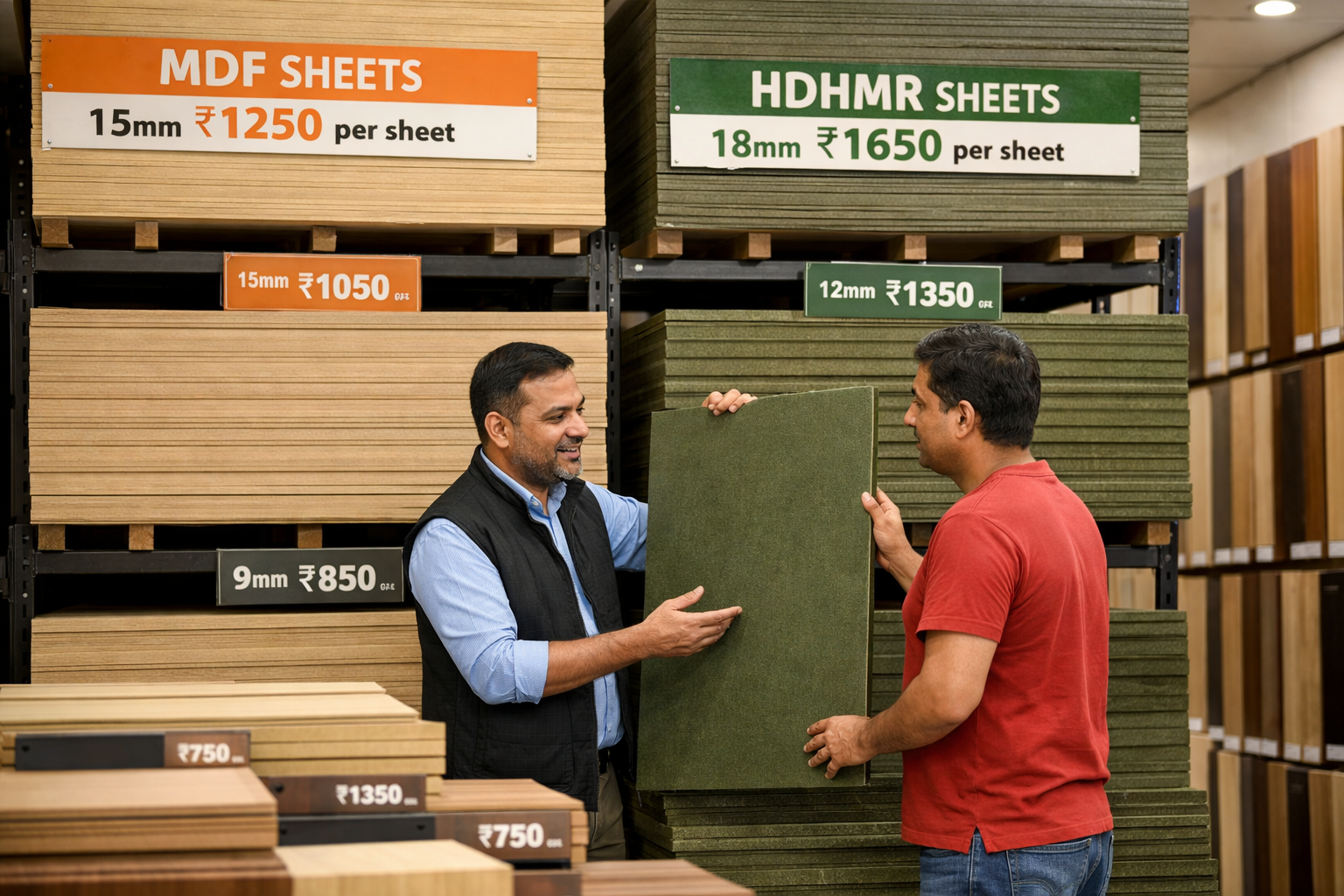
Price Factors: Particle board is cheap, but let’s break down the price considerations: - Thickness & Density: Thicker boards obviously cost more. But even a thick particle board will usually be cheaper than a thinner MDF or plywood in absolute terms. Lower density boards (which are lighter and weaker) use less material and might be a tad cheaper, but most standard ones have similar density. If you encounter something called “economy particle board” it might be lighter/less dense and cheaper (and also less strong). - Finish (Plain vs Laminated): Buying a raw particle board sheet is cheapest, but you then have to laminate or paint it. Pre-laminated boards cost a bit more but come finished. For example, a plain 18mm particle board might cost X per sq.ft, and the pre-lam version maybe X+₹10 per sq.ft due to the melamine top. Still way cheaper than buying laminate separately and plywood. - Brand: There are branded particle boards (like Greenpanel, Action Tesa, Century etc have them) and unbranded or local ones. Branded might ensure proper glue and maybe lower formaldehyde, but might cost a bit more. However, even branded particle board is inexpensive in the grand scheme. - Comparison: As a rough idea, if 18mm commercial plywood is ₹80 per sq.ft, an 18mm particle board could be around ₹30-40 per sq.ft. It varies, but particle board is often half or less the price of decent plywood. Versus MDF, particle board might be slightly cheaper (MDF 18mm maybe ₹50, particle board ₹35 per sq.ft). So it’s the rock-bottom option among wood sheets. This cost difference drives its use in low-end market – for the price of one plywood wardrobe, you might make two with particle board (though they won’t be as sturdy).
Alternatives to Particle Board: If you’re considering particle board, it’s likely because of budget. MDF is the next step up – it costs a bit more but gives a better finish and strength (still not great with moisture, though). Plywood (even commercial ply) would be a further step up in durability and moisture handling, at higher cost. There’s also OSB (Oriented Strand Board) – which is kind of like particle board but with larger wood flakes oriented in layers; OSB is much stronger and used in construction, but in India OSB is not very common in interiors. OSB could be used for structural subfloors or crates, but not usually for fine furniture because of its rough look (though some trendy designs use OSB as a decorative element these days). Blockboard is another alternative (strips of solid wood inside, veneers outside) – stronger than particle board and often used for shelves, but again cost is higher.
Essentially, if the project allows spending more, upgrading from particle board to even just MDF will yield a better result for indoor furniture. If maximum durability is needed, plywood or HDHMR is the way to go.
Quick Pros/Cons Recap: - Pros: Very cheap, uses recycled wood, lightweight, easy to cut, smooth when laminated. - Cons: Weak, bad with moisture, doesn’t hold screws well, short lifespan, not suitable for heavy use.
Particle Board Uses Quick Chart:
|
Application |
Suitable? |
Notes |
|
Kitchen cabinets (carcass) |
No (not recommended) |
Only if fully sealed and in a dry part of kitchen. Risk of swelling near any water (sink, floor). Will deteriorate faster under weight of utensils. |
|
Wardrobe / cupboards |
Yes, if low-budget |
For a budget wardrobe in a dry bedroom, pre-lam particle board is commonly used. Keep load light (clothes are fine). Hinges should be small or use additional support (e.g., european hinges with dowels). Not as durable as plywood but works for a few years. |
|
Office desks, shelves |
Yes, in many cases |
Lots of office furniture uses laminated PB. For desks, ensure modest weight on it (a computer, files okay). For bookshelves, PB shelves can sag – use shorter spans or add supports. |
|
Bed frames |
Only headboard/footboard |
The decorative parts (headboard panels) can be PB. But the structural frame (where the mattress lies, side rails) should be solid wood or plywood, otherwise it may break under the weight of sleepers. Many low-end beds use PB and often fail at joints. |
|
Flooring underlayment |
Sometimes |
In dry climates, particle board sheets have been used under carpet. But any moisture (even from concrete subfloor) can ruin it. Builders often prefer plywood or OSB which handle moisture better. |
|
Decorative wall panels |
Yes |
If not structural and in dry area, particle board with veneer or laminate can act as wall panel. Cement-bonded PB can be used for acoustic panels or utility walls. |
|
Doors (flush doors core) |
Not really |
Particle board cores are sometimes used in low-end flush doors, but they won’t be very sturdy for security. They also can’t handle moisture if door is exposed. Solid wood or blockboard is used in better doors. |
|
DIY crafts |
Maybe |
For things like a quick and cheap tabletop or a cabinet for your garage, PB can be fine. Just mind the weight it carries and consider sealing it with paint or varnish if there’s any chance of humidity. |
FAQ on Particle Board:
-
Q1. Is particle board really that bad for furniture?
A: It’s not “bad” so much as “limited.” Particle board is fine for light-use, budget-friendly furniture. Millions of people use particle board furniture (think of all the inexpensive flat-pack pieces worldwide). As long as it’s not heavily loaded and is kept dry, it can serve reasonably well. The problems arise when people expect it to perform like solid wood or plywood – it just can’t take the same abuse. So, for a student’s desk or a rental property’s wardrobe, it’s an economical solution. Just temper your expectations: you might see sagging or minor damage after a few years, and you can’t easily hand it down generation to generation. For more permanent or heavy-duty needs, yes, particle board would be a “bad” choice compared to sturdier materials.
-
Q2. How can I improve the durability of particle board furniture?
A: If you already have or must use particle board, there are a few tricks:
o Seal all exposed areas: Apply edge banding or paint to any exposed edges or surfaces to prevent moisture ingress.
o Reinforce with solid wood where possible: For example, if building a bookshelf, you could use a strip of hardwood or even a metal L-bar under the front of each shelf to stiffen it and prevent sag.
o Use proper fasteners: Cam lock systems or confirmat screws work better in particle board than regular wood screws. If a screw is loose, you can remove it, fill the hole with a two-part epoxy or wood filler, and then re-screw to get a better hold.
o Avoid moving it too much: Particle board furniture doesn’t like being taken apart and reassembled repeatedly – the joints weaken. If you move home, try to move the piece intact if possible (unless it’s too large).
o Keep it dry: Placing plastic laminates over surfaces, using coasters for beverages, etc., will help. Also, don’t overload it with weight beyond what it can handle – distribute heavy items evenly.
-
Q3. Particle board vs MDF: which is better?
A: MDF is generally better than particle board for most indoor furniture uses. MDF is stronger (holds screws better, more dense) and has a smoother surface for painting. It still has poor moisture resistance, but particle board is even worse in that regard. MDF can also take a bit more load before sagging and is less likely to crumble at the edges. The main advantage of particle board is that it’s cheaper and lighter than MDF. So, if cost is extremely critical and the piece won’t face much stress, particle board could suffice. Otherwise, many choose MDF for a small step up in price. For example, cabinet doors or furniture parts that need a good finish are often MDF rather than PB. One scenario particle board might be chosen over MDF is large, low-cost shelving or interior of cabinets where weight saving is desired.
-
Q4. What about engineered wood used by brands – is that particle board?
A: The term “engineered wood” could refer to any man-made board (particle board, MDF, plywood, HDF, etc.). Some furniture brands, especially in marketing, will just say “made of engineered wood” without specifying. Often, if it’s a budget brand, that engineered wood is particle board or a mix of particle board and MDF. If it’s a higher-end brand, engineered wood might mean plywood or MDF. Many e-commerce listings use the term because it sounds nicer than “particle board.” If you want to know, check the weight of the item or the spec sheet – if the wardrobe weighs very little for its size, likely it’s particle board. Also, they might mention compliance like E1 grade (for formaldehyde) – both particle board and MDF can be E1. If you’re concerned, you can ask the seller for specifics. But in general, “engineered wood” in low-mid price furniture usually implies particle board as the core.
-
Q5. How much does particle board cost?
A: It’s quite inexpensive. Prices can vary by region, but roughly, an 18mm thick particle board sheet (8ft x 4ft) might cost on the order of ₹1000-1500 (which is around ₹30-45 per sq.ft). Thinner boards like 9mm might be ₹20-25/sq.ft. Pre-laminated boards will add maybe ₹5-15 per sq.ft depending on laminate quality. So if a plywood sheet costs ₹2500 and an MDF ₹1800, a similar particle board might be ₹1200 (just illustrative). Because it’s cheap, particle board is often sold in bulk to manufacturers. If you’re buying retail, you might be charged a bit more per sheet than wholesale, but it will still be the cheapest option. Keep in mind, brands and quality can affect the price a bit; a water-resistant or branded particle board might cost a little more than a generic one, but the difference is usually not huge in absolute terms.
(For more comparisons, check out Particle Board vs Plywood vs MDF in our next section, and see our Price Guides for up-to-date rates on various boards. If you’re curious how HDHMR fits into the picture, we have comparisons for that too.)
Disclaimer: This content is provided for general informational purposes based on industry practices and publicly available information. Product specifications, standards, prices, and availability may vary by manufacturer, region, and time. Readers should independently verify details with manufacturers, dealers, or qualified professionals before making purchase or construction decisions.