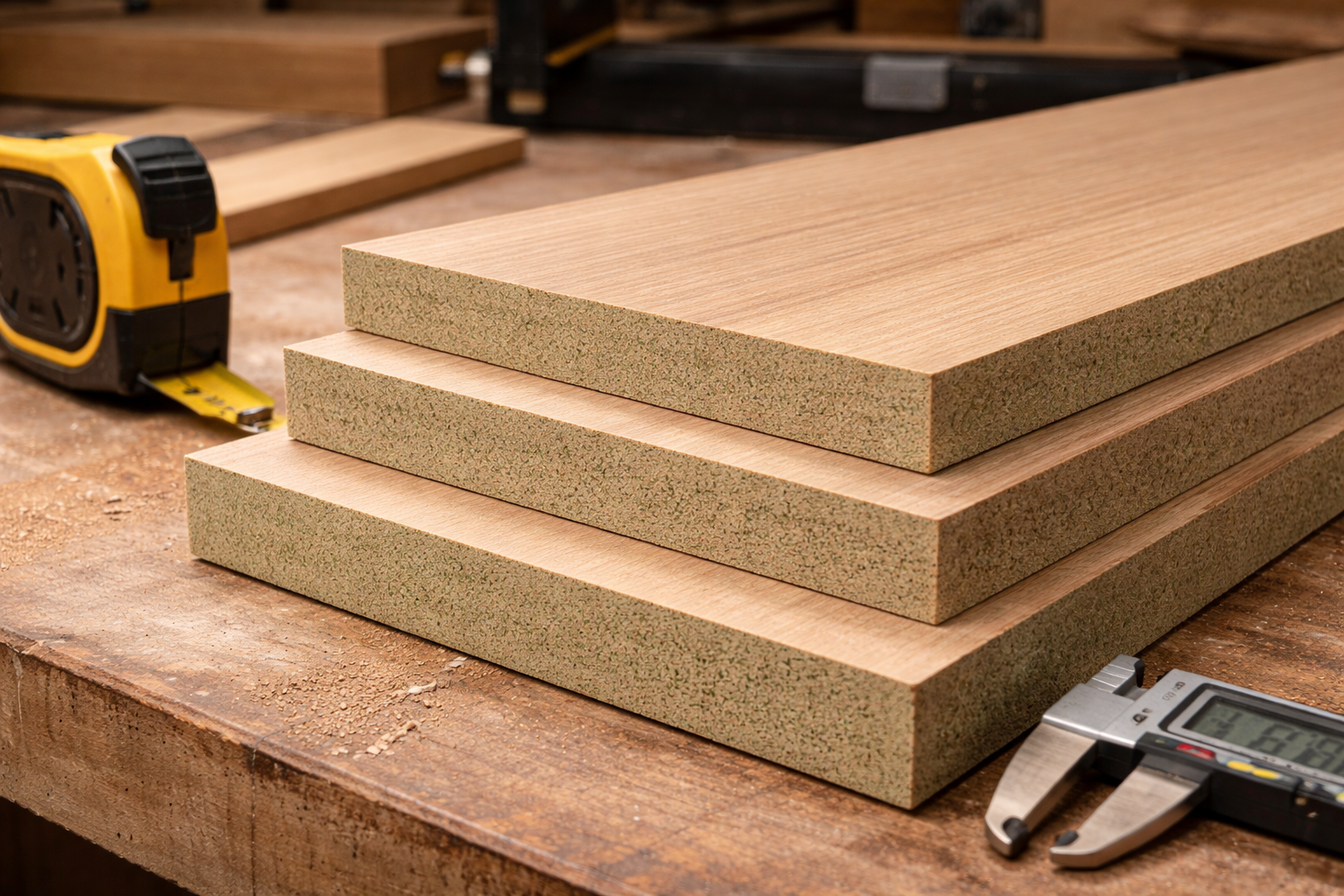
Understanding HDHMR Board Thickness Options
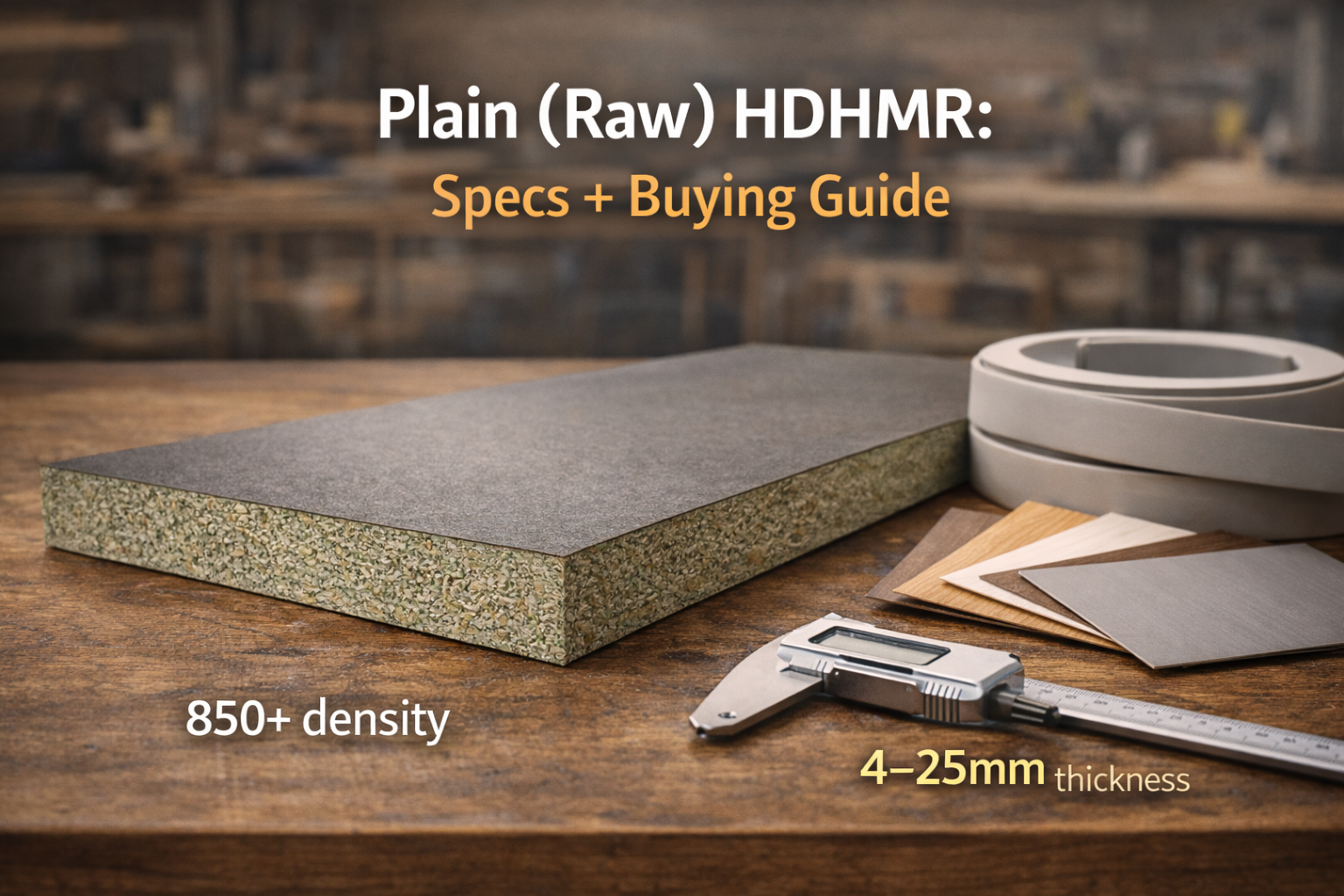
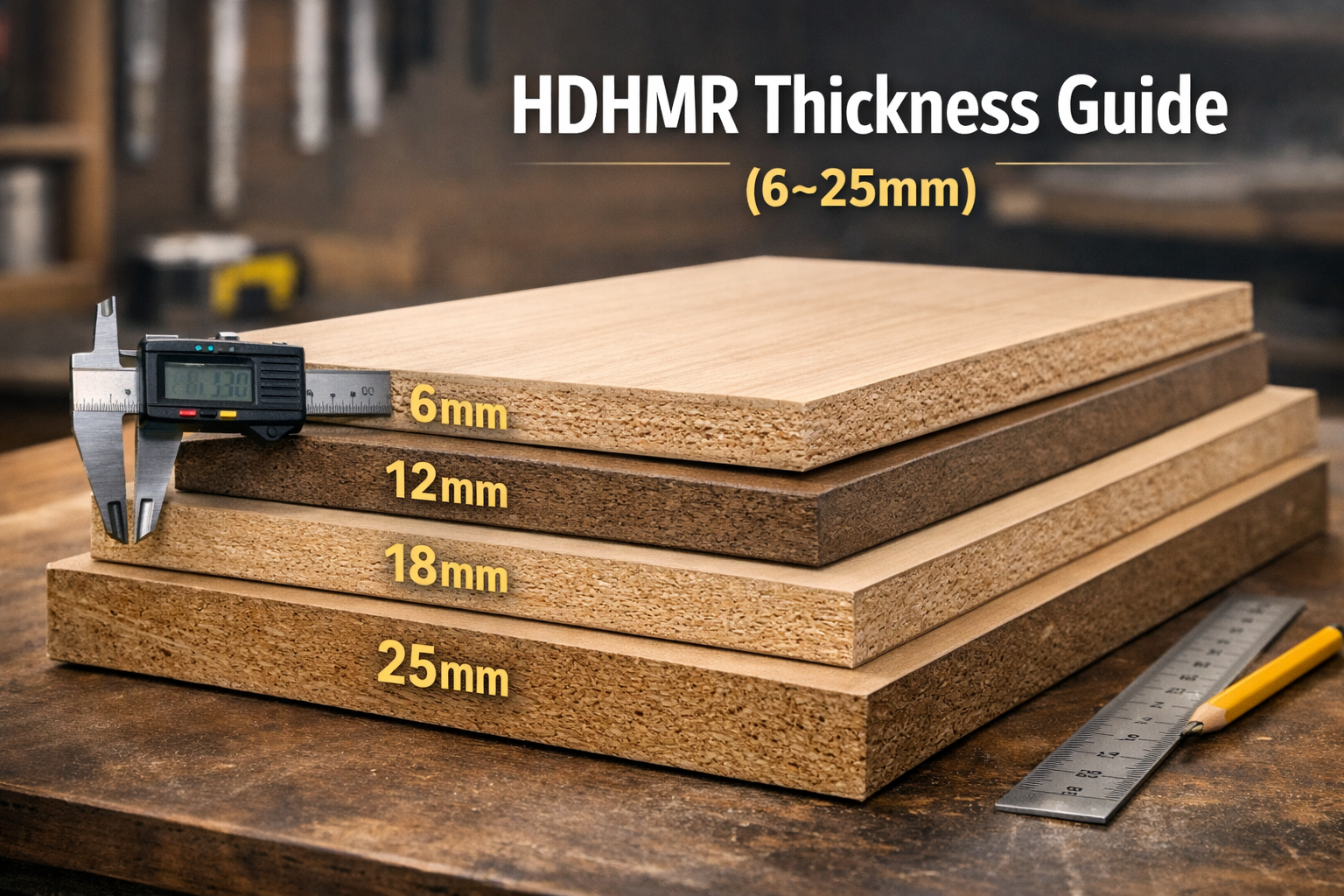
HDHMR boards (High Density High Moisture Resistant boards) are manufactured in a range of thicknesses, typically from about 3mm up to 25mm. However, the most commonly available and used sizes in India are 6mm, 9mm, 12mm, 16mm, and 18mm. The thickness you choose matters a lot – it affects the strength, weight, and cost of your project, and even what kind of hardware you can use.
To put it simply: - Thinner HDHMR boards (6mm, 9mm): Best for non-structural or light-duty uses like backing panels or drawer bottoms. - Medium thickness boards (12mm): Serve for partitions, modest shelves, or places where you need some strength but want to save on weight. - Thick boards (16mm, 18mm and above): Provide maximum strength and are used for load-bearing parts like cabinet carcasses (frames), doors, and large shelves.
It’s the same material (all HDHMR is dense and moisture-resistant), but adding thickness increases the board’s ability to span distances and take weight without bending. On the flip side, thicker boards mean more material – so they cost more and weigh more. Let’s explore each category of thickness and where it fits best in typical interior projects.
Where to Use 6mm & 9mm HDHMR Sheets (Light-Duty)
6mm and 9mm are considered thin HDHMR sheets. They are lightweight and easy to handle, but not meant to carry significant loads or take screws under stress. These thinner boards excel in the following uses: - Back Panels of Cabinets & Wardrobes: The thin sheet is perfect for closing off the back of a wardrobe or cabinet. For example, a large wardrobe might have an 8×4 ft back panel – using 6mm HDHMR there keeps the weight down while still providing a smooth, moisture-resistant enclosure. Once nailed or screwed onto the frame, a 6mm back adds rigidity without needing to be very strong on its own. - Drawer Bottoms and Small Shelves: A 6mm board can be used as the base of a shallow drawer or as a shelf for very light items (e.g. inside a dresser for papers or accessories). Similarly, 9mm can be used for slightly sturdier drawer bases or small wall-mounted cubbies. They won’t support heavy weights, but for light storage they are sufficient. - Decorative Wall Paneling or CNC Cutwork: If you’re using HDHMR to create decorative panels or CNC-routed jali designs, 6mm or 8mm thickness is often ideal. It’s thick enough to be dimensionally stable and hold details, but thin enough to cut patterns through and to mount on a wall without adding too much bulk. - Curved or Bent Sections: In scenarios where a slight bend is needed (perhaps a curved cabinet shutter design or a rounded column cladding), thinner boards like 6mm can flex a bit (HDHMR isn’t as bendable as plywood, but thin sections have some give). Also, being lighter, they put less load on fasteners in such designs.
One thing to note: because these thin boards are, well, thin, you should avoid using them in any situation where they might have to support weight in the middle. Never use 6mm HDHMR for a long shelf or a door – it will likely bend or feel flimsy. And standard hinge or drawer screws are too long for 6mm boards (you’d risk the screw poking through). So thin sheets are usually attached using small screws, nails, or even adhesives to a frame.
Using 12mm HDHMR – Medium Thickness Versatility
The 12mm thickness is a middle ground that offers more strength than 6 or 9mm, but is still noticeably lighter and cheaper than 18mm. In Indian interiors, 12mm HDHMR boards are used in places like: - Partition Panels and Modest Shelves: Need to put a divider inside a cabinet or build a shelf for moderate weight (say books or crockery on a 2ft span)? 12mm can often do the job. It’s stiff enough over short spans (2–3 feet) without sagging under everyday loads. For example, small office storage units might use 12mm boards for shelves that carry files. - Drawer Sides and Medium Cabinet Doors: Some cupboard doors, especially smaller ones (like overhead kitchen cabinet doors or bathroom vanity doors), can be made with 12mm HDHMR to reduce weight. They’ll be lighter to open compared to an 18mm door. However, a caution: if using concealed hinges (the circular cup type), 12mm is about the minimum thickness that can accommodate the hinge cup – any thinner and those hinges won’t fit. Many hinges actually prefer 14–16mm minimum, so 12mm doors might require special slim hinges or surface-mounted hinges. Drawer side panels are often 12mm thick too, which gives the drawer strength while maximizing internal space. - Wall Cladding and Panels: When covering a wall with HDHMR (for instance, to create a laminate-finished accent wall or to level out an uneven surface), 12mm panels provide a good balance. They’re easier to lift and install on a wall than 18mm panels, and they protrude less, but they’re sturdier than very thin 6mm sheets, so they won’t flex or wobble once fixed. - CNC Designs with More Depth: If you want to router or carve into an HDHMR board for design (grooves, patterns, etc.), a 12mm sheet gives you enough depth to work with without cutting all the way through. It’s also less likely to break during detailed cutting than a super thin sheet.
In summary, 12mm HDHMR is quite versatile. It can take moderate loads and standard joinery (screws, modest hinges) while keeping weight manageable. But for large structures or heavy-duty use, you’ll still want to go thicker.
The Workhorses: 16mm & 18mm HDHMR Boards (Heavy-Duty Use)
When it comes to building durable furniture that lasts, 16mm and 18mm HDHMR boards are the go-to thicknesses. Many Indian manufacturers actually consider 16mm as the industry standard for modular furniture, with 18mm used for extra strength. Here’s where these thick boards shine: - Cabinet Carcasses (Frames) & Wardrobe Bodies: The main structure of kitchen cabinets, wardrobe boxes, and similar load-bearing furniture should be 16mm or 18mm for stability. For instance, if you’re installing a kitchen, using 18mm HDHMR for the cabinet boxes (sides, bottom, top) ensures the cabinets can hold heavy utensils or appliances without any flex. These thick boards can be joined with strong screws or knock-down fittings and will create a rock-solid cabinet. - Wardrobe and Tall Cabinet Doors: Large wardrobe doors (say 7 feet high by 2 feet wide) are typically made from 18mm for rigidity. A thinner door might wobble or warp slightly, but 18mm stays straight. Also, such doors need to hold hinges firmly; an 18mm thickness gives plenty of bite for hinge screws or even allows using euro-hinges with inserted hardware. The result is a door that doesn’t sag and can handle being opened and closed thousands of times. - Shelves for Heavy Loads: If you’re making a bookshelf, pantry shelves, or any shelf longer than about 3 feet, 18mm is highly recommended. Thicker shelves greatly resist sagging. As an example, an 18mm HDHMR shelf 1 meter long loaded with books will stay more level over time than a 12mm shelf which might start bowing. There are sag calculation formulas carpenters use – thicker material, higher modulus of rupture – but the rule of thumb is: for heavy loads or long spans, go 18mm. - Countertops and Work Surfaces (under laminate): While HDHMR isn’t typically used bare as a countertop, it’s often used as a substrate for laminate counters or table tops. Here, 18mm or even doubling up two boards to make a 36mm thick top provides the necessary heft and solidity. For a study desk or a workshop table made of HDHMR with laminate on top, using 18mm will prevent any bounce or vibration when you work on it.
One thing to remember with thick boards: they are heavy! An 18mm HDHMR sheet in 8×4 size can weigh around 40–45 kg. Always consider this panel weight when planning. Your workers or carpenters need to handle them safely (usually two people to carry a full sheet). When you mount big cabinets on walls, ensure proper support (heavy-duty anchors) due to the weight. Also, thick boards mean any mistakes (wrong cuts) waste more material money, so measure twice, cut once.
Choosing the Right Thickness for Different Applications
It’s helpful to have a quick reference for which HDHMR thickness is typically used for what. Here’s a simple breakdown:
|
Application / Part |
Recommended HDHMR Thickness |
|
Wardrobe or Cabinet Side panels, Bottom, Top (structure) |
16mm or 18mm – for strength and screw holding |
|
Wardrobe Doors / Shutters |
16mm (for smaller doors) up to 18mm for large doors (ensures no warping) |
|
Back panel of wardrobe/cabinet |
6mm (or 9mm for very large wardrobes for a bit more stiffness) |
|
Shelves (short, under 2ft span) |
12mm can work if load is light; otherwise 16mm |
|
Shelves (long, 2–4ft span or heavy load) |
18mm to avoid sagging over time with weight |
|
Drawer sides/fronts (small drawers) |
12mm (gives sturdy sides and fits small hardware) |
|
Drawer sides/fronts (large drawers) |
16mm (for big drawers that hold heavy items like pots or files) |
|
Drawer bottoms |
6mm is usually sufficient (drawers have support grooves) |
|
Kitchen cabinet carcasses |
18mm for main boxes (withstand weight of countertop & contents) |
|
Kitchen overhead cabinet doors |
16mm (lighter doors, less hinge strain, but still solid) |
|
Bed frame, sofa frame support |
18mm (for structural sections that carry load) |
|
Decorative wall panels |
9mm or 12mm (depending on needed rigidity or pattern depth) |
(These are general guidelines; specific designs might differ, but it gives a starting point.)
From the above, you can see we reserve thick boards for structural strength and use thin boards where weight and flexibility are more important.
Thickness vs Cost and Weight Considerations
Two practical factors to consider when selecting thickness are cost and weight: - Cost: HDHMR board prices increase with thickness. You’re paying for more material per square foot. For example, a 6mm HDHMR sheet might cost around ₹50 per sq.ft, whereas an 18mm sheet of the same brand could be about ₹100 per sq.ft (rough figures for 2025). This isn’t a strict linear scale, but roughly more thickness = more cost. So if you use 18mm everywhere even where 6mm would suffice (like back panels), you’re potentially doubling your material cost unnecessarily. The smart approach is to mix thicknesses in a project: use thick boards where needed and thin boards where you can. That optimizes budget without compromising quality. - Weight: As mentioned, thicker boards are heavy. Using a lot of 18mm will make your furniture very robust but also very weighty. For fixed furniture like wardrobes and kitchens, that’s usually fine (just needs good installation). But if you’re making something movable or wall-mounted, consider if the weight is manageable. Thinner boards keep things lighter. Also, during assembly, lighter pieces are easier to handle accurately – imagine trying to hold up an 18mm cabinet back versus a 6mm back while screwing it in. Heavier boards may also slightly increase shipping costs if you’re transporting material across cities for a project.
Expert Tip: Balance Strength and Practicality – Always consider both the load requirements and the handling. A senior carpenter might say: “Use 18mm for anything that carries weight or takes hardware, and 6mm/9mm to close off panels.” That’s a good general rule. Every extra millimeter adds strength, but beyond a point it might be over-engineering.
FAQs on HDHMR Thickness
Q: Should I use 6mm or 12mm HDHMR for the back of a wardrobe?
A: For wardrobe backs, 6mm HDHMR is usually sufficient. It provides a sturdy enclosure without unnecessary weight or cost. Using 12mm won’t hurt but will add cost and weight without much benefit in this position. Many carpenters use 6mm or 8mm for backs. If the wardrobe is very large or you want a bit more sturdiness (for example, if you might occasionally lean the wardrobe away from the wall during cleaning), you could go with 9mm. But 12mm is generally overkill for a back panel.
Q: What thickness HDHMR is best for kitchen cabinet doors?
A: 16mm HDHMR is ideal for most kitchen cabinet doors. It provides a good balance between strength and weight. Kitchen doors tend to be smaller than wardrobe doors, so 18mm isn’t strictly necessary unless you prefer that heft. 16mm keeps the door lighter for the hinges and easier to open, while still being sturdy and durable. Some premium kitchens use 18mm for a very solid feel, but your hinges and gas struts (for lift-up cabinets) need to be strong enough. If you try using 12mm, it may work for small shutters but standard concealed hinges might not fit well, and the door could feel a bit flimsy. So, stick to ~16mm for a quality result.
Q: Can I use two 9mm HDHMR boards laminated together instead of one 18mm board?
A: It’s technically possible but not recommended for most cases. Gluing two 9mm boards to make an 18mm piece might save you money if 9mm is much cheaper, but you’d have to ensure a perfect bond across the entire surface to mimic a single 18mm board’s strength. Any gap or poor adhesion would weaken the composite board. Also, the time and effort to laminate boards, and the risk of warping if not done properly, usually outweigh a small cost saving. It’s generally better to use a single genuine 18mm board for critical parts to ensure consistent density and strength. That said, sometimes factories press laminate on both sides of a thinner core which effectively builds up thickness – but that’s with professional equipment. For DIY or local carpentry, use the real thickness board.
Q: Does a thicker HDHMR board mean it’s stronger and more moisture resistant?
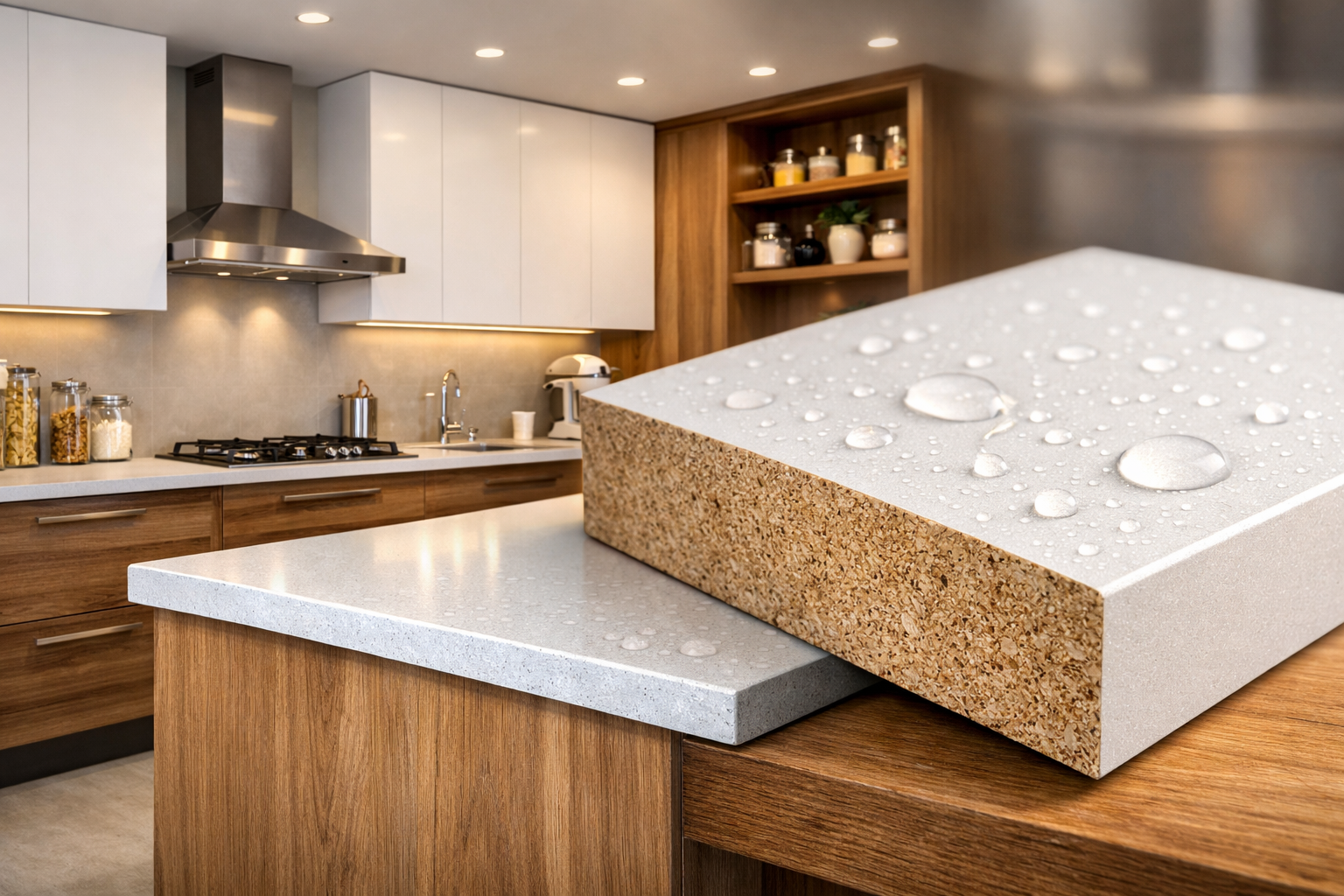
A: Thicker is stronger, yes; but moisture resistance is about the same across thicknesses. An 18mm HDHMR is definitely able to hold more weight and span longer distances than a 6mm or 12mm – purely due to its thickness giving it more cross-sectional strength. However, all HDHMR boards, regardless of thickness, are made with the same moisture-resistant resin technology. A 6mm HDHMR and 18mm HDHMR of the same brand will both resist moisture similarly on a per-thickness basis (the thicker one won’t magically repel water better, except that it physically takes longer for water to penetrate through it). In practice, thinner boards might dry out faster if they do get damp. But overall, choose thickness for structural reasons, and count on the HDHMR material itself for moisture resistance. Always seal the edges of any thickness board for best moisture protection.
Q: What are the standard sizes of HDHMR boards, and do all thicknesses come in 8x4 ft sheets?
A: In India, the most common sheet size for HDHMR (like many boards) is 8ft x 4ft (2440mm x 1220mm). Most thicknesses, whether 6mm, 12mm, or 18mm, are available in this size. Some manufacturers also offer other sizes like 8x6 ft or 7x4 ft in select thicknesses (for example, some brands provide 8x6 in 18mm to reduce joints in big wardrobes). Also, note that not every thickness is produced by every brand – thin sheets (like 3mm or 4mm) might be less common in HDHMR; and very thick ones (like 25mm) might be made by only a few factories. For general availability: 6, 9, 12, 16, 18mm are usually stocked by suppliers. It’s always a good idea to check with your supplier what sizes and thicknesses they carry, as ordering an uncommon thickness might require a special request or bulk order.
Disclaimer: This article is generated using AI-assisted research and is intended for informational purposes only. While we strive for accuracy, readers are advised to verify all technical, pricing, and brand-specific details with official sources. hdhmr.in is not liable for any decisions made based on this content.